

Best Practices for Integrating Undergraduate Research and Career Readiness

Updated: Jul 12
Introduction
In an era where job market complexities are ever-increasing, integrating undergraduate research with career readiness has become essential for educational institutions. By aligning academic experiences with industry demands, students can gain invaluable skills and insights that enhance their employability. However, despite the growing emphasis on career readiness, many institutions struggle to integrate research effectively into their curricula. Failure to do so may leave graduates ill-equipped to meet the demands of the job market.
Integrate Undergraduate Research with Career Readiness
To bridge the gap between academic inquiry and undergraduate research and career readiness, institutions must implement structured programs that align educational experiences with industry needs. This can include:
Collaborative Research Projects: Partner with local businesses or organizations to create research opportunities that address real-world problems. For instance, a university could partner with a tech firm to create a project centered on data analysis, enabling learners to acquire practical experience while aiding the company's goals. As pointed out by Jeanne Mekolichick, the link between undergraduate research and career readiness is increasingly acknowledged, emphasizing the significance of such partnerships.
Internship Opportunities: Motivate learners to seek internships that include investigative elements. This not only improves their practical skills but also offers them a platform to demonstrate their abilities to potential employers. Research indicates that individuals engaged in undergraduate research and career readiness report greater clarity about their professional objectives, which is crucial for career advancement.
Showcase Research Outcomes: Organize events where individuals can present their research findings to industry professionals. This not only builds their confidence but also helps them network and gain visibility in their chosen fields. Significantly, 82 percent of individuals who have engaged in work-integrated learning express a desire for more experiences, highlighting the importance of these showcase events.
By fostering these partnerships, institutions can bridge the gap between education and employment, enhancing students' career prospects. This strategic alignment not only enhances academic success but also significantly boosts students' employability in a competitive job market.

Embed Career Purpose Throughout Academic Programs
Integrating professional purpose into academic programs is essential for enhancing undergraduate research and career readiness among graduates. Effective strategies include:
Curriculum Mapping: Align course objectives with career competencies to ensure that students acquire relevant skills. For example, communication courses can include tasks like creating professional portfolios or participating in mock interviews to enhance job market readiness. Research shows that curriculum mapping boosts learner engagement and aligns educational programs with job demands, ultimately enhancing outcomes for learners.
Guest Lectures and Workshops: Inviting industry experts to share their professional journeys and the skills they emphasize in graduates offers learners insights into real-world applications of their studies. This exposure helps bridge the gap between theoretical knowledge and practical experience. For instance, the University of Baltimore's proactive strategy to combine professional exploration with academic planning has significantly improved engagement and results.
Professional Development Modules: Incorporating modules centered on job exploration, resume crafting, and interview readiness into existing courses ensures that learners grasp not only theoretical concepts but also how to effectively implement them in their job searches. Dr. Yolanda Watson Spiva emphasizes that professional preparedness should be a fundamental aspect of the learner experience to enhance workforce outcomes.
Incorporating these components into educational programs promotes a culture of undergraduate research and career readiness, equipping learners with essential skills for entering the workforce. This gap in employment underscores the urgent need for educational institutions to prioritize career readiness in their curricula.

Foster Faculty-Student Collaboration for Enhanced Outcomes
Without structured collaboration, students may miss out on critical learning opportunities that enhance their academic journey. To cultivate effective faculty-student collaboration, institutions should adopt the following best practices:
Mentorship Programs: Establish formal mentorship initiatives where faculty members actively guide students through research projects. This includes regular check-ins, constructive feedback sessions, and collaborative goal-setting, all of which have shown to boost academic performance and build personal confidence in students.
Collaborative Research Initiatives: Motivate faculty to involve learners in their scholarly endeavors, offering them practical opportunities to contribute to academic work. This participation not only improves learners' investigative abilities but also cultivates stronger connections with faculty, as evidenced by successful collaborations that result in deeper learning experiences.
Collaborative Learning Environments: Establish designated areas where learners and faculty can work together on studies and projects. This could involve specialized research laboratories or online platforms that enable communication and resource sharing, fostering a culture of collaboration that is crucial for educational success.
By embracing these collaborative practices, institutions can significantly impact students' academic success and enhance their undergraduate research and career readiness in ways that extend beyond the classroom.

Utilize Technology to Enhance Academic Connections
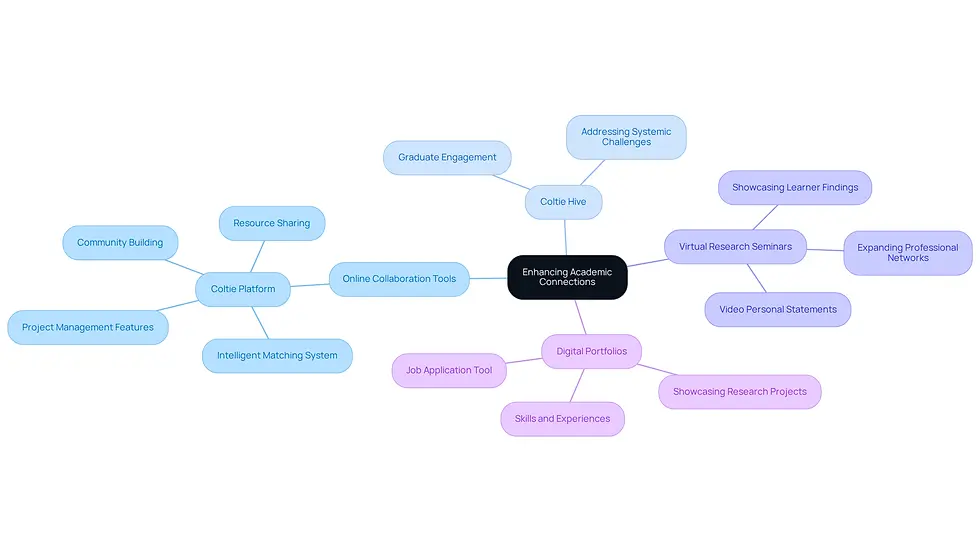
In an era where academic connections are increasingly vital, institutions face significant challenges in fostering engagement and recruitment. To effectively leverage technology in enhancing these connections, institutions can adopt several strategic approaches:
Online Collaboration Tools: Implement platforms like Coltie to facilitate communication between students and faculty. Coltie's intelligent matching system recommends potential candidates to graduate advisors, making the recruitment process seamless and efficient. This tool effectively manages projects, shares resources, and fosters a sense of community.
Coltie Hive: Utilize Coltie Hive to enhance graduate recruitment and engagement. This purpose-built solution enables departments to engage with graduates more effectively, addressing systemic challenges in higher education.
Virtual Research Seminars: Organize online seminars where learners can showcase their findings to a broader audience, including industry experts. This not only enhances their presentation skills but also expands their professional network. Coltie enables learners to create profiles featuring video personal statements, which can be showcased during these seminars.
Digital Portfolios: Encourage learners to create digital portfolios showcasing their research projects, skills, and experiences. With Coltie, students can connect across the educational ecosystem and showcase their work effectively. This can serve as a valuable tool during job applications and interviews.
By embracing these technological advancements, institutions not only enhance academic connections but also support undergraduate research and career readiness for a competitive job market.
Conclusion
Integrating undergraduate research with career readiness is not merely beneficial; it is essential for equipping students to excel in a competitive job market. Aligning academic experiences with industry needs allows educational institutions to create structured programs that enhance learning and improve employability. This strategic approach fosters a seamless transition from academic inquiry to professional application, ensuring that graduates are equipped with the skills and experiences necessary for success.
Key strategies discussed include:
Collaborative research projects that connect students with local businesses
Internship opportunities that incorporate investigative elements
Events that showcase research outcomes to industry professionals
Additionally, embedding career purpose throughout academic programs through curriculum mapping, guest lectures, and professional development modules further enhances students' readiness for the workforce. Fostering faculty-student collaboration through mentorship and research initiatives is crucial for enriching the educational experience.
The integration of technology is pivotal in enhancing academic connections and supporting undergraduate research. By leveraging online collaboration tools and encouraging the creation of digital portfolios, institutions can facilitate meaningful engagement between students and faculty, as well as with potential employers. Embracing these best practices not only prepares students for their careers but also underscores the vital role that educational institutions play in shaping the future workforce. Prioritizing career readiness within academic curricula is essential for developing graduates who can effectively tackle the challenges of today's job market.
Frequently Asked Questions
How can institutions integrate undergraduate research with career readiness?
Institutions can implement structured programs that align educational experiences with industry needs, such as collaborative research projects, internship opportunities, and showcasing research outcomes.
What are collaborative research projects?
Collaborative research projects involve partnerships with local businesses or organizations to create research opportunities that address real-world problems, allowing students to gain practical experience while contributing to the goals of the partnering entity.
Why are internship opportunities important for students?
Internship opportunities motivate students to seek experiences that include investigative elements, improving their practical skills and providing a platform to demonstrate their abilities to potential employers.
What benefits do students gain from engaging in undergraduate research?
Students engaged in undergraduate research report greater clarity about their professional objectives, which is crucial for career advancement.
How can showcasing research outcomes benefit students?
Organizing events for students to present their research findings to industry professionals builds their confidence, helps them network, and increases their visibility in their chosen fields.
What percentage of individuals engaged in work-integrated learning desire more experiences?
82 percent of individuals who have engaged in work-integrated learning express a desire for more experiences, highlighting the importance of showcase events.
What is the overall impact of integrating undergraduate research with career readiness?
By fostering partnerships between education and employment, institutions enhance students' career prospects, academic success, and employability in a competitive job market.
List of Sources
Integrate Undergraduate Research with Career Readiness Boost Career Awareness Through Undergraduate Research Best Practices (https://coltie.com/post/boost-career-awareness-through-undergraduate-research-best-practices) 4 Key Takeaways on Career Readiness (https://insidehighered.com/news/student-success/life-after-college/2026/03/10/4-key-takeaways-career-readiness) Undergrad Research Builds Career Readiness Skills | Council on Undergraduate Research posted on the topic | LinkedIn (https://linkedin.com/posts/council-on-undergraduate-research_dive-into-understanding-the-value-of-undergraduate-activity-7430638782279790592-oBRT) Career Readiness in UR - The Council on Undergraduate Research (https://cur.org/resources-publications/career-readiness-in-ur) Undergraduate Research Experiences Grow Career-Ready Transferable Skills - The Council on Undergraduate Research (https://cur.org/journal-article/undergraduate-research-experiences-grow-career-ready-transferable-skills)
Embed Career Purpose Throughout Academic Programs Rethinking Career Readiness: New Report Guides Colleges on Embedding Career Purpose From Enrollment to Alumni - Complete College America (https://completecollege.org/news/rethinking-career-readiness-new-report-guides-colleges-on-embedding-career-purpose-from-enrollment-to-alumni) Embedding Career Readiness in the Curriculum Toolkit | Center for Innovative Teaching and Learning | Northern Illinois University (https://niu.edu/citl/resources/toolkits/career-readiness/index.shtml) How to connect programs to occupations with curriculum mapping (https://watermarkinsights.com/resources/blog/how-to-connect-programs-to-occupations-with-curriculum-mapping) Career Readiness for Employment | New Data Reveals Gaps (https://cengagegroup.com/news/perspectives/2026/career-readiness-is-the-new-promise-of-higher-education---are-institutions-delivering) 8 Takeaways from a New Report On Career Readiness in Higher Education - Every Learner Everywhere® (https://everylearnereverywhere.org/blog/8-takeaways-from-a-new-report-on-career-readiness-in-higher-education)
Foster Faculty-Student Collaboration for Enhanced Outcomes Mentoring in an Era of Uncertainty for Higher Education (https://insidehighered.com/news/faculty/career-development/2025/04/18/mentoring-era-uncertainty-higher-education) Mentoring Programs That Broaden Pathways to Graduate Education (https://acenet.edu/Research-Insights/Pages/Diversity-Inclusion/Mentoring-Programs-Graduate-Pathways.aspx) Mentorship Programs in 2026: A Guide to Student Success (https://theoasisdoon.com/mentorship-programs-student-success-2026) 4 Ways to Get Faculty to Partner on Student Success - Civitas Learning (https://civitaslearning.com/blog/4-ways-to-partner-with-faculty-on-student-success) Reflections on the benefits of student-faculty partnerships - Center for Engaged Learning (https://centerforengagedlearning.org/reflections-on-the-benefits-of-student-faculty-partnerships)
Utilize Technology to Enhance Academic Connections Analyzing the Use of Technology in Higher Education | GCU (https://gcu.edu/blog/engineering-technology/understanding-transformation-technology-higher-education) Unifying Campus Technology Solutions to Power Higher Ed | Ellucian (https://ellucian.com/blog/how-edtech-innovations-are-shaping-higher-education) 2025 Tech Shifts Shaping Higher Education | Accruent (https://accruent.com/resources/blog-posts/tech-shifts-shaping-higher-education) Using Technology to Transform Higher Education - UPCEA (https://upcea.edu/using-technology-to-transform-higher-education)
Comments