

How Pre-Med Students Can Prepare for Undergraduate Research Success

Introduction
Undergraduate research is a critical component of a successful medical school application, yet it is frequently underestimated. For pre-med students, engaging in research not only cultivates essential skills but also enhances their medical school applications by showcasing their commitment to the field. A critical yet often underestimated element is undergraduate research. Securing meaningful research opportunities presents several challenges. Aspiring medical professionals must navigate this landscape strategically to gain essential experience.
Understand the Importance of Undergraduate Research for Pre-Med Students
Understanding how pre med students can prepare for undergraduate research serves as a pivotal foundation, shaping their educational and professional trajectories. Research enhances understanding of scientific principles and develops essential skills like analytical reasoning, problem-solving, and effective communication. This experience significantly strengthens medical school applications by demonstrating an individual's commitment to the field and potential contributions to scientific knowledge. Furthermore, it enables learners to explore specific interests within medicine, refining their career aspirations.
Coltie simplifies the research journey by matching prospective students with graduate advisors, streamlining the search and recruitment process. Student profiles feature video personal statements, allowing them to compellingly present their interests and aspirations. Faculty can also enhance their profiles with videos that describe their studies and advising styles, fostering a more engaging and informative connection.
Here are some important aspects of undergraduate research to consider:
Skill Development: Research fosters vital skills for medical practice, including data analysis and teamwork, which are crucial in clinical settings.
Networking Opportunities: Participation in studies fosters relationships with educators and industry experts, creating pathways for guidance and future employment opportunities. With Coltie's platform, learners can easily connect with faculty whose work aligns with their interests, enhancing these networking opportunities.
Improved Medical School Applications: Admissions committees favor candidates who show initiative and enthusiasm for medicine, both of which can be effectively demonstrated through involvement in studies. A 2019 survey showed that nearly 60% of new medical trainees had participated in laboratory internships, highlighting its significance.
Comprehending the Investigation Process: Involvement in studies provides learners with a strong understanding of the scientific method, crucial for assessing medical literature and interpreting clinical studies in their future careers. Any investigative background, including non-medical, demonstrates commitment to learning and problem-solving, which is advantageous to medical school admission committees.
In essence, undergraduate inquiry transcends mere academic obligation; it is a transformative experience that illustrates how pre med students can prepare for undergraduate research, equipping them for the challenges of medical school and a successful career in healthcare, with Coltie providing the tools to enhance academic connections and facilitate meaningful inquiry experiences. Ultimately, Coltie empowers students to navigate their academic paths with confidence, ensuring they are well-prepared for the demands of medical school and beyond.

Identify and Secure Research Opportunities
Identifying and securing research positions can often feel overwhelming for students, but understanding how pre med students can prepare for undergraduate research with a strategic approach makes success within reach. Here are some actionable steps to help you identify and secure research positions:
Utilize University Resources: Begin by exploring your university's website for dedicated pages on undergraduate study programs, faculty directories, and departmental announcements. Numerous organizations offer extensive catalogs of available study opportunities.
Network with Faculty: Building relationships with professors is crucial. Attend office hours, participate in class discussions, and convey your interest in their work. An easy dialogue can result in possible academic opportunities, as faculty often value proactive learners.
Utilize Peer Networks: Engage with fellow pre-med students or upperclassmen who have experience in studies. They can provide valuable insights and may direct you to positions they know of, improving your chances of discovering suitable opportunities.
Attend Academic Fairs and Workshops: Participate in university-hosted academic fairs, workshops, or seminars. These events frequently showcase staff members actively looking for assistants and offer a platform for you to convey your interest directly.
Cold Emailing: If you have a specific area of interest, consider contacting faculty members whose work aligns with your goals. Craft a concise email expressing your interest and inquire about potential openings in their labs, demonstrating your initiative and enthusiasm.
Explore Summer Study Programs: Many institutions provide summer study opportunities specifically tailored for undergraduates. These programs offer intensive study experiences and often include stipends, making them an excellent opportunity to gain practical experience.
Check Online Platforms: Utilize platforms like Coltie to find study opportunities tailored to your interests. These resources can assist you in finding roles that match your academic objectives and promote connections with instructors.
Implementing these strategies illustrates how pre med students can prepare for undergraduate research, enhancing your pre-med experience and positioning you favorably for medical school admissions.
Build Relationships with Faculty and Mentors
For pre-med students, building strong relationships with instructors and mentors is essential for academic and professional success. These connections provide invaluable guidance, support, and opportunities throughout their journeys. Here are effective strategies to cultivate these important relationships:
Be Engaged in Class: Actively participate in discussions, ask questions, and demonstrate genuine interest in the subject matter. This engagement helps you stand out to professors and can lead to further academic opportunities.
Utilize Office Hours: Take advantage of faculty office hours to discuss course material, seek advice, or express interest in their work. One-on-one interactions foster personal connections that can be beneficial in the long run.
Volunteer for Projects: Offer to assist professors with academic projects, even on a volunteer basis. This initiative showcases your willingness to learn and can lead to more formal opportunities in research.
Attend Department Events: Participate in departmental seminars, workshops, and social events. These gatherings offer a relaxed atmosphere for networking and establishing connections with instructors.
Follow Up: After meeting with a professor or mentor, send a thank-you email expressing appreciation for their time and insights. This gesture can leave a lasting impression and strengthen your connection.
Seek Out Mentorship: Identify instructors whose work aligns with your interests and approach them for guidance. A mentor can assist you with studies, coursework, and career planning, improving your academic journey.
Stay in Touch: Maintain regular communication with your mentors, updating them on your academic progress and seeking their advice as needed. This ongoing relationship can be beneficial throughout your academic career.
Studies indicate that students who engage with their instructors tend to perform better academically and receive stronger endorsements for medical school. For instance, nearly 60% of new medical trainees have completed a research internship during their undergraduate studies, demonstrating how pre-med students can prepare for undergraduate research to enhance their medical school candidacy. Programs such as the Joint Admission Medical Program (JAMP) and the Summer Health Education Research Program (SHERP) demonstrate the advantages of establishing connections with instructors and mentors, offering students practical involvement and networking opportunities. Cultivating connections with faculty and mentors helps you build a supportive network that enriches your educational experience and creates future opportunities.

Engage Actively in Research Projects
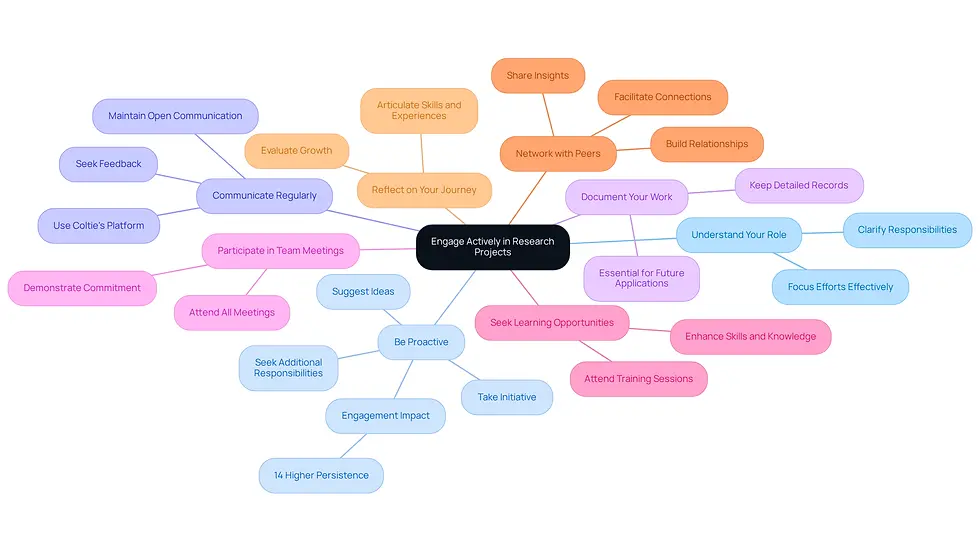
Maximizing your experience in research requires active engagement in your projects after securing a position in your field. Here are strategies to ensure you make the most of your research involvement:
Understand Your Role: Clarify your responsibilities and expectations with your supervisor. Knowing what is expected of you will help you focus your efforts effectively.
Be Proactive: Take the initiative to contribute beyond your assigned tasks. Suggest ideas, ask questions, and seek additional responsibilities that align with your interests. Research shows that students who engage proactively are 14% more likely to persist in their studies, underscoring the importance of taking initiative.
Communicate Regularly: Maintain open lines of communication with your study team. Regularly update your supervisor on your progress and seek feedback to improve your work. Utilizing Coltie's Research Portfolio Management can enhance this communication by providing real-time updates on staff and lab profiles, ensuring everyone is informed and engaged.
Document Your Work: Keep detailed records of your investigative activities, findings, and contributions. This documentation will be essential when discussing your experience in future applications or interviews, as over 80% of graduating medical trainees reported engaging in projects with faculty members.
Participate in Team Meetings: Attend all team meetings and actively participate in discussions. This involvement will help you stay informed and demonstrate your commitment to the project, which is crucial for building a strong professional network.
Seek Learning Opportunities: Take advantage of any training sessions, workshops, or seminars provided by your study group. These opportunities can enhance your skills and knowledge, making you a more competitive candidate for medical school.
Network with Peers: Build relationships with fellow researchers and graduate students. They can provide support, share insights, and may even become valuable contacts in your future career. Coltie's platform can facilitate these connections through engaging updates on studies and team posts.
Reflect on Your Journey: Regularly evaluate what you are gaining from your study. Reflecting on your growth will help you articulate your skills and experiences in future applications, showcasing your contributions effectively.
Consistent engagement in research is essential for understanding how pre med students can prepare for undergraduate research, as it enhances your learning and positions you as a strong candidate for medical school, setting the stage for future success.
Conclusion
Undergraduate research serves as a pivotal foundation for pre-med students, equipping them with essential skills and experiences for medical school and beyond. Research enhances students' understanding of scientific principles while fostering essential skills like analytical reasoning and effective communication. By actively participating in research, students can demonstrate their commitment to the medical field, refine their career aspirations, and significantly strengthen their medical school applications.
The article outlines several key strategies for pre-med students to prepare for and excel in undergraduate research:
Identify and secure research opportunities through university resources.
Network with faculty to gain insights and support.
Actively engage in research projects to build practical experience.
Building strong relationships with mentors and peers is vital, providing invaluable guidance and support throughout this journey. Furthermore, documenting experiences and reflecting on personal growth ensures that students can effectively articulate their skills and contributions in future applications.
This proactive engagement not only enhances their applications but also prepares them for the rigors of medical school. By taking proactive steps to engage in research, build relationships, and reflect on their experiences, pre-med students can position themselves for success in medical school and their subsequent careers in healthcare. By embracing these research opportunities, pre-med students not only enhance their educational journey but also play a crucial role in advancing medical knowledge and improving patient care.
Frequently Asked Questions
Why is undergraduate research important for pre-med students?
Undergraduate research is crucial for pre-med students as it enhances their understanding of scientific principles, develops essential skills like analytical reasoning and problem-solving, and strengthens medical school applications by demonstrating commitment to the field.
How does research experience benefit medical school applications?
Research experience benefits medical school applications by showcasing a candidate's initiative and enthusiasm for medicine, which are qualities that admissions committees favor. It also reflects potential contributions to scientific knowledge.
What skills do pre-med students develop through undergraduate research?
Pre-med students develop vital skills such as data analysis, teamwork, and effective communication, all of which are crucial in clinical settings.
How does Coltie assist students in finding research opportunities?
Coltie simplifies the research journey by matching prospective students with graduate advisors and streamlining the search and recruitment process. It allows students to create profiles featuring video personal statements to present their interests compellingly.
What networking opportunities does undergraduate research provide?
Participation in research fosters relationships with educators and industry experts, creating pathways for guidance and future employment opportunities. Coltie enhances these networking opportunities by connecting learners with faculty whose work aligns with their interests.
What does involvement in research teach students about the scientific process?
Involvement in research provides students with a strong understanding of the scientific method, which is crucial for assessing medical literature and interpreting clinical studies in their future careers.
How does any investigative background benefit medical school admissions?
Any investigative background, including non-medical research, demonstrates a commitment to learning and problem-solving, which are advantageous qualities for medical school admission committees.
List of Sources
Understand the Importance of Undergraduate Research for Pre-Med Students Benefits of Clinical Research for Pre-Med Students | Trinity School of Medicine (https://trinityschoolofmedicine.org/about/resources/blog/benefits-of-clinical-research-for-pre-med-students) How to Get Research Experience Before Applying to Med School - UVM Professional and Continuing Education (https://learn.uvm.edu/news/research-experience-for-med-school) How research experience can strengthen your medical school application (https://ama-assn.org/medical-students/preparing-medical-school/how-research-experience-can-strengthen-your-medical) Premed Research That Impresses Medical Schools (https://usnews.com/education/blogs/medical-school-admissions-doctor/articles/premed-research-that-impresses-medical-schools)
Identify and Secure Research Opportunities Networking Statistics 2026: Industry Data, Trends & Insights (https://wavecnct.com/blogs/networking-statistics) Premed students can apply now for 2026 Flinn Summer Research Internships (https://healthsciences.arizona.edu/news/premed-students-can-apply-now-2026-flinn-summer-research-internships) Your Job Search Is 80% Networking and 20% Applying—And That’s Non-Negotiable (https://linkedin.com/pulse/your-job-search-80-networking-20-applyingand-thats-brian-fink-h6dee) How to get started in research (https://ama-assn.org/medical-students/succeed-medical-school/how-get-started-research) Summer Undergraduate Research Programs (https://students-residents.aamc.org/phd-biomedical-science/summer-undergraduate-research-programs)
Build Relationships with Faculty and Mentors JAMP and SOAR: Building Pathways to Medical Careers | College of Medicine | University of Houston (https://uh.edu/medicine/news-events/stories/2026/08-aug/jamp-soar-building-pathways.php) Building Rapport With Professors for Strong Med School Recommendation Letters (https://usnews.com/education/best-graduate-schools/articles/building-rapport-with-professors-for-strong-med-school-recommendation-letters) 7 Top Tips From Pre-Med Academic Advisors and Counselors (https://ihn.cuimc.columbia.edu/news/7-top-tips-pre-med-academic-advisors-and-counselors) What I wish I knew in medical school about finding mentors (https://ama-assn.org/medical-students/succeed-medical-school/what-i-wish-i-knew-medical-school-about-finding-mentors) Essential Research Experience Guide for Pre-Med Students (https://coltie.com/post/essential-research-experience-guide-for-pre-med-students)
Engage Actively in Research Projects Pre-health Research: What, How and When? (https://careerservices.upenn.edu/blog/2024/03/14/pre-health-research-what-how-and-when) How to get started in research (https://ama-assn.org/medical-students/succeed-medical-school/how-get-started-research) How Universities Are Measuring Student Engagement in 2026 (https://moderncampus.com/blog/how-universities-are-measuring-student-engagement-in-2026.html) Premed Research That Impresses Medical Schools (https://usnews.com/education/blogs/medical-school-admissions-doctor/articles/premed-research-that-impresses-medical-schools) Getting Involved In Research as an Undergraduate - SEEDS – Access Changes Everything (https://seedsaccess.org/getting-involved-in-research-as-an-undergraduate)



Comments