

How to Find Urban Planning Research Opportunities as an Undergraduate

Updated: Sep 1
Introduction
For undergraduates in urban planning, understanding the dynamics of this field is crucial for future success. With numerous research opportunities available, students can enhance their academic profiles and gain invaluable experience aligned with their career aspirations. However, many students find it overwhelming to choose the right research opportunities. What steps can aspiring urban planners take to find and take advantage of these opportunities?
Explore the Landscape of Urban Planning Research Opportunities
Understanding the landscape of city development is essential for aspiring professionals in the field. Urban development encompasses a wide range of subjects, including sustainable growth, transportation, housing policy, and community involvement. Here are some effective steps to explore:
Explore online resources to discover how to find urban planning research opportunities as an undergraduate, utilizing platforms such as Pathways to Science and Planetizen, which offer listings of internships, fellowships, and positions specifically designed for undergraduates in city development.
Investigate your university's urban development department for specialized programs that support undergraduate studies. Many institutions provide assistant roles or summer internships, which are valuable for students learning how to find urban planning research opportunities as an undergraduate while working closely with faculty members.
Join groups like the American Planning Association (APA) or local development chapters. These organizations often feature job boards, networking events, and workshops that provide guidance on how to find urban planning research opportunities as an undergraduate.
Reflect on which aspects of city development resonate with you the most. Whether your passion lies in environmental sustainability, city design, or social equity, clarifying your interests will help you focus your search effectively.
Participate in events associated with city development, such as the upcoming SACRPH 2026 conference. These events are great for learning how to find urban planning research opportunities as an undergraduate and for meeting professionals who can help you.
Concentrate on cultivating essential competencies such as GIS expertise and effective communication abilities, which are highly valued by employers in the city development sector. These skills can significantly improve your employability and preparedness for academic positions.
Numerous initiatives provide stipends or financial aid for undergraduate students in city development studies. Exploring these options can ease financial worries and promote increased involvement in study initiatives.
By investigating these paths, you will gain a better understanding of how to find urban planning research opportunities as an undergraduate and identify opportunities that align with your academic and career goals. Recent trends indicate a growing emphasis on sustainable practices and community engagement, making this an exciting time for undergraduates to contribute to the field. Engaging with these opportunities can significantly shape your future in city development, making it imperative to take action now.

Identify Specific Research Opportunities in Urban Planning
For undergraduates, understanding how to find urban planning research opportunities as an undergraduate is crucial for enhancing their academic profiles and career prospects. Here are effective strategies to find these positions:
Use Online Job Boards: Platforms such as Indeed, LinkedIn, and specialized sites like the Planetizen Jobs Board are excellent resources for city development positions. Utilize specific keywords such as 'urban development internship' or 'urban studies assistant' to narrow your search. In 2026, many city planning internships are available, offering hourly pay between $29.60 and $35.52, indicating a competitive job market.
University Study Centers: Many universities have specialized facilities centered on urban studies. Browse their websites for listings of ongoing projects and opportunities for undergraduate participation. For example, the Urban Sustainability Research Group at the University of Michigan often provides various study initiatives.
Networking with Faculty: Talking with professors who share your research interests can uncover hidden opportunities. Reach out via email, expressing your enthusiasm for their work and inquiring about potential openings in their projects. Faculty members often have insights into internship opportunities that may not be publicly advertised.
Internship Programs: Look for internship programs designed for undergraduates in city development. The Urban Research Opportunities Program (UROP) at UC Irvine, for instance, links students with faculty and industry partners for valuable experiential learning. Additionally, organizations like Stantec and Thrive West Central are currently offering internships, such as the Urban Planning Intern position and GIS/Urban Planning Intern position, respectively.
Local Authorities and Nonprofits: Numerous local authorities and non-profit entities carry out city development studies. Regularly check their websites for internship or volunteer positions that provide practical experience. For example, the City of Park Ridge is offering an Urban Planning Internship with a salary range of $16.00 - $18.00 per hour, which can be a great entry point for students.
By following these strategies, students can discover how to find urban planning research opportunities as an undergraduate, positioning themselves advantageously in a competitive field and paving the way for future success in city development.

Prepare Your Application Materials for Research Positions
Crafting your application documents with precision is essential for securing city development study opportunities. Here’s how to create compelling documents:
Craft a Strong Resume: Emphasize relevant coursework, skills, and any prior experience in urban planning. Utilize action verbs and quantify achievements where possible. Adjust your resume to highlight experiences that correspond with the particular position, as this personalization can greatly improve your attractiveness to hiring committees. Students with internship experience receive significantly more job interview requests, highlighting the need to showcase relevant experiences.
Compose a Customized Cover Letter: Your cover letter should express excitement for the opportunity and explain why you are a perfect candidate. Mention specific projects or faculty members you want to partner with, illustrating how your background aligns with their goals. Madeline Mann emphasizes that a well-crafted cover letter can set you apart, especially in smaller organizations where personal connections matter.
Gather Letters of Recommendation: Request letters from professors or professionals who can attest to your abilities and potential as a researcher. Provide them with details about the position and your aspirations, enabling them to write personalized letters that strengthen your application. This step is crucial, as strong endorsements can significantly influence hiring decisions.
Prepare a Portfolio (if applicable): If you have completed relevant projects or studies, compile them into a portfolio. This may include reports, presentations, or visual materials that demonstrate your abilities and comprehension of city development concepts. A well-organized portfolio can provide tangible evidence of your capabilities and commitment to the field.
Practice Interview Skills: If you land an interview, take some time to practice common questions related to city development studies. Be prepared to discuss your interests, pertinent experiences, and how you can add value to the team. Effective interview preparation can enhance your confidence and performance, making a positive impression on potential employers.
Furthermore, with the University of Florida launching Florida's first dedicated undergraduate degree in development studies in fall 2026, there are growing prospects in city design studies. A strong application can open doors to valuable opportunities in city development.

Network with Faculty and Professionals in Urban Planning
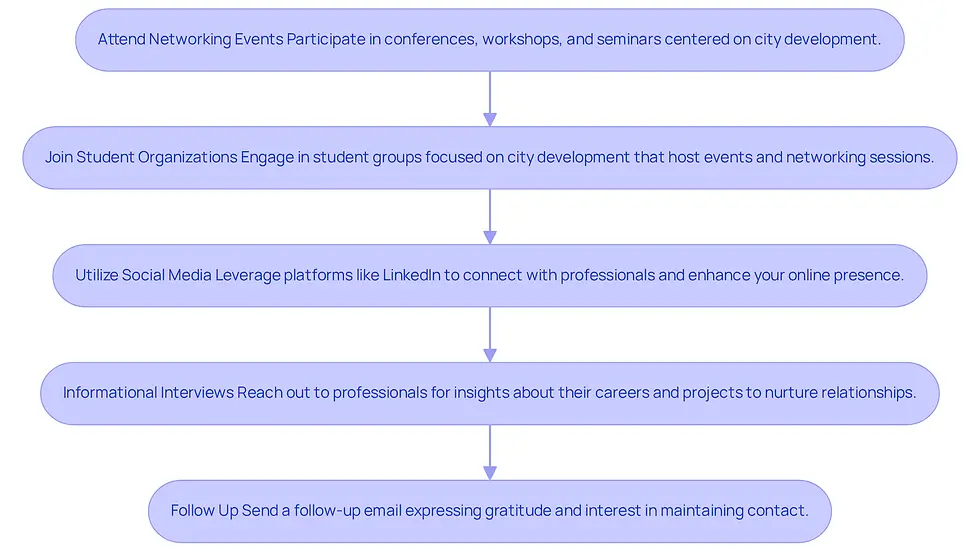
Effective networking is essential for fostering partnerships and exploring opportunities in city development. Here are effective strategies to enhance your networking efforts:
Attend Networking Events: Participate in conferences, workshops, and seminars centered on city development. These gatherings are prime opportunities to connect with professionals and faculty who can provide insights and potential research collaborations. For instance, the World Urban Forum, scheduled for May 18-22, 2026, in Baku, Azerbaijan, is expected to attract over 20,000 participants from various sectors, making it an ideal venue for networking.
Join Student Organizations: Engage in student groups focused on city development. These organizations frequently host events, guest speakers, and networking sessions that facilitate connections with peers and industry professionals.
Utilize Social Media: Leverage platforms like LinkedIn to connect with city development professionals. Following organizations, joining relevant groups, and engaging with posts can significantly enhance your online presence within the urban planning community. Additionally, using Coltie's platform can further enhance your networking experience by intelligently suggesting matches between prospective students and faculty based on shared interests.
Informational Interviews: Reach out to professionals for informational interviews. Prepare insightful questions about their career trajectories and current projects. This method not only expands your comprehension but also nurtures relationships that may result in future possibilities. Coltie's video profiles offer insights into faculty projects and advising styles, making it easier to identify potential mentors who align with your academic goals.
Follow Up: After meeting someone, send a follow-up email expressing gratitude for their time and interest in maintaining contact. This simple act can create a lasting impression and keep communication channels open.
By actively networking with faculty and professionals, especially through platforms like Coltie, you can significantly enhance your visibility in the planning community and discover how to find urban planning research opportunities as an undergraduate. Neglecting to network may result in missed opportunities that could significantly impact your career in urban planning.
Conclusion
Navigating the landscape of urban planning research opportunities is crucial for undergraduates aiming to influence city development. By understanding the available avenues, students can gain valuable experience and insights that enhance their academic and professional journeys.
This article outlines several effective strategies for finding these opportunities:
Utilize online resources.
Engage with university departments.
Network with faculty.
Participate in relevant events.
It emphasizes the importance of honing essential skills, such as GIS expertise and effective communication, while also highlighting the significance of crafting strong application materials. By actively pursuing internships and research positions, students can build their resumes and contribute to the evolving landscape of urban planning.
Many students find it challenging to navigate the myriad of urban planning research opportunities available. However, taking proactive steps in their search can significantly shape their future. Failing to engage with these opportunities could hinder their professional growth and understanding of urban planning. Taking initiative in this pursuit can profoundly influence their career trajectory and understanding of urban sustainability.
Frequently Asked Questions
What is the importance of understanding urban planning for aspiring professionals?
Understanding urban planning is essential for aspiring professionals as it encompasses various subjects like sustainable growth, transportation, housing policy, and community involvement.
What online resources can help undergraduates find urban planning research opportunities?
Platforms such as Pathways to Science and Planetizen offer listings of internships, fellowships, and positions specifically designed for undergraduates in city development.
How can university programs support undergraduate studies in urban development?
Many universities provide specialized programs, assistant roles, or summer internships that allow students to work closely with faculty members and gain practical experience in urban development.
What organizations can undergraduates join to find urban planning research opportunities?
Joining groups like the American Planning Association (APA) or local development chapters can provide access to job boards, networking events, and workshops related to urban planning.
Why is it important for students to reflect on their interests in city development?
Clarifying personal interests in areas such as environmental sustainability, city design, or social equity helps students focus their search for relevant urban planning research opportunities.
What types of events can help undergraduates learn about urban planning research opportunities?
Participating in events like the SACRPH 2026 conference allows students to learn about urban planning and meet professionals in the field.
What competencies should students cultivate to enhance their employability in city development?
Essential competencies include GIS expertise and effective communication skills, which are highly valued by employers in the city development sector.
Are there financial aid options available for undergraduate students in city development studies?
Yes, numerous initiatives provide stipends or financial aid to support undergraduate students, easing financial concerns and promoting involvement in study initiatives.
What recent trends are influencing urban planning research opportunities for undergraduates?
There is a growing emphasis on sustainable practices and community engagement, making it an exciting time for undergraduates to contribute to the field of urban development.
List of Sources
Explore the Landscape of Urban Planning Research Opportunities News | Harvard Mellon Urban Initiative (https://mellonurbanism.harvard.edu/news) U.S. Bureau of Labor Statistics (https://bls.gov/ooh/life-physical-and-social-science/urban-and-regional-planners.htm) News & Events | School of City & Regional Planning (https://planning.gatech.edu/news-events) 2026 Are Too Many Students Choosing Urban Planning? Oversaturation, Competition, and Hiring Reality | Research.com (https://research.com/advice/are-too-many-students-choosing-urban-planning-oversaturation-competition-hiring-reality) Navigating Undergraduate Research Opportunities in Urban Planning (https://coltie.com/post/navigating-undergraduate-research-opportunities-in-urban-planning)
Identify Specific Research Opportunities in Urban Planning Internship Opportunities in Urban Planning & Design - Urban Design and Planning (https://urbdp.be.uw.edu/internship-opportunities-in-urban-planning-design) Urban Planning Intern (https://parkridge.us/job_detail_T4_R140.php) 93 Urban Planning Internship jobs in United States (https://linkedin.com/jobs/urban-planning-internship-jobs) Urban Planning Internships 2026 Jobs, Employment | Indeed (https://indeed.com/q-urban-planning-internships-2026-jobs.html)
Prepare Your Application Materials for Research Positions Navigating Undergraduate Research Opportunities in Urban Planning (https://coltie.com/post/navigating-undergraduate-research-opportunities-in-urban-planning) U.S. Bureau of Labor Statistics (https://bls.gov/ooh/life-physical-and-social-science/urban-and-regional-planners.htm) 70+ Internship Statistics in 2025: Data, Case Studies & Trends | Shortlister (https://myshortlister.com/insights/internship-statistics) I’ve read 1000+ cover letters, and THIS is what will get you the interview (https://medium.com/@madelinemann/ive-read-1000-cover-letters-and-this-is-what-will-get-you-the-interview-b534660d6fd5) 2026 Fastest-Growing Careers for Urban Planning Degree Graduates | Research.com (https://research.com/advice/fastest-growing-careers-for-urban-planning-degree-graduates)
Network with Faculty and Professionals in Urban Planning For Your Calendar: Recommended Urban Planning Conferences 2025-2026 (https://urbansolutionsjournal.substack.com/p/for-your-calendar-recommended-urban) Urban Planning Conferences in United States 2026 | ICA (https://internationalconferencealerts.com/urban-planning/united-states) Events Calendar — APA NYM (https://nyplanning.org/events-calender) Urban Planning Events Board (https://planetizen.com/events)


Comments