

4 Best Practices for Undergraduate Research Opportunities for Women in STEM

Updated: Sep 1
Introduction
Women in STEM often encounter significant barriers that hinder their access to research opportunities, yet these challenges can be transformed into pathways for success. Undergraduate research serves as a crucial element that can enhance both academic performance and career prospects for women in STEM. This article outlines best practices for women in STEM, focusing on how to:
Identify valuable research opportunities
Enhance application materials
Effectively utilize networking and mentorship
By embracing these strategies, aspiring female scientists can not only navigate their challenges but also redefine their futures in STEM.
Identify Relevant Research Opportunities in STEM
Many students find it challenging to navigate the vast array of available opportunities in STEM without proper guidance. To effectively identify pertinent study opportunities, students should utilize a variety of university resources and proactive strategies. Here are some actionable steps:
Utilize University Resources: Check your university's academic office or career services for listings of available positions. Numerous organizations keep records of undergraduate research opportunities for women in STEM and other academic opportunities specifically for undergraduates, which can greatly improve access to valuable experiences.
Engage with Faculty: Attend departmental seminars and workshops to meet faculty members. Express your interest in their fields of study and inquire about potential openings in their labs. Building relationships with faculty can lead to mentorship opportunities that are crucial for academic success.
Explore Online Platforms: Websites such as PathwaysToScience.org and the National Science Foundation's REU program provide searchable databases of opportunities in STEM fields designed for undergraduates. These platforms can assist learners in finding fully funded summer programs that match their interests. Furthermore, Coltie's clever matching system can enable links between learners and academic opportunities based on common scholarly interests, enhancing the search process to be more effective and tailored. For example, individuals who have used Coltie have indicated discovering positions that perfectly aligned with their academic objectives, resulting in successful partnerships.
Network with Peers: Join student organizations related to your field of study. These groups frequently exchange information about study opportunities and can offer insights into the application process. Engaging with peers can also foster a sense of belonging, which is essential for persistence in STEM.
Attend Conferences: Participate in academic conferences and workshops. These events are excellent for networking and often include sessions on available study opportunities. Getting involved in these environments can boost your visibility and lead to collaborative projects.
By actively pursuing these resources, learners can discover positions that align with their academic interests and enhance their resumes and professional networks. Failing to engage with these resources may result in missed opportunities that could significantly impact academic and professional trajectories. Recent studies suggest that participation in undergraduate research opportunities for women in STEM can greatly enhance graduation rates, especially among underrepresented groups, with a 4-year graduation rate of 48% for marginalized UR individuals and a 6-year graduation rate of 95% for UR participants. This emphasizes the significance of these opportunities in promoting equity in STEM education, reinforcing the essential role that platforms like Coltie play in linking individuals with valuable practical engagements.

Enhance Application Materials for Research Positions
In a competitive academic job market, crafting standout application materials is essential for success. To improve application materials for academic positions, students should concentrate on creating a compelling resume and cover letter that effectively showcase their pertinent skills and backgrounds. Here are some best practices:
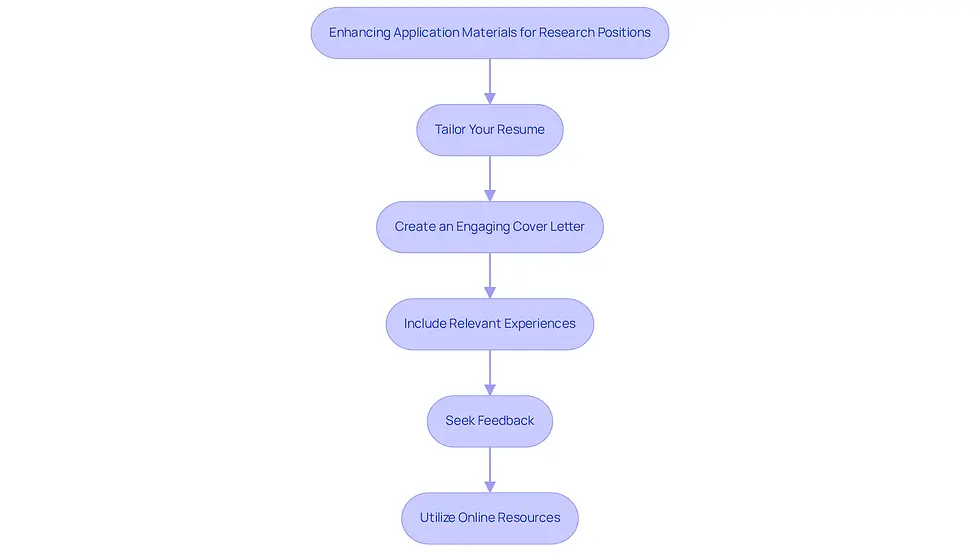
Tailor Your Resume: Personalize your resume for each application by highlighting relevant coursework, skills, and qualifications that correspond with the position. Use action verbs and quantify achievements where possible. Indeed reports that employers spend just six to seven seconds reviewing each resume, underscoring the need for clarity and visual appeal.
Create an Engaging Cover Letter: Your cover letter should express your enthusiasm for the position and clarify how your background qualifies you as an appropriate candidate. Be specific about what you hope to learn and contribute; this personal touch can differentiate your application from others. A well-crafted cover letter can leave a strong impression, highlighting relevant experiences and engaging the reader.
Include Relevant Experiences: Highlight any previous research, internships, or projects that demonstrate your skills and commitment to the field. Participating in undergraduate research opportunities for women in STEM-related extracurricular activities can significantly enhance your application, demonstrating your proactive engagement in the discipline. The increase in science, technology, engineering, and mathematics jobs is expected to surpass overall employment growth from 2019 to 2029, emphasizing the importance of distinguishing oneself in applications for these opportunities.
Seek Feedback: Before submitting your application, ask a mentor or professor to review your materials. Their insights can provide valuable feedback and help refine your presentation, ensuring that your application is polished and professional. Additionally, university career services and alumni networks can offer support in creating effective application materials.
Utilize online resources like the American Association of University Women (AAUW), which provide templates and advice for creating effective application materials that support undergraduate research opportunities for women in STEM. These resources can guide you in presenting your qualifications in the best light.
By following these steps, individuals can create application materials that effectively highlight their qualifications and enthusiasm for research, enhancing their chances of obtaining valuable opportunities in the science and technology sector. Ultimately, the quality of your application materials can significantly influence your career trajectory in the science and technology fields.
Leverage Networking and Mentorship for Success
Many individuals in STEM fields struggle to find effective networking opportunities, which can hinder their career advancement. To enhance their networking efforts, individuals should consider the following strategies:
Joining professional organizations like the Society of Women Engineers (SWE) or Women in Science, Technology, Engineering, and Mathematics provides access to undergraduate research opportunities for women in STEM, as well as networking events, mentorship programs, and resources tailored for women in technical fields.
Attend Workshops and Conferences: Engaging in workshops and conferences relevant to their discipline allows students to meet industry professionals and stay updated on the latest research and trends. These events often feature discussions led by experienced leaders in science, technology, engineering, and mathematics.
Utilize Social Media: Platforms like LinkedIn serve as powerful networking tools. Students should connect with professionals in their field, join pertinent groups, and actively engage with their content to foster relationships and visibility.
Seek Out Mentors: Identifying faculty members or professionals whose work resonates with them can lead to valuable mentorship opportunities. A mentor can provide essential guidance, support, and insights into navigating the complexities of a STEM career.
Be a Mentor Yourself: As learners progress in their studies, guiding younger peers can strengthen their understanding while broadening their network. This reciprocal relationship not only aids the mentee but also enhances the mentor's leadership skills and professional connections.
Ultimately, the strength of one’s professional network can significantly influence career trajectory and opportunities.

Engage in Hands-On Research and Internship Experiences
Many students find it challenging to identify and secure practical experiences that align with their academic pursuits, yet these experiences are crucial for career success. To enhance the advantages of practical involvement and internship opportunities, students should actively pursue chances that enable them to utilize their knowledge in real-world contexts. Here are some best practices:
Engage in undergraduate research opportunities for women in STEM by seeking opportunities to support faculty members with their studies. This can offer invaluable knowledge and assist you in developing essential skills in data collection, analysis, and presentation.
Pursue internships: Apply for internships in industry or research institutions. Internships provide practical knowledge and can frequently lead to job offers after graduation. Studies show that students who perform well in internships may receive job offers before graduation, highlighting the competitive advantage these experiences provide.
Engage in service learning: Participate in service-learning projects that link science, technology, engineering, and mathematics with community needs. This not only enhances your skills but also allows you to make a positive impact. Engaging in such projects can sharpen your understanding of real-world applications of STEM concepts.
Many universities provide undergraduate research opportunities for women in STEM through summer research programs or fellowships. These programs often provide funding and mentorship, making them an excellent way to gain experience. Research indicates that participation in programs like the STAR Scholars Program can significantly increase the likelihood of working in a science laboratory and enhance retention rates in STEM fields.
Reflect on your experiences: After completing a research project or internship, take time to reflect on what you learned and how it applies to your future goals. This reflection can assist you in expressing your background in future applications. As Farrah Dalal, a career and industry coach, emphasizes, having training or knowledge in your field demonstrates due diligence and context for future roles.
Ultimately, the pursuit of practical experiences not only enriches academic knowledge but also positions students favorably in the competitive job market.

Conclusion
Women in STEM continue to face significant barriers in securing undergraduate research opportunities, which are crucial for their academic and professional development. By actively seeking out relevant research positions, enhancing application materials, leveraging networking and mentorship, and engaging in hands-on experiences, students can significantly improve their chances of success in these fields.
The article outlines practical strategies, including:
Utilizing university resources
Tailoring application materials
Participating in professional organizations to foster connections and gain insights.
Additionally, the importance of mentorship and networking is emphasized, as these relationships can provide guidance and open doors to new opportunities. Engaging in internships and research projects not only builds essential skills but also enhances employability in a competitive job market.
By actively pursuing these opportunities, women in STEM can redefine the landscape of their fields and inspire future generations to follow suit.
Frequently Asked Questions
What challenges do students face in identifying research opportunities in STEM?
Many students find it challenging to navigate the vast array of available opportunities in STEM without proper guidance.
What resources should students utilize to find research opportunities?
Students should check their university's academic office or career services for listings of available positions, as many organizations keep records of undergraduate research opportunities.
How can engaging with faculty help students in finding research opportunities?
Attending departmental seminars and workshops allows students to meet faculty members, express interest in their fields, and inquire about potential openings in their labs, which can lead to mentorship opportunities.
What online platforms can assist students in finding STEM opportunities?
Websites like PathwaysToScience.org and the National Science Foundation's REU program provide searchable databases of opportunities, while Coltie's matching system connects learners with academic opportunities based on shared scholarly interests.
How can networking with peers benefit students seeking research opportunities?
Joining student organizations related to their field can help students exchange information about study opportunities and gain insights into the application process, fostering a sense of belonging essential for persistence in STEM.
Why should students attend conferences and workshops?
Academic conferences and workshops are excellent for networking and often include sessions on available study opportunities, which can boost visibility and lead to collaborative projects.
What impact do undergraduate research opportunities have on graduation rates?
Participation in undergraduate research opportunities, especially for women and underrepresented groups in STEM, can significantly enhance graduation rates, with a 4-year graduation rate of 48% for marginalized individuals and a 6-year graduation rate of 95% for underrepresented participants.
What is the significance of platforms like Coltie in the context of STEM education?
Platforms like Coltie play an essential role in linking individuals with valuable practical engagements, promoting equity in STEM education by connecting students with opportunities that align with their academic interests.
List of Sources
Identify Relevant Research Opportunities in STEM Internship and Research Opportunities - The Council on Undergraduate Research (https://cur.org/resources-publications/student-resources/internship-and-research-opportunities) Participation in Undergraduate Research Reduces Equity Gaps in STEM Graduation Rates | CBE—Life Sciences Education (https://lifescied.org/doi/10.1187/cbe.22-03-0061) Boost Undergraduate Research Opportunities for STEM Students Today (https://coltie.com/post/boost-undergraduate-research-opportunities-for-stem-students-today) Undergraduate STEM Internships and Fellowships - ORISE (https://orise.orau.gov/internships-fellowships/undergraduates.html) NSF Research Experiences for Undergraduates (https://nsf.gov/funding/initiatives/reu)
Enhance Application Materials for Research Positions Beyond the basics: Writing a STEM cover letter - ORISE (https://orise.orau.gov/internships-fellowships/blog/writing-a-stem-cover-letter.html) How to build the perfect STEM resume or CV - ORISE (https://orise.orau.gov/internships-fellowships/blog/how-to-build-the-perfect-stem-resume-or-cv.html) STEM Jobs See Uneven Progress in Increasing Gender, Racial and Ethnic Diversity (https://pewresearch.org/science/2021/04/01/stem-jobs-see-uneven-progress-in-increasing-gender-racial-and-ethnic-diversity) How to Write a Good Cover Letter for a Research Position | Earthlab (https://earthlab.colorado.edu/blog/how-write-good-cover-letter-research-position) STEM Education Stats | 2026 Statistics | Jobs & Careers (https://idtech.com/blog/stem-education-statistics)
Leverage Networking and Mentorship for Success STEM Career Networking Night - NYAS (https://nyas.org/shaping-science/events/stem-career-networking-night-connections-careers-and-impact) Accelerating Women’s Advancement in STEM: Emerging Lessons on Network Strategies and Approaches - The Asia Foundation (https://asiafoundation.org/publication/accelerating-womens-advancement-in-stem-emerging-lessons-on-network-strategies-and-approaches) 10 Career-Building Networking Strategies For STEM Professionals (https://womeninstemnetwork.com/10-stem-specific-strategies-that-actually-work) What Are the Most Effective Networking Strategies for Women in STEM? (https://womentech.net/forum-topic/what-are-most-effective-networking-strategies-women-in-stem) Networking in STEM: Effective Strategies for Women in Technical Fields (https://linkedin.com/pulse/networking-stem-effective-strategies-women-technical-fields-5ofse)
Engage in Hands-On Research and Internship Experiences ULRI Research Highlights the Critical Role of Support Structures in STEM Internships (https://ul.org/news/educational-research-team-publishes-paper-on-critical-support-structures-needed-in-internships-to-help-ensure-persistence-in-stem-careers) STEM students benefit from summer internships (https://wildcat.arizona.edu/141495/opinions/stem-students-benefit-from-summer-internships) Recent Research: Hands-On STEM Research Experiences Game Changers for Freshmen | SSTI (https://ssti.org/blog/recent-research-hands-stem-research-experiences-game-changers-freshmen) New Report Examines the Impact of Undergraduate Research Experiences for STEM Students (https://nationalacademies.org/news/new-report-examines-the-impact-of-undergraduate-research-experiences-for-stem-students)



Comments