
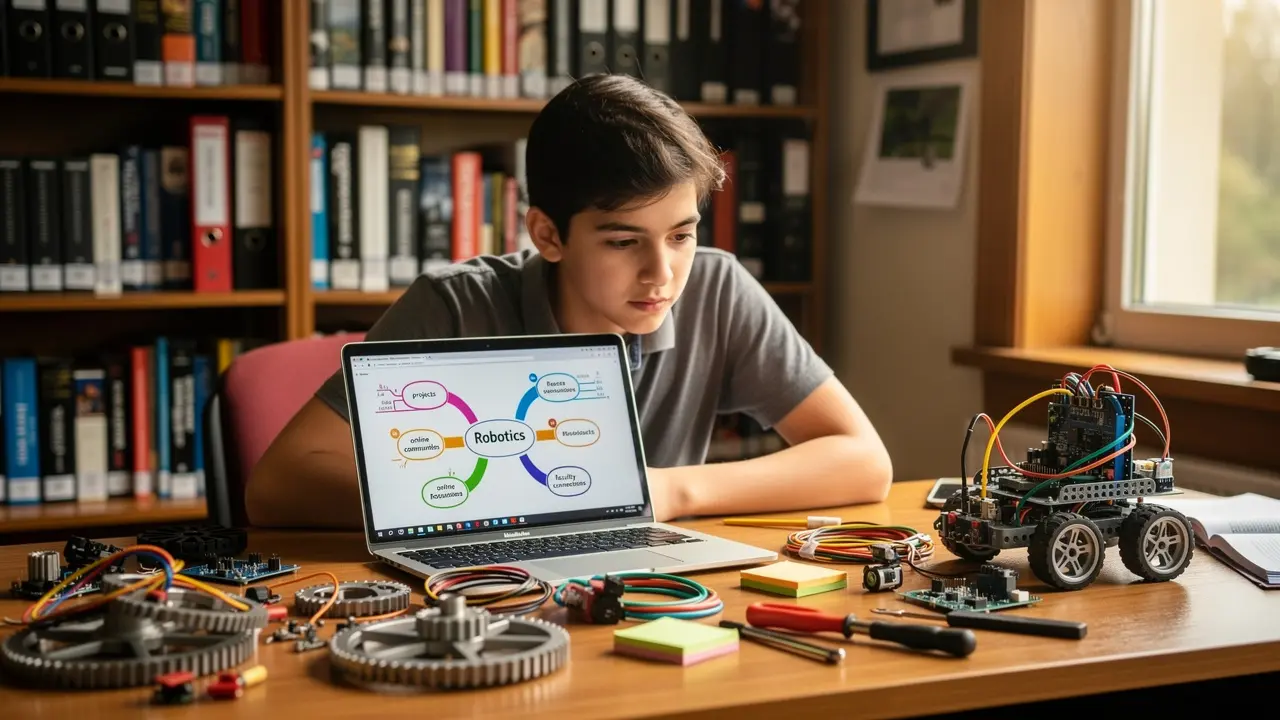
4 Steps to Find Robotics Research Opportunities as an Undergraduate

Introduction
The field of robotics is not only evolving rapidly but also presenting significant challenges for undergraduates seeking research opportunities. By identifying their personal interests and utilizing available resources, students can create pathways to meaningful projects that align with their academic goals.
Many students struggle to find suitable research opportunities in the competitive field of robotics, and without proper guidance, they may miss out on valuable experiences that could shape their careers.
Navigating this landscape effectively is crucial for students aiming to make impactful contributions to the field of robotics.
Identify Your Research Interests in Robotics
To embark on your study of machines, it is essential to identify the specific areas that intrigue you. The following steps will guide your exploration:
Self-Assessment: Evaluate your interests. Are you more drawn to mechanical design, programming, artificial intelligence, or human-robot interaction?
Research Trends: Explore current trends in automation by reading articles, attending webinars, or following related forums. This will help you identify hot topics and emerging fields.
Engage with Projects: Participate in hands-on projects or competitions, such as robotics clubs or hackathons, to gain practical experience and discover what you enjoy.
Consult Resources: Utilize online platforms like Pathways to Science to find materials and options that match your preferences.
By clearly defining your academic interests, you will enhance your ability to make informed decisions about your educational path.

Explore Available Robotics Research Platforms and Resources
Navigating the landscape of automation opportunities requires a strategic approach to resource utilization. Here’s a structured approach:
University Websites: Explore the engineering departments of universities that capture your interest. For example, the University of Michigan offers undergraduate study opportunities that allow students to work closely with faculty members on innovative projects. The new Ford Motor Company Automation Building at U-M promotes a cooperative study atmosphere, encouraging interdisciplinary involvement among scholars, which is essential for the success of the automation program.
Research Databases: Utilize specialized databases like Pathways to Science, which catalogs internships, fellowships, and summer research programs specifically in technology related to robotics. These platforms are invaluable for learning how to find robotics research opportunities as an undergraduate that align with your academic goals.
Online Communities: Participate in online forums and communities, such as the robotics subreddit on Reddit. These platforms enable you to connect with peers, share experiences, and learn about studies that others have faced.
Professional Organizations: Engage with professional organizations like the IEEE Robotics and Automation Society. These organizations often offer catalogs of study options, grants, and networking events that can enrich your academic journey. Faculty members frequently highlight the significance of undergraduate inquiry, stating that it greatly enhances the academic experience and equips students with knowledge on how to find robotics research opportunities as an undergraduate.
As the automation sector grows, seizing these opportunities now can significantly enhance your academic and professional trajectory.

Connect with Faculty and Research Advisors
Establishing relationships with faculty and mentors is essential for unlocking opportunities in the field of robotics. Here are key steps to foster meaningful relationships:
Attend Office Hours: Regularly visit your professors during office hours. Prepare thoughtful questions about their studies and express genuine interest in their work. Research indicates that 78% of educators believe strong teacher-student relationships enhance student engagement, underscoring its importance. Additionally, students who attend office hours are more likely to engage in research opportunities, highlighting the significance of this practice.
Participate in Classes: Actively engage in your classes, especially those centered on technology related to machines. This involvement helps you stand out and demonstrates your enthusiasm for the subject.
Network at Events: Attend seminars, workshops, and conferences related to robotics. Networking at these events can lead to valuable connections with faculty and industry professionals, opening doors to potential collaborative opportunities.
Utilize Online Platforms: Leverage platforms like Coltie to connect with faculty members. Coltie intelligently suggests matches between prospective students and graduate advisors, making it easier for students to find mentors. Create a profile that highlights your interests and experiences, including a video personal statement, which can enhance your visibility and appeal to faculty. Faculty can also enhance their profiles with videos that outline their studies and advising styles, fostering a more engaging connection.
Many students find it challenging to establish connections with faculty members, which can limit their opportunities in robotics. By proactively interacting with faculty and utilizing tools like Coltie, students can gain insights into how to find robotics research opportunities as an undergraduate and enhance their chances of securing positions in faculty-led projects. By actively engaging with faculty, students can significantly enhance their academic and career trajectories in robotics.

Apply for Robotics Research Positions Effectively
With your preferences outlined, resources examined, and connections established, it is essential to approach the application process strategically. Here’s how to do it effectively:
Tailor Your Resume: Customize your resume to highlight relevant skills and experiences related to robotics. Include projects, coursework, or internships that demonstrate your capabilities. Tailoring your resume to match job descriptions can boost your interview chances significantly, highlighting the value of targeted applications.
Create an Engaging Cover Letter: Compose a cover letter that expresses your enthusiasm for the specific position and how your experience aligns with the faculty's work. Mention any connections you have made with them. A well-crafted cover letter can increase attention to your application by up to 38%, making it a crucial component of your submission.
Prepare for Interviews: If chosen for an interview, investigate the faculty's recent work and formulate thoughtful questions. Practicing common interview questions related to your skills and experiences can enhance your performance. Candidates who understand the role and communicate effectively tend to perform better in interviews. Without a clear understanding of the role, candidates may struggle to convey their qualifications effectively.
Follow Up: After submitting your application or attending an interview, send a thank-you email expressing your appreciation for the opportunity and reiterating your interest in the position. This gesture can reinforce your enthusiasm and professionalism.
By implementing these strategies, you will help yourself stand out as a candidate and improve your odds of understanding how to find robotics research opportunities as an undergraduate. Ultimately, a well-prepared application can set you apart in a competitive field.

Conclusion
Identifying and securing robotics research opportunities as an undergraduate can significantly influence one's academic and professional trajectory. By understanding personal interests, exploring available resources, connecting with faculty, and applying effectively, students can navigate the competitive landscape of robotics research with confidence.
The article outlines a structured approach to uncovering these opportunities:
Self-Assessment: Pinpoint specific interests within robotics to focus efforts effectively.
Resource Utilization: Utilize various platforms and resources to discover available projects.
Faculty Relationships: Foster relationships with faculty members who can guide and support students in their research endeavors.
Tailored Applications: Highlight relevant skills and experiences in a customized application process.
However, many students find it difficult to identify and secure these opportunities due to a lack of guidance and resources. This proactive engagement not only enhances their educational experience but also positions them for future success in the field.
By actively participating in the robotics community, students can not only enhance their skills but also pave the way for future innovations in technology.
Frequently Asked Questions
Why is it important to identify research interests in robotics?
Identifying research interests in robotics is essential to embark on a focused study of machines and to make informed decisions about your educational path.
What is the first step in identifying my research interests in robotics?
The first step is self-assessment, where you evaluate your interests in areas such as mechanical design, programming, artificial intelligence, or human-robot interaction.
How can I stay updated on current trends in robotics?
You can stay updated by reading articles, attending webinars, and following related forums to explore current trends in automation.
What are some ways to gain practical experience in robotics?
Participating in hands-on projects or competitions, such as robotics clubs or hackathons, is a great way to gain practical experience and discover what you enjoy.
Where can I find resources to help identify my research interests in robotics?
Online platforms like Pathways to Science can be utilized to find materials and options that match your preferences in robotics.
List of Sources
Identify Your Research Interests in Robotics National Robotics Week — Latest Physical AI Research, Breakthroughs and Resources (https://blogs.nvidia.com/blog/national-robotics-week-2026) Robotics Research 2026: Forward-Looking Insight from ABI Research Analysts (https://abiresearch.com/blog/robotics-research) The 5 Robotics Trends In 2026 You Must Get Ready For Now | Bernard Marr (https://linkedin.com/posts/bernardmarr_the-5-robotics-trends-in-2026-you-must-get-activity-7385910302892265474-H5sw) State of Robotics 2026 Report: $38B Market, 12 Humanoids, VLA Adoption | Robotics Center of Silicon Valley (https://roboticscenter.ai/state-of-robotics-2026) Top 5 Global Robotics Trends 2026 (https://ifr.org/ifr-press-releases/news/top-5-global-robotics-trends-2026)
Explore Available Robotics Research Platforms and Resources Michigan Robotics | University of Michigan (https://robotics.umich.edu) Robotics Statistics for Manufacturers | DEVELOP (https://develop-llc.com/knowledge-base/automation-statistics-2025-in-robotics-manufacturing) Robotics Research: How Asia, Europe and America Invest (https://ifr.org/ifr-press-releases/news/robotics-research-goverment-programs-asia-europe-and-america-2025) UMich undergraduate robotics program to open this fall (https://michigandaily.com/news/umich-undergraduate-robotics-program-to-open-this-fall) Robotics Research Aims to Close Societal Gaps | Lab Manager (https://labmanager.com/robotics-research-aims-to-close-societal-gaps-27143)
Connect with Faculty and Research Advisors News (https://robopgh.org/news) International Federation of Robotics (https://ifr.org/P6) 25 Things to Know About Student Engagement (https://esparklearning.com/blog/statistics-student-engagement) 5+ Surprising Stats About Student Engagement - STEM Sports (https://stemsports.com/5-surprising-stats-about-student-engagement) Student Engagement in Learning Is Low. A Survey Offers Clues on How to Bring Them Back (https://marketbrief.edweek.org/meeting-district-needs/student-engagement-in-learning-is-low-a-survey-offers-clues-on-how-to-bring-them-back/2024/10)
Apply for Robotics Research Positions Effectively Job Search Statistics 2026: Trends and Success Rates (https://maxofjob.com/blog/job-search-statistics) Robotics Career - Crafting a Winning Robotics Resume: Essential Components and Tips (https://roboticscareer.org/news-and-events/news/68266) Resume statistics USA - The latest data for 2026 (https://standout-cv.com/usa/stats-usa/resume-statistics) 165 Resume Statistics: Cover Letters and Valuable Skills (https://flair.hr/en/blog/resume-statistics) What Is a Tailored Resume? The Science Behind It (https://resumly.ai/blog/the-science-behind-tailored-resumes)



Comments