

Comparing Robotics Research Experiences for College Students: Traditional vs. Innovative

Updated: Jun 16
Introduction
As robotics research evolves, college students face a critical decision between traditional and innovative research experiences.
While conventional programs offer structured learning and mentorship, they may leave students unprepared for the rapid changes in technology.
In contrast, innovative approaches emphasize interdisciplinary collaboration and hands-on projects, fostering creativity and real-world problem-solving skills.
Ultimately, the choice between these approaches could determine their readiness for future challenges in technology.
Overview of Traditional Robotics Research Experiences
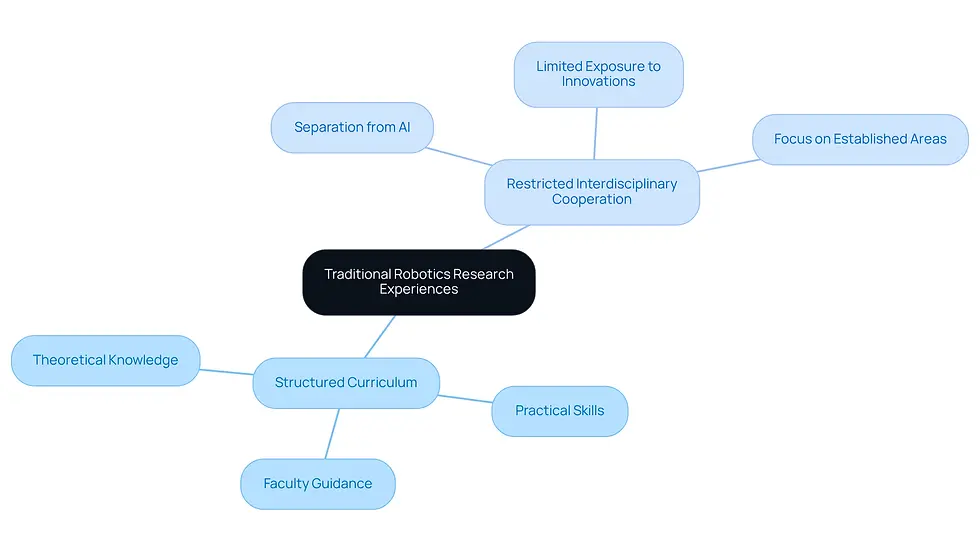
Conventional research in automation often lacks the flexibility required to keep pace with rapid technological advancements. These experiences typically include the following key components:
Structured Curriculum: Students adhere to a predefined curriculum that emphasizes both theoretical knowledge and practical skills in robotics. This often includes a focus on programming, mechanical design, and control systems, providing a solid foundation for understanding core concepts. Faculty members play a pivotal role in guiding learners through their robotics research experience for college students. Their expertise and experience are invaluable, providing insights that assist learners in navigating complex challenges and improving their learning outcomes.
Restricted Interdisciplinary Cooperation: Conventional initiatives frequently fail to fully utilize interdisciplinary methods, which can separate automation from other pertinent areas like artificial intelligence or cognitive science. This separation can limit learners' exposure to innovative ideas and methodologies, creating a barrier to their educational growth. The research focus in these programs is usually on established areas of technology, such as automation and control, while also providing robotics research experience for college students. As a result, new trends such as soft automation or human-machine interaction might garner less focus, possibly restricting learners' involvement with innovative advancements in the field.
However, conventional automation research backgrounds may lack the necessary adaptability and creativity to keep up with rapid technological changes. This statistic highlights the critical role these initiatives play in shaping the next generation of experts in the field.
Exploration of Innovative Robotics Research Approaches
Traditional educational approaches often struggle to keep pace with the rapid advancements in automation and technology. Innovative research methods in automation are characterized by their emphasis on collaboration, technology integration, and real-world applications. Key features include:
Interdisciplinary Collaboration: Innovative programs often encourage collaboration across various disciplines, integrating insights from computer science, engineering, and cognitive psychology to enhance robotics research.
Project-Based Learning: Students engage in hands-on projects that address real-world challenges, fostering creativity and problem-solving skills. This approach often includes competitions and collaborative projects with industry partners.
Use of Advanced Technologies: Incorporating cutting-edge technologies such as AI, machine learning, and simulation tools enables learners to explore intricate concepts and applications in automation.
Flexible Learning Environments: Innovative programs frequently employ online platforms and hybrid learning models, offering learners greater flexibility in how they interact with course materials and projects.
As a result, individuals who engage with these innovative methods are better positioned to thrive in the technology sector. Ultimately, embracing these innovative research methods is crucial for developing the skills necessary to excel in a fast-evolving technology landscape.

Comparative Analysis: Pros and Cons of Each Approach
As the robotics field evolves, the choice between traditional and innovative options for robotics research experience for college students becomes increasingly critical for aspiring professionals.
Traditional Robotics Research Experiences
Pros: Structured Learning: Provides a clear pathway for students, ensuring they acquire essential foundational knowledge critical for their development. Mentorship: Direct access to experienced faculty who can guide learners through complex topics, enhancing their understanding and skills. Established Reputation: Many traditional programs have a long-standing reputation, which can significantly enhance an individual's resume and job prospects.
Cons: Limited Flexibility: Rigid curricula can hinder students' ability to keep pace with rapid advancements in robotics, creating challenges in their future careers. Less Interdisciplinary Exposure: The lack of integration with other fields can lead to a narrow understanding of robotics, limiting students' ability to innovate and adapt in a multidisciplinary environment. Focus on Established Areas: May not cover cutting-edge topics, leaving students less prepared for future challenges in the industry.
Innovative Robotics Research Approaches
Pros: Adaptability: Programs can swiftly incorporate new technologies and methodologies, ensuring alignment with industry changes and demands. For instance, the automotive industry has an adoption rate of up to 7.5 robots per thousand workers, highlighting the need for educational programs to keep pace with such rapid advancements. Enhanced Engagement: Project-based learning promotes creativity and practical problem-solving skills, making the educational journey more dynamic and relevant. Interdisciplinary Learning: Promotes cooperation among different areas, enhancing the educational experience and expanding individuals' skill sets.
Cons: Variable Structure: Some innovative programs may lack the rigor and structure of traditional programs, potentially leading to gaps in foundational knowledge that are crucial for advanced study. Resource Intensive: May require more resources and institutional support to implement effectively, which can pose challenges for some universities. Less Established Reputation: Newer initiatives may not yet possess the same recognition as traditional ones, which could affect individuals' job prospects in a competitive market.
This analysis highlights the significance of aligning educational decisions with personal objectives and preferences, particularly in the context of providing robotics research experience for college students. Ultimately, the choice of educational approach can significantly influence one's readiness to tackle future challenges in robotics and automation.

Suitability of Approaches for Diverse Student Needs
Choosing between conventional and novel technology research opportunities can be a daunting task for students, as it directly impacts their educational journey and career prospects.
Traditional Robotics Research Experiences
Best For: Students who thrive in structured learning environments with clear expectations and guidance. Those seeking mentorship from experienced faculty, benefiting from a strong foundational knowledge base. Individuals pursuing careers in recognized areas of automation, where conventional knowledge and methodologies are highly valued.
Innovative Robotics Research Approaches
Best For: Students who excel in dynamic, project-based environments and prefer hands-on learning experiences. Those interested in interdisciplinary collaboration, eager to explore cutting-edge technologies and innovative solutions. Individuals looking to enter rapidly evolving fields where adaptability, creativity, and problem-solving skills are essential.
Ultimately, students should let their personal learning preferences and career aspirations guide their choice between traditional and innovative approaches. By carefully evaluating their options, students can position themselves for success in the ever-evolving field of robotics.

Conclusion
The distinction between traditional and innovative robotics research approaches significantly impacts students' educational experiences. Traditional methods provide a structured learning environment that emphasizes foundational knowledge and mentorship, essential for students seeking a clear pathway in established areas of automation. However, this rigidity can limit students' adaptability in a fast-changing tech environment.
In contrast, innovative robotics research approaches foster collaboration, creativity, and real-world problem-solving through project-based learning and the integration of advanced technologies. These methods not only engage students more dynamically but also prepare them for the demands of a fast-paced industry. This choice, however, positions students to thrive in a dynamic industry.
Ultimately, students should choose between traditional and innovative robotics research experiences based on their personal learning styles and career goals. By carefully considering the strengths and weaknesses of each approach, students can better position themselves for success in the ever-evolving field of robotics. Choosing the right educational path not only influences academic success but also shapes future innovations in robotics.
Frequently Asked Questions
What are the key components of traditional robotics research experiences?
Traditional robotics research experiences typically include a structured curriculum that emphasizes theoretical knowledge and practical skills in robotics, focusing on programming, mechanical design, and control systems. Faculty members guide students through their research experiences, providing valuable insights and support.
How does the structured curriculum benefit students in robotics?
The structured curriculum provides students with a solid foundation for understanding core concepts in robotics, equipping them with essential theoretical knowledge and practical skills necessary for their research and future careers.
What limitations exist in traditional robotics research regarding interdisciplinary cooperation?
Traditional robotics research often lacks full utilization of interdisciplinary methods, which can separate automation from related fields like artificial intelligence or cognitive science. This separation limits students' exposure to innovative ideas and methodologies, hindering their educational growth.
What areas of technology do conventional robotics research programs typically focus on?
Conventional robotics research programs usually focus on established areas of technology, such as automation and control systems, while providing robotics research experience for college students. However, they may give less attention to emerging trends like soft automation or human-machine interaction.
Why is adaptability important in robotics research experiences?
Adaptability is crucial in robotics research experiences because the field is rapidly evolving with technological advancements. Conventional research backgrounds may lack the necessary creativity and flexibility to keep pace with these changes, which is essential for shaping the next generation of experts in robotics.
List of Sources
Overview of Traditional Robotics Research Experiences Benefits of Robotics in Education (https://semo.edu/blog/blog-posts/benefits-robotics-education) Educational Robots Statistics and Facts (2026) (https://scoop.market.us/educational-robots-statistics) Why Robotics? — American Robotics Academy (https://roboticsacademy.com/why-robotics) ARM Institute Endorses More Robotics Education Programs (https://arminstitute.org/news/arm-institute-endorses-two-more-robotics-education-programs) Robotics in Higher Education: A Strategic Advantage for Future-Ready Graduates (https://scholaro.com/db/News/the-role-of-robotics-in-college-students-315)
Exploration of Innovative Robotics Research Approaches National Robotics Week — Latest Physical AI Research, Breakthroughs and Resources (https://blogs.nvidia.com/blog/national-robotics-week-2026) Robotics | MIT News | Massachusetts Institute of Technology (https://news.mit.edu/topic/robotics) Robots run this laboratory in Japan — and are changing how scientists work (https://nature.com/articles/d41586-026-01625-2) News (https://cris.ucr.edu/about/news) The Latest CRB News: Center for Robotics and Biosystems - Northwestern University (https://robotics.northwestern.edu/news-events)
Comparative Analysis: Pros and Cons of Each Approach A new study measures the actual impact of robots on jobs. It’s significant. | MIT Sloan (https://mitsloan.mit.edu/ideas-made-to-matter/a-new-study-measures-actual-impact-robots-jobs-its-significant) Robotics | MIT News | Massachusetts Institute of Technology (https://news.mit.edu/topic/robotics) Robotics and Automation Stories, Videos, Articles, Interviews, Reviews & News | RoboticsTomorrow (https://roboticstomorrow.com) The Robot Report - Robotics News, Analysis & Research (https://therobotreport.com/robotics-news) Top 5 Global Robotics Trends 2026 (https://ifr.org/ifr-press-releases/news/top-5-global-robotics-trends-2026)
Suitability of Approaches for Diverse Student Needs New Report Examines the Impact of Undergraduate Research Experiences for STEM Students (https://nationalacademies.org/news/new-report-examines-the-impact-of-undergraduate-research-experiences-for-stem-students) Robotics in Higher Education: A Strategic Advantage for Future-Ready Graduates (https://scholaro.com/db/News/the-role-of-robotics-in-college-students-315) The future of educational robotics: enhancing education, bridging the digital divide, and supporting diverse learners (https://aiforgood.itu.int/the-future-of-educational-robotics-enhancing-education-bridging-the-digital-divide-and-supporting-diverse-learners) HU professors, students launch robotics research - Harrisburg University (https://harrisburgu.edu/news/hu-professors-students-launch-robotics-research)



Comments