
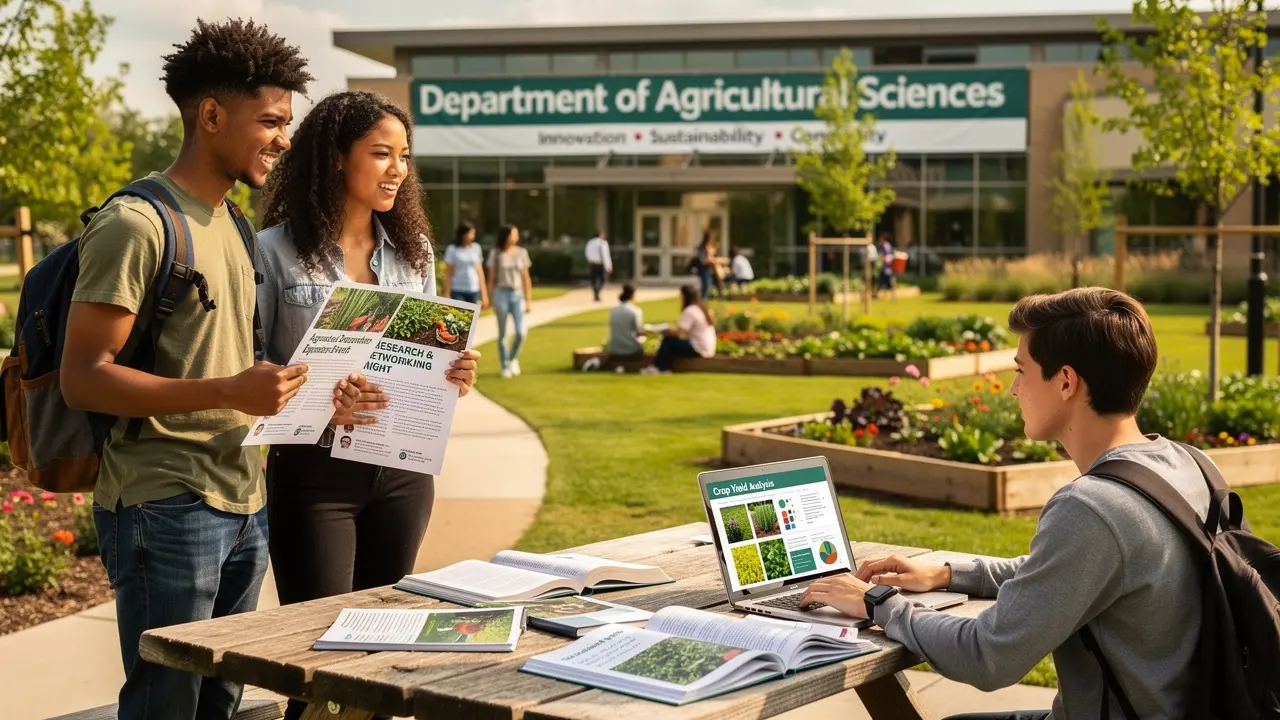
How to Find Agriculture Research Opportunities as an Undergraduate

Introduction
Identifying agriculture research opportunities presents a significant challenge for undergraduates eager to explore this essential field. By effectively using academic resources and online platforms, students can discover numerous opportunities that align with their interests and career goals. Navigating the vast array of opportunities can be overwhelming for students. This guide offers a roadmap to discovering and securing research positions that can significantly impact a student's academic journey and career trajectory.
Explore Available Agriculture Research Opportunities
To effectively learn how to find agriculture research opportunities as an undergraduate, it is essential to adopt a structured approach that begins with identifying your specific interests. Here are some actionable steps:
Identify Your Interests: Consider which aspects of farming most interest you. Are you drawn to crop science, sustainable practices, or agricultural technology? Narrowing down your interests will help focus your search.
Academic Organizations: Explore universities and academic institutions celebrated for their agricultural programs. Institutions such as the University of California, Davis, and Iowa State University are acknowledged for their significant contributions in agriculture.
Utilize Online Databases: Explore platforms such as Zintellect, which provides a comprehensive application management system for various study options. This resource allows users to create profiles and apply for opportunities year-round, ensuring access to a wide range of programs.
Check for Summer Programs: Many universities offer summer study programs designed for undergraduates. For example, Purdue University’s College of Agriculture provides practical exploration opportunities that can greatly improve your academic journey.
Stay Informed: Regularly check agricultural studies journals and institutional websites to keep up with new possibilities. This proactive strategy helps you uncover opportunities that might not be widely advertised, ensuring you seize valuable experiences.
By following a systematic approach, you can learn how to find agriculture research opportunities as an undergraduate that align with your interests and goals.

Utilize University Resources and Online Platforms
Navigating how to find agriculture research opportunities as an undergraduate requires strategic use of available resources. Here’s how to maximize your efforts:
Visit Your University’s Career Center: Career centers are crucial hubs for students looking for internships and academic experiences. They offer workshops and personalized assistance, significantly impacting job offers; for instance, graduating seniors who utilized career services received an average of 1.24 job offers, compared to just 1.0 for those who did not. Additionally, students using career center help to find an internship are 2.2 times more likely to secure a paid internship than those who do not.
Engage with Academic Advisors: Arrange a meeting with your academic advisor to discuss your study interests. Advisors can offer valuable perspectives on faculty members engaged in pertinent studies and may know about forthcoming prospects. Statistics indicate that students who interact with academic advisors are more likely to discover personalized academic options, improving their chances of success.
Explore Digital Platforms: Use platforms such as ResearchGate and LinkedIn to connect and find scholarly prospects. Joining groups centered on farming can link you with experts and peers, boosting your opportunities for discovering appropriate projects. For instance, effective networking via these platforms has enabled many students to uncover distinct options in agriculture.
Employ Social Media: Follow pertinent hashtags on platforms like Twitter and Instagram, such as #AgResearch or #AgricultureInternships, to remain informed about postings regarding available positions. This approach can broaden your search and connect you with real-time information.
Check University Websites: Regularly visit the websites of agricultural departments within your university. These sites frequently showcase notifications regarding projects and chances for student participation, ensuring you stay updated about accessible options.
Utilizing these strategies can enhance your understanding of how to find agriculture research opportunities as an undergraduate, leading to a more successful academic journey in agriculture.

Network with Faculty and Research Advisors
Establishing connections with faculty and research advisors is crucial for unlocking academic opportunities. Here are steps to effectively connect with faculty and research advisors:
Attend Departmental Events: Departmental events provide valuable opportunities to connect with faculty and explore their research. Participate in seminars, workshops, and networking events hosted by your department.
Contact via Email: Compose a tailored email to faculty members whose work aligns with your interests. Introduce yourself, express your enthusiasm for their research, and inquire about potential projects. Be concise and respectful of their time.
Follow Up: If you do not receive a response, it is advisable to send a courteous follow-up email after one to two weeks. Faculty members often have numerous commitments, and a gentle reminder can help keep your inquiry on their radar.
Seek Mentorship: If you establish a connection with a faculty member, consider asking them to be your mentor. A mentor can provide guidance and support, opening doors to various academic opportunities.
Utilize Peer Networks: Engage with fellow students involved in academic projects. They can offer insights into their experiences and may know of openings in their labs or projects.
By actively engaging with faculty and peers, you can discover how to find agriculture research opportunities as an undergraduate that may otherwise remain hidden.

Prepare and Submit Your Research Applications
To maximize your chances of securing agriculture research opportunities, it is essential to follow a structured approach:
Tailor Your Resume and Cover Letter: Customize your resume and cover letter for each submission. Highlight relevant coursework, skills, and experiences that align with the position in the field. Tailored resumes significantly increase the chances of securing interviews, as they demonstrate a clear connection between your background and the role.
Gather Supporting Documents: Ensure you have all necessary supporting documents ready, including transcripts, letters of recommendation, and a portfolio of work. Keeping these documents up to date is crucial, as many applications require them to be submitted alongside your application.
Create a Robust Proposal: If a proposal is necessary, prepare one that clearly delineates your interests, objectives, and methodology. A well-structured proposal not only showcases your understanding of the topic but also your ability to conduct research effectively.
Submit Requests on Time: Adhere to submission deadlines, providing your materials well in advance. The application closing date for the Agriculture and Food Research Initiative - Education and Workforce Development is December 31, 2026. Submitting your materials late can lead to missed opportunities.
Utilize Resources: Browse opportunities through the Zintellect catalog, which offers a comprehensive list of available positions and internships in agriculture. This tool can help simplify your submission process.
Prepare for Interviews: If chosen for an interview, investigate the faculty member’s work and prepare thoughtful questions. Practicing common interview questions can help you present yourself confidently and make a strong impression.
Follow Up: After submitting your application or completing an interview, send a thank-you email to convey your gratitude for the chance. This simple gesture can leave a lasting positive impression and reinforce your interest in the position.
Implementing these strategies can significantly boost your prospects by teaching you how to find agriculture research opportunities as an undergraduate and support your academic journey. Additionally, it's worth noting that the USDA made a historic $262.5 million investment in 2023 to support over 60 minority-serving institutions, which underscores the importance of seeking out these funding opportunities.

Conclusion
Navigating the landscape of agricultural research opportunities as an undergraduate can be challenging yet rewarding. By identifying personal interests and leveraging available resources, students can access a wealth of opportunities that align with their academic and career goals.
Key strategies include:
Exploring university resources
Utilizing online platforms
Actively networking with faculty and peers
Engaging with career centers, participating in departmental events, and staying informed through digital channels can significantly enhance the discovery of research opportunities. Furthermore, preparing tailored applications and following up with potential mentors can set students on a path to success in their agricultural research endeavors.
By actively engaging in this process, students can not only enhance their academic journey but also contribute to the future of agriculture in meaningful ways. Embrace the journey and seize the opportunities that await in this dynamic and impactful field.
Frequently Asked Questions
How can I start finding agriculture research opportunities as an undergraduate?
Begin by identifying your specific interests within agriculture, such as crop science, sustainable practices, or agricultural technology. This will help focus your search.
Which academic organizations should I consider for agriculture research?
Look into universities and academic institutions known for their agricultural programs, such as the University of California, Davis, and Iowa State University, which are recognized for their contributions to agriculture.
What online resources can help me find agriculture research opportunities?
Utilize platforms like Zintellect, which offers a comprehensive application management system for various study options, allowing you to create profiles and apply for opportunities year-round.
Are there any summer programs available for agriculture research?
Yes, many universities, including Purdue University’s College of Agriculture, offer summer study programs designed for undergraduates, providing practical exploration opportunities.
How can I stay informed about new agriculture research opportunities?
Regularly check agricultural studies journals and institutional websites to keep up with new possibilities. This proactive approach helps you discover opportunities that may not be widely advertised.
List of Sources
Explore Available Agriculture Research Opportunities Current Research Opportunities (https://orise.orau.gov/usda-ars/current-research-opportunities.html) pathwaystoscience.org (https://pathwaystoscience.org/programhub.aspx?sort=SUM-UMinnesota-SOARREEU)
Utilize University Resources and Online Platforms The Value of Career Services (https://naceweb.org/career-development/organizational-structure/the-value-of-career-services) New study finds ample career opportunities in agriculture, food, and natural resources - Brownfield Ag News (https://brownfieldagnews.com/news/new-study-finds-ample-career-opportunities-in-agriculture-food-and-natural-resources) UT Extension Internship Applications Open for Summer 2026 | Institute News (https://utianews.tennessee.edu/ut-extension-internship-applications-open-for-summer-2026) Under Represented Students STEP-Up to Careers in Agriculture (https://usda.gov/about-usda/news/blog/under-represented-students-step-careers-agriculture)
Network with Faculty and Research Advisors The Importance of Professor and Student Connection (https://apu.edu/articles/the-importance-of-the-professor-and-student-connection) Emailing Faculty About Research Opportunities (Example Included) (https://career.arizona.edu/blog/2023/04/30/emailing-faculty-about-research-opportunities-example-included) The Impact of Social Relationships on College Student Learning during the Pandemic: Implications for Sociologists - PMC (https://pmc.ncbi.nlm.nih.gov/articles/PMC10271819) Tips for Writing an Email to Faculty about Research | Office for Undergraduate Research (https://our.unc.edu/find/emails-to-faculty) The Do’s and Don’ts of Contacting Professors about Research | SENR (https://senr.osu.edu/undergraduate/undergraduate-research/dos-and-donts)
Prepare and Submit Your Research Applications Applications open for 2026 Ag-Tech Career Exploration program | Stuttgart Daily Leader (https://stuttgartdailyleader.com/applications-open-for-2026-ag-tech-career-exploration-program) Opportunity Listing - Agriculture and Food Research Initiative Competitive Grants Program Education and Workforce Development (https://simpler.grants.gov/opportunity/5bf434f3-5a29-4c07-a179-1ba41c662fd3) Internships and Career Opportunities (https://usda.gov/farming-and-ranching/agricultural-education-and-outreach/youth-agriculture/internships-and-career-opportunities) Current Research Opportunities (https://orise.orau.gov/usda-ars/current-research-opportunities.html) Yearly Success and Progress Rates (https://nscresearchcenter.org/yearly-success-and-progress-rates)


Comments