

How to Find Communication Research Opportunities as an Undergraduate

Updated: Jul 4
Introduction
Many undergraduates struggle to find enriching communication research opportunities due to a lack of awareness about available options. This guide will help students explore various pathways to discover valuable research experiences, including:
Internships
Assistant positions
Independent study projects
Summer research programs
With numerous avenues to explore, students need effective strategies to identify their research interests and leverage university resources for securing opportunities.
Understand Communication Research Opportunities
Many students overlook valuable opportunities in communication research because they do not know how to find communication research opportunities as an undergraduate. Understanding how to find communication research opportunities as an undergraduate is essential for embarking on a successful journey in communication study. Communication research can take many forms, including:
Internships: Many universities and organizations offer internships that allow students to gain hands-on experience in research settings. These can be found through university career services or dedicated internship platforms.
Assistant Positions: Faculty members often seek undergraduate assistants to help with ongoing projects. This is a great way to gain experience and build relationships with faculty.
Independent Study Projects: Students can create their own study initiatives, often with the support of a faculty mentor. This allows for exploration of personal interests within the field.
Summer Research Programs: Many institutions offer summer programs specifically for undergraduates to participate in scholarly activities, often providing stipends or academic credit.
Recognizing and pursuing how to find communication research opportunities as an undergraduate can significantly enhance your academic and professional prospects.

Identify Your Research Interests
To effectively identify your research interests in communication, consider the following steps:
Reflect on Your Coursework: Think about the classes that have captivated you the most. What topics ignited your curiosity? Jot down specific themes or concepts that resonated with you. Students typically gravitate toward subjects that reflect their personal goals and values, making this reflection essential.
Explore Current Trends: Stay informed about emerging trends in communication. Regularly read articles, journals, and blogs to discover what areas are currently being researched and discussed. Engaging with contemporary issues can significantly enhance your connection to the field. Based on recent studies, comprehending current trends can result in more knowledgeable academic pursuits.
Engaging with Faculty: Start discussions with professors to gain insights into their research areas. They can offer valuable insights into various topics and may suggest areas that align with your interests. Faculty engagement is crucial, as it can lead to mentorship opportunities and collaborative projects. Coltie facilitates this engagement by empowering students with better information and connections, enhancing visibility and collaboration through tools like the Opportunity Planner and Event Management features.
Participate in Workshops: Attend workshops or seminars focused on communication research. These events introduce you to various methodologies and subjects, assisting you in expanding your viewpoint and honing your preferences. Many students find that participating in these events helps them uncover new passions. Coltie's platform can assist you in learning how to find communication research opportunities as an undergraduate and connect with these opportunities.
Refine Your Focus: After creating a list of preferences, refine it to 2-3 specific areas. This focused approach not only enhances clarity but also significantly increases your chances of achieving your academic goals. Articulating your academic interests can be challenging, especially in a competitive academic environment.
By adhering to these steps and using Coltie's innovative platform, you can define your academic interests and create a strong base for your scholarly journey in the area of study. Interacting with the intricacies of the field will not only improve your comprehension but also equip you for upcoming challenges in the study.

Utilize University Resources and Networks
To enhance your chances of discovering communication research opportunities, it is essential to leverage university resources and networks effectively, including innovative tools like Coltie:
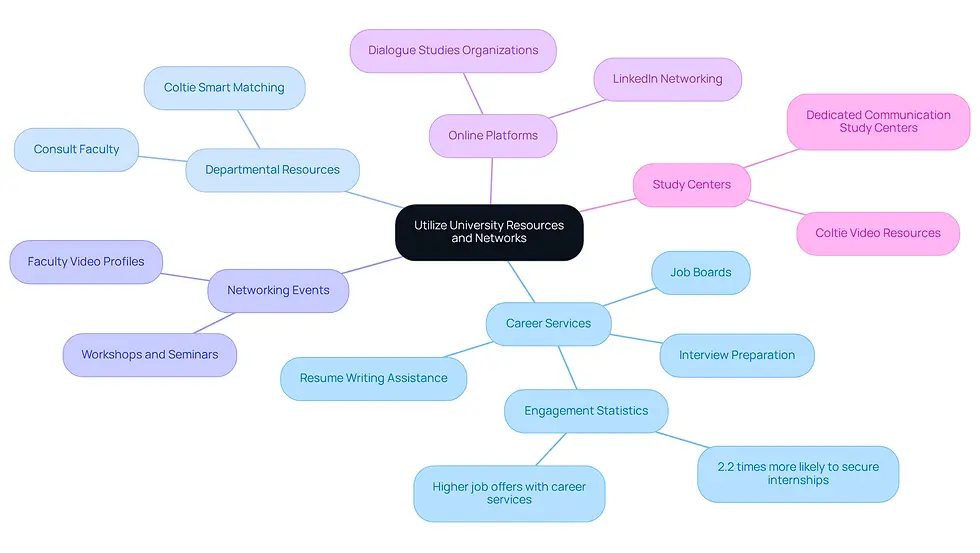
Career Services: Most universities feature a career services office that plays a crucial role in connecting students with internships and research positions. These offices typically maintain job boards and offer assistance with resume writing and interview preparation. Data indicates that students who engage with career services are 2.2 times more likely to secure internships, with those utilizing these services being more likely to obtain paid internships.
Departmental Resources: Consult your communication department for specific study options. Faculty members often announce vacancies for assistants or projects, offering direct routes to participation in ongoing initiatives. With Coltie, you can utilize smart matching to connect with faculty who align with your academic pursuits, improving your chances of discovering fitting options.
Networking Events: Participate in networking events, workshops, and seminars organized by your university. These gatherings are excellent for meeting faculty and peers who share your academic interests, fostering connections that can lead to collaborative opportunities. Coltie enhances this experience by allowing faculty to showcase their studies and advising styles through video profiles, making it easier for you to find the right match.
Online Platforms: Utilize platforms like LinkedIn to connect with professionals in the industry. Participating in organizations centered on dialogue studies can keep you updated on new opportunities and trends.
Study Centers: Numerous universities maintain dedicated study centers focusing on communication studies. Interacting with these centers can uncover available roles or projects, enabling you to contribute to important investigative efforts. Additionally, Coltie's platform allows you to view videos about relevant topics, further enriching your understanding of the field.
Many students find it challenging to navigate the vast array of resources available for research opportunities. By leveraging these resources, students can discover how to find communication research opportunities as an undergraduate, which will enhance their chances of success in securing valuable research positions. Engaging with these resources, especially Coltie's smart matching and video profiles, helps you uncover valuable study opportunities and build a supportive network for your academic and professional journey.
Prepare and Submit Your Applications
To maximize your chances of securing communication research opportunities, follow these structured steps:
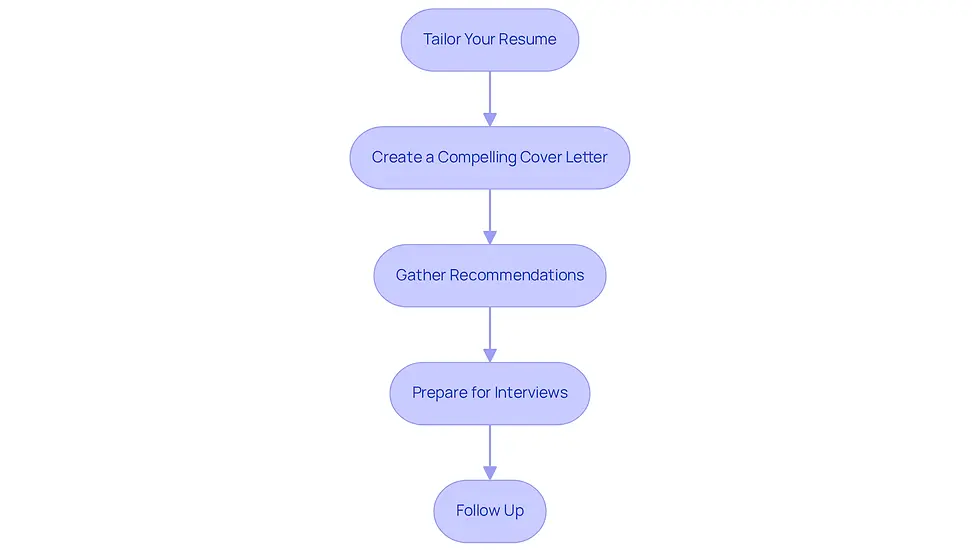
Tailor Your Resume: Customize your resume to emphasize relevant coursework, skills, and experiences pertinent to communication studies. Highlight any prior positions, internships, or projects that demonstrate your capabilities. Many applicants struggle to condense their experiences into a concise format, so aim for a resume that is no longer than two pages.
Create a Compelling Cover Letter: Compose a cover letter that expresses your enthusiasm for the particular study opportunity. Clearly articulate why you are a suitable candidate and how your interests align with the project objectives. Incorporate keywords from the job description to enhance visibility while avoiding jargon to maintain clarity.
Gather Recommendations: Request letters of recommendation from professors or professionals who can vouch for your investigative potential. Provide them with details about the position to help them tailor their letters effectively, ensuring they can speak to your abilities and potential as a researcher.
Prepare for Interviews: If chosen for an interview, conduct comprehensive research on the faculty member's work and the specific project. Be ready to discuss your passions and how you can add value to their projects.
Follow Up: After submitting your application, consider sending a courteous follow-up email to express your ongoing interest in the position. This demonstrates professionalism and enthusiasm, which can positively influence the hiring decision.
Ultimately, understanding how to find communication research opportunities as an undergraduate can set you apart in a competitive field.
Conclusion
Many students feel overwhelmed by the vast array of research opportunities available to them, yet exploring these options is crucial for academic and professional success. By understanding the various types of opportunities available - internships, assistant positions, and independent study projects - students can enhance their educational experience and prepare for future challenges.
Key strategies for identifying and pursuing these opportunities include:
Reflecting on personal interests
Engaging with faculty
Utilizing university resources
Actively participating in networking events
Each of these steps not only clarifies research interests but also fosters valuable connections that can lead to collaborative projects and mentorship. Additionally, preparing tailored applications and following up with potential mentors can further increase the likelihood of securing desired positions.
This proactive approach not only enhances their resumes but also deepens their understanding of the field. By actively engaging with these opportunities, students can unlock their potential and make significant contributions to the field of communication studies.
Frequently Asked Questions
Why is it important to find communication research opportunities as an undergraduate?
Finding communication research opportunities is essential for embarking on a successful journey in communication study, as it enhances academic and professional prospects.
What types of communication research opportunities are available for undergraduates?
Communication research opportunities can include internships, assistant positions, independent study projects, and summer research programs.
How can students find internships related to communication research?
Students can find internships through university career services or dedicated internship platforms that offer hands-on experience in research settings.
What are assistant positions in communication research?
Assistant positions involve working with faculty members who seek undergraduate assistants to help with ongoing research projects, providing valuable experience and relationship-building opportunities.
What are independent study projects?
Independent study projects allow students to create their own study initiatives, often with the support of a faculty mentor, enabling them to explore personal interests within the field of communication.
What are summer research programs?
Summer research programs are offered by many institutions specifically for undergraduates to participate in scholarly activities, often providing stipends or academic credit.
List of Sources
Understand Communication Research Opportunities knightcolumbia.org (https://knightcolumbia.org/page/summer-2026-research-policy-communications-internship) Research & Communications Intern, Independent America — Summer 2026 (https://instituteforglobalaffairs.org/announcements/2026/02/job-opening-research-and-communications-intern) CLOSED U.S. News and World Report Summer Internships (https://englishinternships.byu.edu/Internships/u-s-news-and-world-report-summer-internships) 2026 Communication Internships | WayUp (https://wayup.com/s/internships/communication) Internship Statistics U.S. 2026 | Trends, Studies, Data (https://standout-cv.com/usa/stats-usa/internship-statistics)
Identify Your Research Interests New Report Recommends Research Agenda for Effective Science Communication (https://nationalacademies.org/news/new-report-recommends-research-agenda-for-effective-science-communication) Cision Unveils "Inside PR 2026": The Definitive Report on PR Trends, AI Adoption, and the Future of Communications (https://prnewswire.com/news-releases/cision-unveils-inside-pr-2026-the-definitive-report-on-pr-trends-ai-adoption-and-the-future-of-communications-302652945.html) 7 Communications Trends for 2026 — The Communications Network (https://comnetwork.org/blog/7-communications-trends-for-2026) Communications trends in 2026: what’s changing and why it matters (https://greenhouse.agency/blog/communications-trends-in-2026-whats-changing-and-why-it-matters) How to Choose a Research Topic in 2026 (https://worldacademic.press/blog/52)
Utilize University Resources and Networks Communication and Outreach | VPR at JHU (https://research.jhu.edu/researchcommunication) How to Use Data to Drive Student Engagement with Career Services - uConnect (https://gouconnect.com/career-everywhere/how-to-use-data-to-drive-student-engagement-with-career-services) The Value of Career Services (https://naceweb.org/career-development/organizational-structure/the-value-of-career-services) News | Department of Communication (https://communication.umd.edu/news) Calendar | Join Media Events Today for Career Growth — The Center for Communication (https://centerforcommunication.org/calendar)
Prepare and Submit Your Applications How to Write a Good Cover Letter for a Research Position | Earthlab (https://earthlab.colorado.edu/blog/how-write-good-cover-letter-research-position) Cover Letter Writing (https://com.miami.edu/career-connections/career-resources/cover-letter-writing) 165 Resume Statistics: Cover Letters and Valuable Skills (https://flair.hr/en/blog/resume-statistics) How to Write a Cover Letter That Actually Gets You Hired in 2026 | Qamla (https://qamla.com/blogs/how-to-write-a-cover-letter-that-gets-you-hired-2026) Every year, my most-read blog is the annual Executive Resume Trends report. | Adrienne Tom (https://linkedin.com/posts/adriennetom_executive-resume-trends-for-2026-what-works-activity-7396543966214680576-IsMR)



Comments