
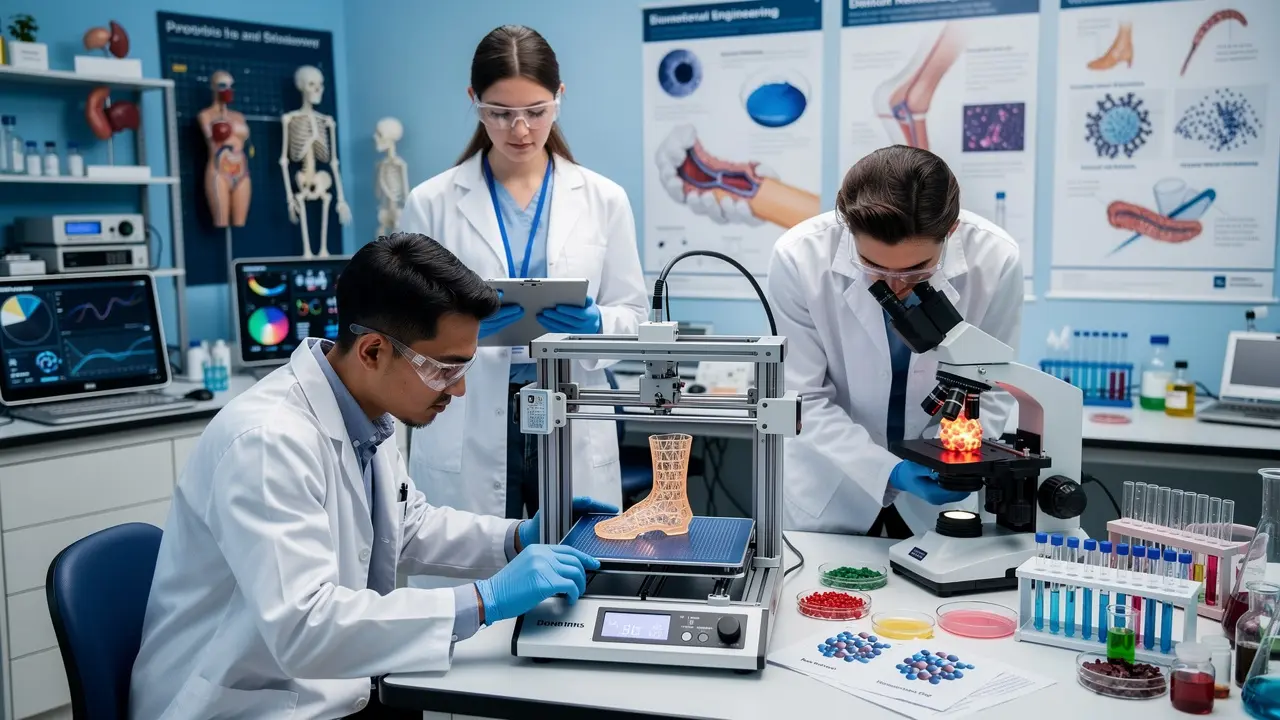
Is Biomedical Engineering a Good Major? Explore Its Value and Impact

Updated: Jun 13
Introduction
Biomedical engineering offers a unique intersection of innovation and healthcare, presenting significant career opportunities in a rapidly evolving field. This dynamic discipline combines principles of design, biology, and technology to address pressing medical challenges.
Many students are uncertain about the value of a biomedical engineering degree in a rapidly changing healthcare environment. However, understanding the distinct advantages of this interdisciplinary field can significantly influence your career trajectory in medicine and technology.
Understand the Interdisciplinary Nature of Biomedical Engineering
Biomedical technology uniquely combines design principles with biology, medicine, and technology to address pressing healthcare challenges. This interdisciplinary framework enables students to tackle complex healthcare issues by utilizing technical solutions for biological problems. For instance, biomedical engineers play a crucial role in developing medical devices, requiring proficiency in mechanics, materials science, and human physiology. Recent advancements include:
Creation of nanoparticles that boost immune responses against cancer
Development of innovative medical devices that improve patient outcomes
Such integration enhances graduates' skill sets and significantly improves their employability across various sectors, including healthcare, academia, and technology. Collaboration among professionals from diverse backgrounds drives innovation, leading to solutions that enhance patient care and improve health outcomes. Significantly, interdisciplinary education in health technology is increasingly acknowledged for its role in preparing students for a broad range of career paths, from academia to biotechnology and clinical practice. Institutions such as Northwestern's BME community play a crucial role in fostering collaboration and preparing students to navigate the ethical dimensions of emerging technologies. As a result, graduates are not only prepared for diverse career paths but are also positioned to lead advancements in medical technology that can significantly impact patient care.

Explore Diverse Career Opportunities in Biomedical Engineering
Biomedical engineering graduates have diverse career options, including roles as:
Medical device engineers
Clinical engineers
Scientific researchers
The Bureau of Labor Statistics forecasts a 5.2% employment increase for engineers in the medical field from 2024 to 2034, indicating a strong demand for professionals in:
Hospitals
Research institutions
Manufacturing companies
An aging population and increasing medical needs drive this demand, emphasizing engineers' essential role in advancing health solutions. For instance, medical engineers may:
Create prosthetics
Develop advanced imaging equipment
Engage in groundbreaking regenerative medicine projects
Choosing from diverse career paths enhances job satisfaction and enables graduates to align their work with their interests and values. Additionally, gaining practical experience through internships and co-op programs is crucial for securing employment in this competitive job market. However, the competitive nature of the job market necessitates that graduates distinguish themselves through practical experience. As the healthcare landscape evolves, the role of medical engineers will be pivotal in shaping future innovations that enhance patient care.

Assess the Impact of Biomedical Engineering on Healthcare and Technology
Biomedical technology is not just enhancing healthcare; it is fundamentally reshaping how we approach medical challenges.
Advancements in medical imaging, such as MRI and CT scans, have revolutionized diagnostics, enabling earlier and more accurate detection of diseases. Traditional diagnostic methods often fall short in accuracy and timeliness, leading to delayed treatments.
Medical engineers are at the forefront of creating life-saving devices like pacemakers and insulin pumps, significantly improving patients' quality of life.
Artificial intelligence and machine learning are driving the development of personalized medicine, where treatments can be tailored to individual patients based on their unique biological profiles.
According to recent statistics, the job-growth outlook for bioengineers and healthcare engineers is projected to be 5% between 2024 and 2034. This growth indicates a robust demand for skilled professionals in biomedical technology. Moreover, the worldwide biotechnology market, estimated at $1.55 trillion in 2024, is projected to expand to $4.61 trillion by 2034, highlighting the economic importance of health technology advancements.
As aspiring professionals consider their options, they may wonder if biomedical engineering is a good major, especially with educational pathways like the online Master of Science in Biomedical Engineering program at Case Western Reserve University, which can be completed in as few as 18 months and provides the necessary skills to contribute to this dynamic field. This clearly shows how crucial medical technology is in shaping the future of medicine. As Dr. Daniel Kraft observed, 'Artificial intelligence is reshaping the future of medical technology, revolutionizing diagnostics, advancing personalized treatment, and transforming how clinicians and researchers approach health innovation.'
As we embrace these advancements, the future of healthcare will depend on our ability to integrate technology with compassionate care.

Investigate Academic and Research Opportunities in Biomedical Engineering
Biomedical engineering students encounter a myriad of academic opportunities that significantly enrich their educational journey. Many universities offer specialized programs that allow students to engage in innovative projects. These projects often involve collaboration with healthcare organizations and industry partners.
For instance, ongoing study initiatives include a $47 million project financed by the Advanced Research Projects Agency for Health focused on restoring sight through eye transplantation and innovative treatments for metastatic breast cancer, which is backed by a five-year grant from the National Institutes of Health. Students may also engage in studies aimed at developing new biomaterials for implants or exploring the use of 3D printing in creating prosthetic devices.
These experiences enhance students' grasp of theory and equip them for real-world biomedical challenges. Additionally, participation in scholarly activities can lead to publications and conference presentations, providing students with valuable credentials for the job market.
Notably, a recent study involving over 120,000 students revealed that those engaged in undergraduate research are twice as likely to graduate in four years and 14.36 times more likely in six years, underscoring the transformative impact of research involvement on academic success. This correlation between research involvement and graduation rates highlights the critical role of practical experience in academic achievement.

Conclusion
Biomedical engineering is essential for addressing critical healthcare challenges through the integration of engineering and medical sciences. This interdisciplinary approach equips graduates with diverse skills and places them at the forefront of medical innovation, enhancing patient care.
Key insights reveal expansive career opportunities for biomedical engineering graduates, including roles in hospitals and research institutions. With a projected employment growth rate of 5.2% in the medical engineering sector, professionals can find diverse roles. The integration of advanced technologies, such as AI and personalized medicine, underscores the importance of this field in shaping the future of healthcare.
Without biomedical engineering, many healthcare challenges remain unresolved, impacting patient care. As healthcare evolves, biomedical engineers will play a crucial role in driving innovation and enhancing health solutions. Engaging in biomedical engineering is not just a career choice; it is a commitment to shaping the future of healthcare and technology.
Frequently Asked Questions
What is biomedical engineering?
Biomedical engineering is an interdisciplinary field that combines design principles with biology, medicine, and technology to address healthcare challenges.
What role do biomedical engineers play in healthcare?
Biomedical engineers develop medical devices and solutions that require knowledge in mechanics, materials science, and human physiology to improve patient outcomes.
What are some recent advancements in biomedical engineering?
Recent advancements include the creation of nanoparticles that enhance immune responses against cancer and the development of innovative medical devices that improve patient care.
How does interdisciplinary education benefit students in biomedical engineering?
Interdisciplinary education enhances students' skill sets, improving their employability across various sectors such as healthcare, academia, and technology.
Why is collaboration important in biomedical engineering?
Collaboration among professionals from diverse backgrounds drives innovation, leading to solutions that enhance patient care and improve health outcomes.
What career paths can graduates of biomedical engineering pursue?
Graduates can pursue a broad range of career paths, including roles in academia, biotechnology, and clinical practice.
How do institutions like Northwestern's BME community contribute to biomedical engineering education?
Institutions like Northwestern's BME community foster collaboration and prepare students to navigate the ethical dimensions of emerging technologies in healthcare.
List of Sources
Understand the Interdisciplinary Nature of Biomedical Engineering USC Announces Joint Biomedical Engineering Department, Bridging Medical and Engineering schools - USC Stevens Center for Innovation (https://stevens.usc.edu/news/usc-announces-joint-biomedical-engineering-department-bridging-medical-and-engineering-schools) The Research Buzz: BME’s latest discoveries (https://bme.jhu.edu/news-events/news/the-research-buzz-bmes-latest-discoveries-2) Hartmann Charts a Future of Growth and Discovery for Biomedical Engineering (https://mccormick.northwestern.edu/biomedical/news-events/news/articles/2025/hartmann-charts-a-future-of-growth-and-discovery-for-biomedical-engineering.html) The Power of Collaboration: Interdisciplinary Approaches in Biomedical Research – SPRBS (https://sprbs.net/the-power-of-collaboration-interdisciplinary-approaches-in-biomedical-research)
Explore Diverse Career Opportunities in Biomedical Engineering Biomedical Engineer Ranks Among Best Jobs of 2026 (https://careers.usnews.com/best-jobs/biomedical-engineer) How to Secure High-Growth Biomedical Engineering Jobs in 2026: A Practical Transition Roadmap | AscendurePro (https://ascendurepro.com/biomedical-engineering-jobs) Newsweek: Biomedical Engineering Career a "Safe Bet" (https://bioe.umd.edu/news/story/emnewsweekem-biomedical-engineering-career-a-safe-bet) 10 Excellent Biomedical Engineering Career Opportunities (https://ep.jhu.edu/news/10-excellent-biomedical-engineering-career-opportunities)
Assess the Impact of Biomedical Engineering on Healthcare and Technology Biomedical Engineering Innovations and Trends to Watch for in 2026 (https://online-engineering.case.edu/blog/emerging-trends-in-biomedical-engineering) On the horizon in biomedical engineering - Nature Biomedical Engineering (https://nature.com/articles/s41551-026-01611-z) Watch Now: The Impact of AI in Biomedical Engineering Innovation (https://bmes.org/news/watch-now-the-impact-of-ai-in-biomedical-engineering-innovation) 7 Medical Sciences Trends Shaping Healthcare in 2026 | UF Medical Physiology Online (https://distance.physiology.med.ufl.edu/about/articles/7-medical-sciences-trends-shaping-healthcare-in-2026) Biomedical Engineering Expands into Consumer Tech at CES 2026 | Young No posted on the topic | LinkedIn (https://linkedin.com/posts/young-no-54771a14_ces2026-biomedicalengineering-activity-7415099902080430080-AuT9)
Investigate Academic and Research Opportunities in Biomedical Engineering USC announces joint biomedical engineering department (https://today.usc.edu/usc-announces-joint-biomedical-engineering-department-bridging-medical-and-engineering-schools) Latest News | Biomedical Engineering | UC Davis Engineering (https://bme.ucdavis.edu/news) The Research Buzz: BME’s latest discoveries (https://bme.jhu.edu/news-events/news/the-research-buzz-bmes-latest-discoveries-2) Participation in Undergraduate Research Reduces Equity Gaps in STEM Graduation Rates | CBE—Life Sciences Education (https://lifescied.org/doi/10.1187/cbe.22-03-0061)

I agree that one of the strengths of biomedical engineering is its ability to integrate engineering, biology, and medicine. This approach is crucial for developing health technologies that truly address clinical needs.