

Maximize Efficiency with Research Opportunity Automation Software

Updated: Jun 6
Introduction
The integration of effective research opportunity automation software is transforming higher education by enhancing institutional efficiency and streamlining processes. By automating repetitive tasks such as data collection and application tracking, academic organizations can concentrate on fostering student engagement and improving decision-making. Yet, as institutions adopt these innovative tools, they encounter challenges in effectively integrating automation.
What strategies can they implement to ensure a successful transition and fully realize the benefits?
Understand Research Opportunity Automation Software
Effective research opportunity automation software is essential for academic organizations that aim to streamline their processes. Research opportunity automation software is a type of software for opportunity management that includes digital resources aimed at simplifying and improving the procedures related to discovering, handling, and implementing prospects within academic organizations. Coltie's SAGE and PreSAGE tools illustrate this by offering unified, auto-updated faculty and lab profiles that highlight findings in real time. These platforms function as research opportunity automation software to automate repetitive tasks such as data collection, application tracking, and communication between faculty and prospective students. Research opportunity automation software allows institutions to reduce administrative burdens, enhance data accuracy, and speed up decision-making.
Coltie fosters academic collaboration with short study videos (Bytes) and team updates (Posts) that link students, alumni, and partners. Comprehending these resources is crucial for academic leaders seeking to improve their study processes and boost student involvement. As educational leaders acknowledge the advantages of mechanization, many are testing research opportunity automation software as part of their strategy, which not only enhances administration efficiency but also fosters a more engaging academic atmosphere for students. By utilizing research opportunity automation software, institutions can adopt innovative tools to optimize research workflows and boost student engagement, leading to better outcomes in higher education. Ultimately, embracing these tools can redefine the educational landscape, fostering a more dynamic learning environment.

Identify Key Benefits of Automation in Higher Education
The integration of technology in higher education presents significant opportunities for enhancing institutional effectiveness and student engagement. Key advantages include:
Increased Efficiency: Automation drastically reduces the time spent on repetitive tasks, allowing faculty and staff to concentrate on strategic initiatives. For instance, the University of East London implemented an intelligent system that reduced its annual Clearing process time from 435 hours to merely two minutes, accomplishing tasks in a fraction of the previous duration. This efficiency enables quicker decision-making in application reviews and other administrative processes.
Improved Accuracy: By minimizing human intervention, automation significantly lowers the risk of errors in data entry and processing. This is especially important in the administration of studies, where accuracy is essential for compliance and reporting.
Enhanced Student Experience: Automation tools facilitate personalized communication and timely updates regarding applications and research opportunity automation software, creating a more engaging academic environment. For instance, Georgia State University's chatbot reduced summer melt rates from 19% to 9%, demonstrating how automated responses can guide students smoothly from admission to enrollment. Many students feel unsupported in their academic journey, leading to dissatisfaction and disengagement, highlighting the urgent need for improved support through digitized services.
Cost Savings: Enhancing processes through mechanization decreases the requirement for significant administrative assistance, enabling organizations to distribute resources more efficiently. Florida Polytechnic University, for instance, experienced a 185% rise in applications over three years after adopting marketing technology, demonstrating how efficiency can result in financial advantages.
Data-Driven Insights: Automation allows the gathering and examination of data, empowering organizations to make informed choices based on real-time information. Predictive analytics can identify at-risk students and recommend personalized interventions, enhancing recruitment strategies and aligning academic offerings with student needs. Additionally, transparency about data usage is essential to address potential concerns regarding student privacy and data governance.
Ultimately, embracing technology is not just an option; it is a necessity for institutions aiming to thrive in a competitive educational landscape.

Implement Effective Strategies for Automation Integration
Integrating research opportunity automation software into higher education institutions presents challenges and opportunities that require careful consideration. To effectively implement this technology, consider the following strategies:
Assess Current Processes: Evaluate existing workflows to identify areas where mechanization can yield significant benefits. Involve faculty, staff, and students to ensure a comprehensive understanding of needs and challenges.
Choose the right tools: Select research opportunity automation software that aligns with your institution's specific objectives for mechanization. Consider factors such as user-friendliness, integration capabilities with existing systems, and scalability. Popular resources like Cayuse and AutoRA are frequently preferred for research administration due to their robust features.
Offer Education and Assistance: Ensure that faculty and staff receive comprehensive training on effectively using the new automated systems. Ongoing support is essential to address challenges that may arise during the transition, fostering a smoother adoption process.
Trial Initiatives: Introduce mechanization systems gradually, starting with trial initiatives in specific departments or processes. This phased approach allows for testing and refinement before a full-scale rollout, minimizing disruption and facilitating adjustments based on initial feedback.
Gather Feedback and Iterate: After implementation, continuously collect feedback from users to identify areas for improvement. This iterative process enables institutions to make necessary adjustments, enhancing the effectiveness of the tools over time.
Monitor Performance Metrics: Establish key performance indicators (KPIs) to assess the success of system integration. Metrics such as time saved, error reduction, and user satisfaction provide valuable insights into the effectiveness of the automated initiatives, assisting in justifying ongoing investments.
Ultimately, the success of these initiatives hinges on the institution's commitment to continuous improvement and stakeholder engagement.

Monitor and Optimize Automation for Sustained Success
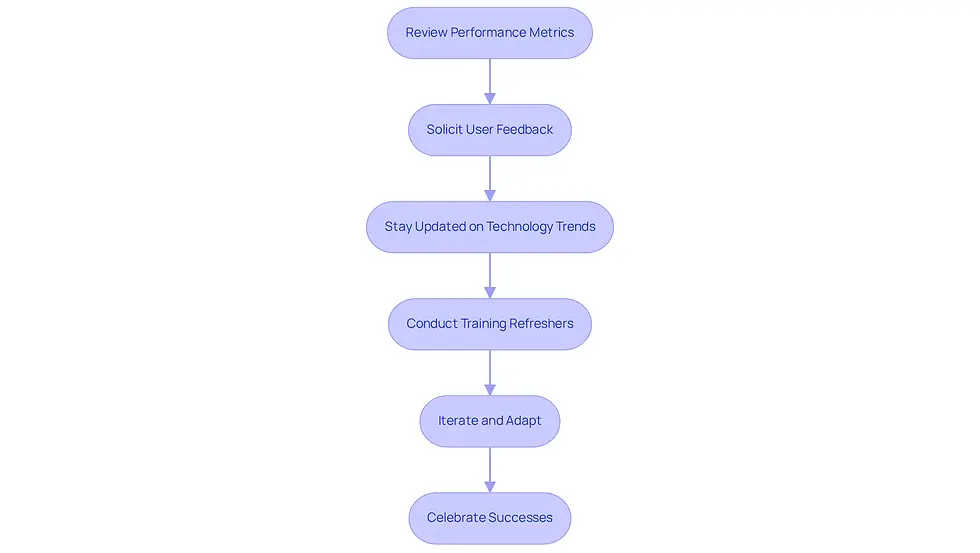
To ensure the long-term success of research opportunity automation software, institutions must adopt a proactive approach to monitoring and optimization:
Regularly Review Performance Metrics: Continuously track key performance indicators (KPIs) established during the integration phase. Regular reviews help identify trends, successes, and areas needing improvement, enabling data-driven decision-making.
Solicit User Feedback: Engage with faculty, staff, and students to gather feedback on their experiences with technological tools. This feedback is invaluable for understanding practical implications and identifying enhancements that can improve user satisfaction and operational efficiency. Research indicates that institutions that actively pursue user feedback can significantly improve the efficiency of their research opportunity automation software.
Stay Updated on Technology Trends: The field of automation is rapidly evolving. Institutions should remain informed about new features, tools, and best practices to leverage the latest advancements in technology, ensuring they remain competitive and efficient. Brian French emphasizes that automation in education not only empowers institutions but also facilitates ease of management and optimized workflows.
Conduct Training Refreshers: As new features are introduced or staff changes occur, provide refresher training sessions to ensure all users are equipped to utilize the software effectively. This ongoing education fosters a culture of continuous improvement and adaptability.
Iterate and Adapt: Be prepared to adjust workflows and processes based on performance data and user feedback. Flexibility is essential for optimizing operational efforts, ensuring they continue to meet institutional needs and enhance user experiences. Resistance to change can significantly impede the successful adoption of new systems.
Celebrate Successes: Acknowledge and rejoice in accomplishments stemming from mechanization initiatives. Emphasizing achievements can enhance morale and promote further involvement with technological initiatives, strengthening a positive culture surrounding technology adoption.
Failure to implement these strategies may lead to diminished efficiency and missed opportunities in research opportunity automation software.
Conclusion
Many academic institutions struggle with operational inefficiencies and low student engagement, hindering their overall effectiveness. Embracing research opportunity automation software represents a significant shift for these institutions, aiming to enhance their operational efficiency and student engagement.
The article highlights several key benefits of such automation:
Increased efficiency through reduced task completion times
Improved accuracy in data handling
Enhanced student experiences via personalized communication
Significant cost savings
The ability to derive actionable insights from data
These advantages not only contribute to smoother administrative operations but also empower institutions to better meet the needs of their students and faculty.
As the educational landscape continues to evolve, it is essential for institutions to prioritize the integration of research opportunity automation software. By implementing strategic approaches to monitor, optimize, and adapt these technologies, academic organizations can maximize their immediate benefits and position themselves for sustained success in a competitive environment. Institutions that embrace this change will not only enhance their operational capabilities but also create a more engaging learning environment for their students.
Frequently Asked Questions
What is research opportunity automation software?
Research opportunity automation software is a type of software designed for opportunity management that simplifies and improves the processes related to discovering, handling, and implementing research opportunities within academic organizations.
What are some examples of research opportunity automation software?
Examples include Coltie's SAGE and PreSAGE tools, which offer unified, auto-updated faculty and lab profiles that highlight findings in real time.
How does research opportunity automation software benefit academic organizations?
It helps reduce administrative burdens, enhance data accuracy, and speed up decision-making, ultimately leading to improved efficiency in managing research opportunities.
What tasks can be automated by research opportunity automation software?
The software can automate repetitive tasks such as data collection, application tracking, and communication between faculty and prospective students.
How does Coltie foster academic collaboration?
Coltie fosters academic collaboration through short study videos (Bytes) and team updates (Posts) that link students, alumni, and partners.
Why is understanding research opportunity automation software important for academic leaders?
Understanding these resources is crucial for academic leaders as it helps them improve study processes and boost student involvement.
What impact does research opportunity automation software have on student engagement?
By utilizing this software, institutions can create a more engaging academic atmosphere for students, leading to better outcomes in higher education.
How can embracing research opportunity automation software redefine the educational landscape?
Embracing these tools can optimize research workflows and foster a dynamic learning environment, ultimately enhancing the educational experience.
List of Sources
Understand Research Opportunity Automation Software ABACC Empowers Christian Business Officers in Higher Ed (https://myabacc.org/blog/automation-ai-are-fast-becoming-critical-in-higher-education) Automation in Higher Education (https://processmaker.com/blog/automation-in-higher-education) Automated Research Workflows Are Speeding Pace of Scientific Discovery; New Report Offers Recommendations to Advance Their Development (https://nationalacademies.org/news/automated-research-workflows-are-speeding-pace-of-scientific-discovery-new-report-offers-recommendations-to-advance-their-development) The Impact of AI on Work in Higher Education (https://educause.edu/research/2026/the-impact-of-ai-on-work-in-higher-education) AI Adoption in Research Administration at Emerging Research Institutions - Ithaka S+R (https://sr.ithaka.org/publications/ai-adoption-in-research-administration-at-emerging-research-institutions)
Identify Key Benefits of Automation in Higher Education 4 higher education leaders on AI’s biggest benefits and risks (https://highereddive.com/news/4-higher-education-leaders-on-ais-biggest-benefits-and-risks/818014) Revolutionizing University Operations: | MAU (https://maufl.edu/how-automation-transforms-marketing-admissions) Why the Future of Student Engagement is Automated and Personal (https://moderncampus.com/blog/why-the-future-of-student-engagement-is-automated-and-personal.html) How Can Automation Improve the Student Experience? | FE News (https://fenews.co.uk/exclusive/how-can-automation-improve-the-student-experience) Automation Today: Publication & Newsletter: How Universities can use software automation to increase quality assurance, improve student experiences, and provide better use of resources (https://automationtoday.net/featuredarticles/how-universities-can-use-software-automation-to-increase-quality-assurance-improve-student-experiences-and-provide-better-use-of-resources)
Implement Effective Strategies for Automation Integration How Education is Shifting Thanks to Hyperautomation (https://processmaker.com/blog/how-education-is-shifting-thanks-to-hyperautomation) A guide to making automation work in higher education (https://timeshighereducation.com/campus/guide-making-automation-work-higher-education) ABACC Empowers Christian Business Officers in Higher Ed (https://myabacc.org/blog/automation-ai-are-fast-becoming-critical-in-higher-education) 70 Business Automation Statistics Driving Growth in 2025 - Vena (https://venasolutions.com/blog/automation-statistics) AI News in Education Industry that Matter the Most | Jan-Mar' 26 (https://pursuit.us/news/ai-news-in-education-industry-that-matter-the-most)
Monitor and Optimize Automation for Sustained Success Efficiency Through Automation | Collegis Education (https://collegiseducation.com/solutions/automate-processes-improve-efficiency) Benefits and Examples of Automation in Education | SalientProcess (https://salientprocess.com/blog/benefits-and-examples-of-automation-in-education) ABACC Empowers Christian Business Officers in Higher Ed (https://myabacc.org/blog/automation-ai-are-fast-becoming-critical-in-higher-education) Automation in Higher Education (https://processmaker.com/blog/automation-in-higher-education) Automation in Higher Education: Strategic Workflow Solutions Driving Institutional Growth (https://goedmo.com/blog/automation-in-higher-education)



Comments