

How to Find a Faculty Mentor: 4 Essential Steps for Success

Updated: Sep 1
Introduction
Many students face difficulties in identifying mentors who truly understand their academic aspirations. Faculty mentors play a pivotal role in shaping students' educational journeys, offering insights that extend beyond the classroom. Establishing a meaningful connection with a mentor who aligns with academic goals is a significant challenge for many students. Students must learn effective strategies to find and cultivate these essential relationships to enhance their academic success.
Understand the Importance of a Faculty Mentor
Understanding how to find a faculty mentor can significantly enhance your academic journey. Here are several compelling reasons to seek out a faculty mentor:
Career Guidance: Mentors provide invaluable advice on navigating academic and professional paths, including course selection, research opportunities, and career options. Research from the 2018 Strada-Gallup Alumni Survey indicates that students credit their long-term success to faculty advisors, which helps them adapt more easily to college, remain enrolled, and attain higher grades.
Networking Opportunities: A mentor can introduce you to professionals in your field, expanding your network and creating pathways for internships and job opportunities. This is particularly important as Gen Z is projected to become the workforce majority by 2035, with 61% of this generation indicating they would leave for better work-life balance and mental health support, underscoring the need for robust mentoring programs.
Skill Development: Mentors assist in honing essential skills such as research methodologies, critical thinking, and effective communication. Structured peer mentoring programs, as demonstrated by Wilton et al. (2021), have shown significant improvements in educational performance, particularly among first-year STEM students, highlighting the importance of skill development in early educational stages.
Emotional Support: Without guidance, students may find themselves lost in their academic journey, facing challenges that could hinder their success. Faculty mentorship can significantly impact students' lives by making them feel seen, heard, and supported, which is vital for their overall well-being and success.
Comprehending these advantages highlights the significance of understanding how to find a faculty mentor who aligns with your educational objectives, as this guidance can transform their educational experience, leading to greater achievements and personal growth.

Identify Potential Faculty Mentors Based on Research Interests
To understand how to find a faculty mentor, start by determining your areas of interest and educational objectives. Follow these essential steps:
Reflect on Your Interests: Consider the topics that excite you and where you envision making contributions to your field. Document your interests and any specific questions you may have.
Research Staff Profiles: Explore your university's department website to review staff profiles. Pay attention to their fields of study, recent publications, and ongoing projects, as these details can help you gauge alignment with your interests.
Attend Seminars and Workshops: Participate in departmental seminars, workshops, or guest lectures to gain insights into instructors and their work. These events also offer opportunities for informal discussions, which can be invaluable in establishing connections.
Consult with Advisors: Discuss your interests with your educational advisor or other instructors to obtain suggestions on possible guides who align with your research objectives. This step can provide personalized insights based on their experiences.
Create a Shortlist: Compile a list of faculty members whose work resonates with your academic aspirations. Aim for a diverse range of advisors to broaden your options and enhance your chances of finding a compatible match.
Coltie's innovative platform empowers students by offering improved information and connections. This facilitates a more transparent and student-centered recruitment experience. Key features include profile creation, communication tools, and access to mentoring networks. Research indicates that graduate students viewed as having greater potential receive more guidance from advisors, highlighting the importance of making informed choices in advisor selection. In fact, retention rates for mentees reach 72%, while guides have a 69% retention rate, underscoring the significance of effective pairing. Furthermore, case studies like the 'Faculty Participation in the Matching Program' demonstrate effective pairing processes, offering practical insights into how to manage this essential element of educational development. By adhering to these steps and using Coltie's resources, including its pricing options, you can effectively learn how to find a faculty mentor who will assist you in your educational journey.

Prepare for Initial Meetings with Potential Mentors
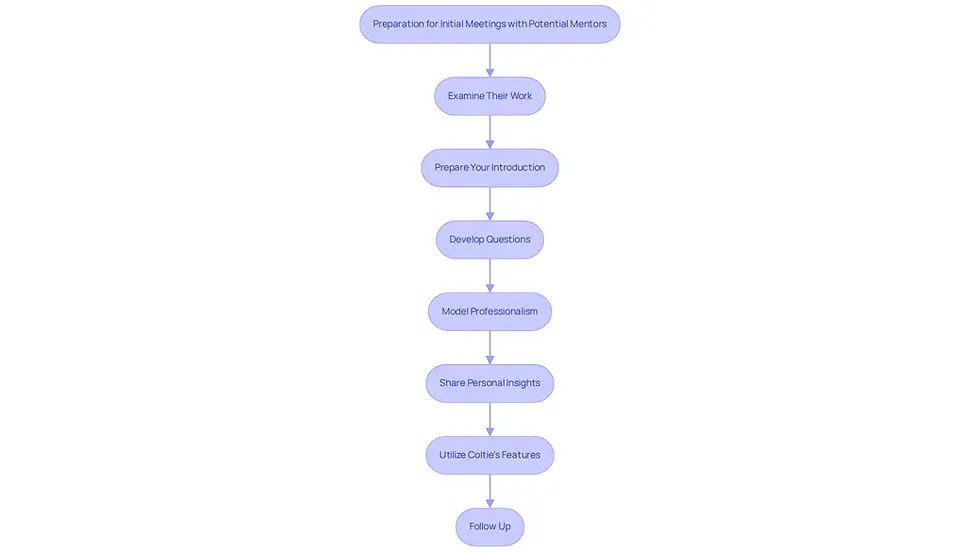
Preparation is key to making a strong impression during your first meeting with a potential mentor. Here are essential steps to ensure you are well-prepared:
Examine Their Work: Familiarize yourself with the faculty member's studies by reviewing their recent publications and understanding their contributions to the field. This knowledge will help you engage in meaningful discussions.
Prepare Your Introduction: Create a brief introduction that emphasizes your academic background, areas of interest, and what you aspire to accomplish through mentorship. This sets a clear context for your conversation.
Develop Questions: Formulate thoughtful questions to ask during the meeting. Inquiries about their research, mentoring style, and expectations for mentees can lead to valuable insights. For instance, asking about their career path can provide guidance for your own professional decisions.
Model Professionalism: Dress appropriately and arrive on time. This demonstrates respect for the instructor's time and sets a professional tone for the meeting. Timeliness and preparation are crucial for establishing a respectful mentoring environment. Additionally, consider preparing an agenda for the meeting to help guide the discussion.
Share Personal Insights: Be open about your experiences, hopes, and challenges. Sharing personal insights can foster trust and deepen the mentor-mentee relationship, allowing for more tailored guidance.
Utilize Coltie's Features: Leverage Coltie's platform to create a profile and connect with faculty members, enhancing your visibility and engagement. This can facilitate more productive discussions during your meetings.
Follow Up: After the meeting, send a thank-you email expressing your appreciation for their time and insights. This reinforces your interest in building a mentoring relationship and keeps the lines of communication open.
Statistics suggest that guides should ideally arrange meetings with mentees at least twice a semester to sustain a productive relationship. By implementing these strategies, you can transform your initial meeting into a foundation for a fruitful mentorship.
Follow Up and Build a Relationship with Your Mentor
Building a strong relationship with your guide is essential for academic success and requires consistent effort. Here are some effective strategies to foster this relationship:
Schedule Regular Meetings: Establish a routine for meetings, ideally weekly or monthly, to discuss your progress, challenges, and goals. Consistency is key to maintaining a strong connection. Research shows that 71% of individuals with guidance are satisfied with their jobs, highlighting the importance of regular engagement.
Be Open and Honest: Share your academic experiences, including both successes and setbacks. Transparency fosters trust and allows your advisor to offer personalized guidance. As Sarvenaz Sarabipour notes, mentorship needs to be tailored to the individual, so starting discussions about expectations early on is crucial.
Seek Feedback: Actively request feedback on your work and progress. This shows that you appreciate your guide's insights and are dedicated to your growth. Unclear expectations often lead to dissatisfaction among early-career researchers. By clarifying expectations, you can significantly improve your mentoring experience.
Express Gratitude: Regularly thank your advisor for their support and guidance. Acknowledging their contributions reinforces the relationship's value and encourages ongoing engagement.
Engage in Their Work: Attend their lectures, seminars, or research presentations. Showing interest in their work can deepen your connection and provide additional learning opportunities.
Investing in these strategies not only enhances your academic journey but also lays the groundwork for future professional success.

Conclusion
The search for a faculty mentor is crucial for students aiming to enhance their academic journey and personal growth. The right mentor can provide essential guidance, networking opportunities, skill development, and emotional support, all of which are vital for navigating the complexities of academic life. This enhancement can lead to improved academic performance and personal development.
The article outlines a clear, structured approach to identifying and connecting with potential faculty mentors. Key steps include:
Reflecting on personal interests
Researching faculty profiles
Attending departmental events
Preparing for initial meetings
These strategies not only help in finding a compatible mentor but also lay the groundwork for a productive and supportive relationship. Regular communication, openness, and gratitude are emphasized as vital components in nurturing this connection.
Ultimately, seeking a faculty mentor is about building a relationship that can guide you through your academic journey. Engaging actively in this process can lead to transformative experiences that extend beyond the classroom. By actively pursuing mentorship, students can unlock opportunities that shape their academic and professional futures in profound ways.
Frequently Asked Questions
Why is it important to have a faculty mentor?
A faculty mentor is important because they provide career guidance, networking opportunities, skill development, and emotional support, all of which can significantly enhance a student's academic journey and overall success.
How can a faculty mentor assist with career guidance?
Faculty mentors offer invaluable advice on navigating academic and professional paths, including course selection, research opportunities, and career options, which can help students adapt to college and achieve higher grades.
What networking opportunities can a faculty mentor provide?
A faculty mentor can introduce students to professionals in their field, expanding their network and creating pathways for internships and job opportunities, which is crucial for career development.
In what ways do mentors help with skill development?
Mentors assist in honing essential skills such as research methodologies, critical thinking, and effective communication, which are vital for academic success, especially for first-year STEM students.
How does faculty mentorship provide emotional support?
Faculty mentorship offers emotional support by making students feel seen, heard, and supported, which is essential for their overall well-being and success in their academic journey.
What evidence supports the benefits of faculty mentorship?
Research from the 2018 Strada-Gallup Alumni Survey indicates that students credit their long-term success to faculty advisors, and structured peer mentoring programs have shown significant improvements in educational performance.
List of Sources
Understand the Importance of a Faculty Mentor Faculty Mentoring Students: Benefits That Can Last a Lifetime | National Society of High School Scholars (https://nshss.org/resources/blog/blog-posts/faculty-mentoring-students-benefits-that-can-last-a-lifetime) The Benefits of a College Mentor and Strategies for Finding One (https://berry.edu/articles/blog/2023/benefits-of-a-mentor) Half of college students say professors should be mentors (https://insidehighered.com/news/student-success/life-after-college/2024/12/02/half-college-students-say-professors-should-be) Mentoring Statistics You Need to Know - 2026 (https://mentorloop.com/blog/mentoring-statistics) naspa.org (https://naspa.org/blog/reimagining-mentorship-in-higher-education-addressing-the-academic-and-career-needs-of-first-year-students)
Identify Potential Faculty Mentors Based on Research Interests Mentor Matching Program (https://globalhealth.brown.edu/opportunities/mentor-matching-program) 40+ Definitive Mentorship Statistics and Research for 2025 (https://mentorcliq.com/blog/mentoring-stats) Mentoring Statistics You Need to Know - 2026 (https://mentorloop.com/blog/mentoring-statistics) What Makes a Good Match? Predictors of Quality Mentorship Among Doctoral Students | CBE—Life Sciences Education (https://lifescied.org/doi/10.1187/cbe.23-05-0070) 2025 News (https://medschool.umaryland.edu/carti/about-carti/news/2025-news/new-research-mentor-matching-program-at-carti.html)
Prepare for Initial Meetings with Potential Mentors Tips for Finding a Potential Faculty Mentor // Research and Innovation // Marquette University (https://marquette.edu/innovation/undergraduate-research-approach-faculty-mentor.php) Tips for Your First Mentoring Session (https://asaecenter.org/association-careerhq/career/articles/career-management/tips-for-your-first-mentoring-session) How to be a Successful Mentee | Office of the Executive Vice Chancellor | Nebraska (https://executivevc.unl.edu/tipsheets/how-be-successful-mentee) Tips for Successful Mentoring Sessions and Relationships | Faculty Mentoring at Amherst | Tips for Successful Mentoring Sessions and Relationships | Amherst College (https://amherst.edu/academiclife/provost_dean_faculty/faculty-recruitment-and-mentoring/mentoring-at-amherst/TipsforSuccessfulMentoring) Tips for Meeting with a Potential Mentor (https://sfp.caltech.edu/undergraduate-research/getting-started/meeting_tips)
Follow Up and Build a Relationship with Your Mentor Mentoring Statistics 2026: 35+ Stats on Retention, Growth & ROI (https://mentorgain.com/blog/mentoring-statistics) The Impact of Mentoring: 11 Key Mentoring Statistics You Need to Know (https://totara.com/us/articles/the-impact-of-mentoring-11-key-mentoring-statistics-you-need-to-know) Improving mentoring in academia requires a ‘collective effort’ (https://science.org/content/article/improving-mentoring-academia-requires-collective-effort) Mentoring in an Era of Uncertainty for Higher Education (https://insidehighered.com/news/faculty/career-development/2025/04/18/mentoring-era-uncertainty-higher-education) 40+ Definitive Mentorship Statistics and Research for 2025 (https://mentorcliq.com/blog/mentoring-stats)



Comments