

10 Best Ways for International Students to Join a Research Lab

Updated: Sep 1
Introduction
Many international students struggle to navigate the complexities of securing research positions in a foreign academic landscape. With countless opportunities available, the challenge lies in identifying the most effective strategies to connect with the right labs that align with one's academic aspirations. Here are ten essential methods that can help international students successfully join research labs:
Leverage innovative platforms like Coltie for intelligent matching.
Master the art of networking with faculty and peers.
Attend academic conferences and workshops to meet potential collaborators.
Utilize social media to follow and engage with research groups.
Seek mentorship from experienced researchers in the field.
Participate in relevant online forums and discussion groups.
Tailor your CV and cover letter to highlight relevant skills and experiences.
Be proactive in reaching out to labs of interest.
Stay informed about the latest research trends and developments.
Follow up on applications and express continued interest.
By employing these strategies, students can significantly enhance their chances of finding the right research opportunities that align with their goals.
Utilize Coltie for Intelligent Matching with Research Labs
Many students struggle to find the best ways for international students to join a research lab that aligns with their academic goals, which leads to wasted time and missed opportunities. Coltie's intelligent matching system helps students connect with labs that fit their academic interests and career goals. This targeted approach:
Streamlines the search process
Significantly enhances the chances of finding a compatible research environment.
Coltie Hive, developed by academics for academics, enhances the intelligent matching system and addresses systemic challenges in higher education. Features like video resumes (Visumes) let individuals present themselves more dynamically to potential advisors, fostering deeper connections and increasing engagement. Studies indicate that those using video profiles are 60% more likely to reach out to faculty, highlighting the importance of this resource for students seeking lab opportunities. This innovative approach not only simplifies the search process but also highlights some of the best ways for international students to join a research lab and take charge of their academic journeys.

Network with Faculty and Peers to Discover Opportunities
In academia, a robust network is essential for discovering study and career opportunities. Actively participate in departmental events, join student organizations, and make the most of faculty office hours. Nurturing relationships with professors and peers helps you gain insights into available positions and may lead to recommendations. Networking creates opportunities for project collaborations and enhances your academic experience.
Research indicates that 80% of jobs are filled through personal and professional contacts, highlighting the challenges students may face without a strong network. This shows that effective networking can lead to job opportunities. For instance, Takudzwanashe Mhuru, a recent graduate, successfully secured a summer job with a professor after applying networking skills learned in the Career Launch program, demonstrating how effective networking can bypass competitive application processes.
Interacting with a variety of peers and mentors can also improve your comprehension of different methodologies and encourage innovation, making your academic journey more rewarding. As Julia Freeland Fisher notes, expanding students' networks is crucial for maximizing their experiences and opportunities. Ultimately, the strength of your network can shape your academic and professional future.

Contact Professors to Express Interest in Their Research
One of the best ways for international students to join a research lab is by establishing contact with professors whose research aligns with their interests. Start by composing a brief email that introduces yourself, emphasizes your educational background, and expresses your specific interest in their work. Mention any relevant experience or coursework that showcases your commitment to the field. Research indicates that a well-structured email increases the likelihood of receiving a positive response, demonstrating respect for the professor's time and your commitment to your educational goals. For example, individuals who actively pursue research experiences often improve their academic profiles, making them more competitive for future opportunities.
To maximize your outreach efforts, consider the following best practices:
Keep your email between 150-250 words to ensure brevity and clarity.
Use a clear and professional subject line that directly states the purpose of your email.
Reference a specific paper or project by the professor to show genuine interest in their work.
Be polite and patient, acknowledging that professors may have limited time and may not respond immediately.
Coltie helps learners by offering valuable information and connections, facilitating these outreach efforts through features like communication automation and event management. Case studies show that persistence and professionalism in communication can lead to significant connections in study. For instance, individuals who follow up politely after two weeks of no reply often convey ongoing interest and gratitude, which can improve their chances of obtaining mentorship. By applying these strategies, you can significantly increase your chances of forming valuable academic connections that may shape your future career.

Attend Conferences and Workshops to Explore Research Labs
Attending scholarly conferences and workshops is among the best ways for international students to join a research lab for individuals aspiring to join laboratories. These events highlight innovative studies and provide a platform for students to discover labs that align with their academic interests. During breaks, students can network and engage in casual conversations that may reveal insights about openings in study groups. Formulating insightful questions and actively interacting with speakers can create a lasting impact, nurturing relationships that may lead to collaborative projects.
Statistics suggest that involvement in scholarly conferences greatly improves learner engagement in inquiry. For instance, over 11,000 professionals from 2,600 institutions are expected to attend the AACRAO conference in April 2026, highlighting the scale of networking opportunities available. The NAFSA Annual Conference, taking place in May 2026, will bring together thousands of international education professionals, further underscoring the significance of these gatherings in promoting educational connections.
Coltie simplifies this process by matching candidates with graduate advisors based on their profiles, making the search for opportunities simpler and more effective. With student profiles showcasing video personal statements and faculty profiles enhanced with videos detailing their studies and advising approaches, Coltie transforms educational connections. All scholarly users can produce and observe videos on subjects pertinent to their interests, from campus life to recent advancements in studies, further facilitating meaningful interactions.
Case studies illustrate the benefits of attending such conferences. The EDUCAUSE Annual Conference serves as a premier event for higher education technology professionals, facilitating the exchange of ideas and development of expertise to tackle contemporary challenges. Likewise, the UPCEA Convergence conference emphasizes alternative credentials, offering insights that can improve institutional strategies and boost scholarly opportunities.
Looking forward, several important scholarly conferences in 2026 will showcase the best ways for international students to join a research lab and connect with researchers. Notable events include the QS Higher Ed Summit: Europe in June, which will gather over 500 senior leaders to discuss pressing challenges in higher education, and the NACAC Conference in October, focusing on the high school-to-college transition and maintaining applicant pipelines. These gatherings not only facilitate the exchange of ideas but also empower students to forge connections that can shape their academic futures.

Leverage University Resources for Research Opportunities
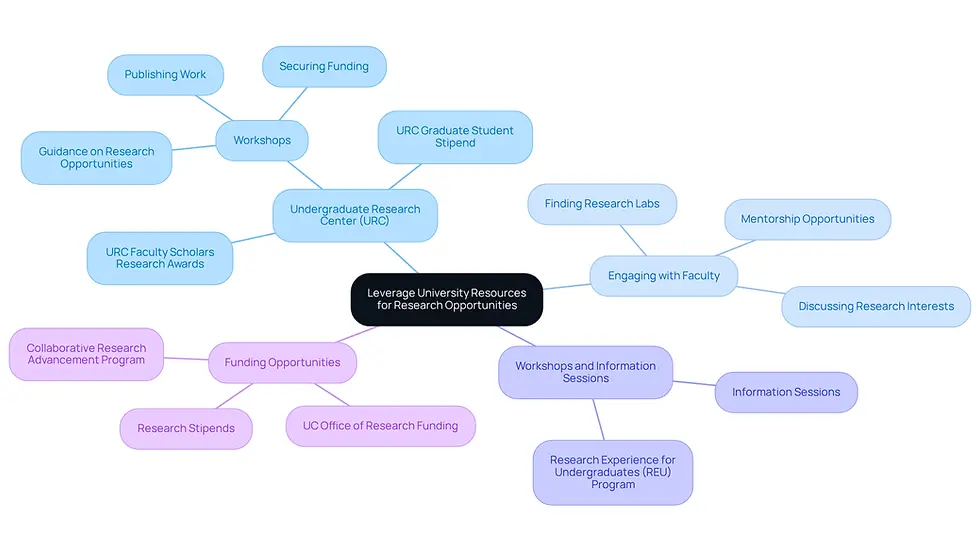
Navigating academic opportunities can be daunting for students without the right support and resources. Universities offer numerous resources to assist students in discovering academic opportunities, including dedicated offices and workshops. For instance, the Undergraduate Research Center (URC) provides guidance on navigating available options. The URC conducts various workshops during the academic year, with more than 200 individuals benefiting from these sessions last year, helping them uncover opportunities for inquiry, publish their work, and secure funding. Online databases and faculty directories are some of the best ways for international students to join a research lab that is actively seeking assistants.
Engaging with faculty is crucial, as discussing their interests can be one of the best ways for international students to join a research lab, since many professors seek enthusiastic undergraduates to assist with projects. Cathy Wang, a B.S. Statistics graduate, emphasizes the importance of starting early and utilizing available resources, stating, "Balance your schedule, as it is easy to feel overwhelmed, and most importantly, enjoy the experience of inquiry!" This proactive approach can lead to significant projects and valuable mentorship.
Moreover, universities frequently organize information sessions and workshops to showcase available programs and funding opportunities. For example, the Research Experience for Undergraduates (REU) Program introduces learners to practical inquiry in various fields, emphasizing scientific problem-solving methods. The UC Office of Research also offers funding options that can greatly enhance learners' investigative experiences. By leveraging these resources, students can effectively navigate the complexities of academia and improve their academic journey, ultimately transforming their experience and opening doors to future success.
Customize Application Materials for Research Lab Applications
In a competitive academic landscape, many applicants struggle to stand out among numerous qualified candidates. Customizing your application materials for academic positions is essential for distinguishing yourself. Start by emphasizing the coursework, skills, and experiences that closely align with the lab's specific focus. A tailored cover letter is impactful because it highlights your genuine interest in the study and demonstrates your understanding of the lab's goals. Statistics reveal that 89% of recruiters expect a cover letter, even when optional (Zety, 2025), underscoring its importance in the application process. Furthermore, a study indicates that tailored cover letters yield a 53% higher callback rate compared to generic ones (ResumeGo, 2020), making customization a key strategy for success.
Your cover letter should follow a three-paragraph framework:
Start with a connection to the lab's work.
Provide evidence of your relevant skills and experiences.
Conclude with a statement of fit for the position.
Make certain your resume is clear and succinct, highlighting educational accomplishments and relevant experience. Avoid excessive jargon to ensure accessibility for hiring managers who may not share your specialized knowledge. Case studies show that candidates who effectively tailor their application materials significantly improve their chances of securing interviews, as demonstrated in the "Importance of Tailoring Your Cover Letter" case study. By neglecting to tailor your application materials, you risk being overlooked in favor of candidates who effectively demonstrate their fit for the position.

Gain Relevant Experience through Internships or Volunteering
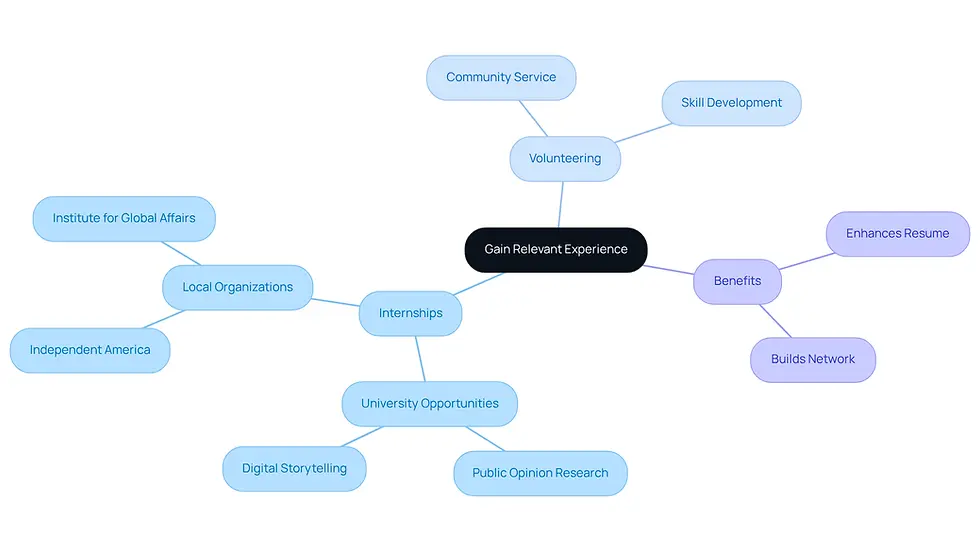
Internships and volunteer roles related to your field provide essential practical experience and enhance your investigative skills. Identify and pursue internships or volunteer opportunities at your university or within local organizations that align with your academic interests. These experiences enhance your resume and help you build a network of contacts, which can be advantageous for future job applications.
Define Your Research Interests to Target Suitable Labs
Before reaching out to research laboratories, it is crucial to define your research focus clearly. Identify the research topics that align with your academic goals. This clarity helps identify labs focused on your interests and enhances your outreach effectiveness.
Studies indicate that individuals who engage in well-defined projects often achieve higher GPAs and improved retention rates, underscoring the importance of this foundational step. For instance, students in competitive fields typically aim for 10-20 scholarly outputs, emphasizing the need for focused and relevant experiential learning.
By articulating your research interests effectively, you enhance your candidacy for lab positions and enrich your academic experience.

Follow Up After Initial Contact to Reinforce Interest
Following up after contacting professors or applying for positions is essential for maximizing your chances of success, particularly if you haven't received a reply within two weeks. A well-crafted follow-up email reinforces your interest and keeps you on the professor's radar. In your message, succinctly reiterate your enthusiasm for their work and inquire about any updates regarding your application or potential opportunities.
Statistics indicate that 80% of successful academic applications involve multiple follow-ups, yet many candidates overlook the importance of this practice, risking their chances of success. For instance, sending a follow-up email within three days of your initial contact can significantly increase your chances of receiving a response. Furthermore, studies show that follow-up emails can enhance reply rates from an average of 9% to as high as 13% when at least one follow-up is included.
Case studies in academia highlight the importance of follow-up communication. For example, students who consistently followed up with faculty members reported higher success rates in securing research positions. Following up shows initiative and helps build stronger relationships with faculty, which can enhance your educational experience.
In your follow-up, consider referencing any mutual contacts or shared interests to personalize your message further. This strategy can create a more engaging dialogue and increase the likelihood of a positive response. Remember, engaging actively with faculty through structured follow-ups can ultimately shape the trajectory of your academic career. Additionally, participating in Coltie's Graduate School Guidance Series can provide valuable insights into the application process and help you understand how to effectively engage with faculty. This series offers sessions where current graduate students and admissions experts share strategies that can enhance your visibility and engagement with potential advisors.

Stay Open to Diverse Research Fields and Opportunities
While specialization is important, embracing interdisciplinary research can uncover unexpected opportunities. Engaging in interdisciplinary research broadens your skills and enriches your main area of study. For instance, a 2021 survey conducted by the National Association of Colleges and Employers found that critical thinking and communication are the top skills desired by employers, yet many recent graduates lack these skills. Students who participate in interdisciplinary programs often report enhanced critical thinking and communication skills, which are highly valued by employers. Attending seminars and workshops outside your immediate discipline, such as enrolling in cross-listed courses and attending seminars from other departments, can reveal new interests and foster collaborations that significantly enhance your academic journey.
Data shows that funding agencies are placing greater emphasis on interdisciplinary studies, especially those that tackle societal challenges. Notable examples include the ETH Zurich's ETH+ Initiative, which focuses on climate systems and precision healthcare, showcasing how interdisciplinary collaboration can lead to innovative solutions for pressing societal issues.
Case studies further illustrate these benefits:
The MIT Media Lab operates without traditional departmental boundaries, leading to innovations like e-ink for eBooks and advanced prosthetics.
Baylor College of Medicine's collaboration with Texas school districts to develop K-12 health science programs illustrates how interdisciplinary methods can equip learners for future careers in health.
By remaining receptive to various academic disciplines, students can develop a comprehensive understanding that prepares them to address intricate challenges in their future professions. However, interdisciplinary research can be hindered by challenges like faculty coordination and curriculum negotiation. Overcoming these obstacles is vital for creating a thriving interdisciplinary academic culture.

Conclusion
Navigating the landscape of research opportunities as an international student presents both challenges and significant rewards. Many students struggle to find research opportunities that truly match their academic interests. Tools like Coltie can help streamline this search and connect students with research environments that align with their goals. By adopting a targeted approach, students can significantly improve their chances of success in securing research positions.
Key strategies include:
Networking with faculty and peers
Effectively contacting professors
Attending conferences to uncover hidden opportunities
Engaging with university resources
Customizing application materials
Gaining relevant experience through internships and volunteering
Defining research interests
Following up on communications
Staying open to various research fields and interdisciplinary opportunities can lead to exciting collaborations and innovations. By embracing these strategies, students can not only enhance their academic experiences but also position themselves for future success in their careers.
Frequently Asked Questions
What is Coltie and how does it assist students in finding research labs?
Coltie is an intelligent matching system that helps students connect with research labs that align with their academic interests and career goals, streamlining the search process and enhancing the chances of finding a compatible research environment.
What features does Coltie Hive offer to improve the matching process?
Coltie Hive includes features like video resumes (Visumes) that allow individuals to present themselves dynamically to potential advisors, fostering deeper connections and increasing engagement. Studies show that users of video profiles are 60% more likely to reach out to faculty.
Why is networking important for students in academia?
Networking is essential for discovering study and career opportunities, as it helps students gain insights into available positions and may lead to recommendations. Research indicates that 80% of jobs are filled through personal and professional contacts.
How can students effectively network with faculty and peers?
Students can effectively network by actively participating in departmental events, joining student organizations, and utilizing faculty office hours to nurture relationships with professors and peers.
What should students include when contacting professors about research opportunities?
Students should compose a brief email introducing themselves, emphasizing their educational background, expressing interest in the professor's work, and mentioning relevant experience or coursework.
What are some best practices for emailing professors?
Best practices include keeping the email between 150-250 words, using a clear and professional subject line, referencing a specific paper or project by the professor, and being polite and patient regarding response times.
How does Coltie facilitate outreach efforts for students?
Coltie facilitates outreach by offering valuable information and connections, along with features like communication automation and event management to support students in their networking and outreach efforts.
What impact does persistence in communication have when reaching out to professors?
Persistence, such as following up politely after two weeks of no reply, can convey ongoing interest and gratitude, improving the chances of obtaining mentorship and forming valuable academic connections.
List of Sources
Utilize Coltie for Intelligent Matching with Research Labs Comparing Cognitive Science Research Opportunities for Undergraduates (https://coltie.com/post/comparing-cognitive-science-research-opportunities-for-undergraduates) 4 Best Practices for Effective Research Opportunity Matching (https://coltie.com/post/4-best-practices-for-effective-research-opportunity-matching) Maximize Your Researcher Discovery Platform for Effective Opportunities (https://coltie.com/post/maximize-your-researcher-discovery-platform-for-effective-opportunities) 5 Best Ways for Honors Students to Join a Research Lab (https://coltie.com/post/5-best-ways-for-honors-students-to-join-a-research-lab) 10 Undergraduate Research Opportunities for Biology Students (https://coltie.com/post/10-undergraduate-research-opportunities-for-biology-students)
Network with Faculty and Peers to Discover Opportunities From Campus to Career: Networking Tips for International Students (https://global.tamu.edu/news/2026-news/networking-tips-international-students.html) Teaching college students networking skills is an equity imperative – The Chronicle of Evidence-Based Mentoring (https://evidencebasedmentoring.org/teaching-college-students-networking-skills-is-an-equity-imperative) Importance of Networking (https://universitylabpartners.org/student-voices/importance-of-networking) Packed rooms, big ideas and new partnerships at R+I Week 2026 (https://research.uc.edu/news/2026/05/26/packed-rooms-big-ideas-and-new-partnerships-at-r-i-week-2026) Finding Networking Opportunities as a Student | National Society of High School Scholars (https://nshss.org/resources/blog/blog-posts/how-to-find-networking-opportunities-as-a-student)
Contact Professors to Express Interest in Their Research Cracking Cold Emails: Reaching Out to Professors in a Way that Works (https://pcur.princeton.edu/2025/04/cracking-cold-emails-reaching-out-to-professors-in-a-way-that-works) Too Many PhD Graduates or Too Few Academic Job Openings: The Basic Reproductive Number R0 in Academia - PMC (https://pmc.ncbi.nlm.nih.gov/articles/PMC4309283) The Ultimate Guide to Cold-Emailing Professors for High School Research Mentorship (https://riseglobaleducation.com/blogs/how-to-cold-email-professors-for-high-school-research-mentorship) How to email graduate school professors | Graduate and Postdoctoral Studies | Rice University (https://graduate.rice.edu/current-news/how-email-graduate-school-professors)
Attend Conferences and Workshops to Explore Research Labs Top Higher Education Conferences in to Put on Your Radar (https://educationdynamics.com/higher-education-conferences-to-put-on-your-radar) International Conference Alerts | Find Upcoming International Conferences 2026–2027 (https://internationalconferencealerts.com) The Essential 2026 Conference Calendar for Higher Education Scholars and Leaders (https://blog.sabbaticalhomes.com/top-higher-education-conferences) All Conference Alert: Upcoming International Conferences 2026 (https://allconferencealert.com)
Leverage University Resources for Research Opportunities Undergraduate Research (https://statistics.ucdavis.edu/undergrad/research) News | University of Cincinnati Office of Research (https://research.uc.edu/news) Undergraduate Research | U-M LSA Department of Statistics (https://lsa.umich.edu/stats/undergraduate-students/undergraduate-research-opportunities-.html) Undergraduate Research | Department of Statistics (https://stat.oregonstate.edu/research/undergrad)
Customize Application Materials for Research Lab Applications How to Write a Good Cover Letter for a Research Position | Earthlab (https://earthlab.colorado.edu/blog/how-write-good-cover-letter-research-position) Major Trends in Career Documents – Cover Letters & Personal Statements (2026) (https://beyondberea.org/blog/2026/03/26/major-trends-in-career-documents-cover-letters-personal-statements-2026) 52 Career Actions: Week 15: Write a tailored cover letter for a dream position. (https://theprofessorisin.com/2026/06/09/52-career-actions-week-15-write-a-tailored-cover-letter-for-a-dream-position) Do You Need a Cover Letter in 2026? What the Data Actually Says | Resume Optimizer Pro (https://resumeoptimizerpro.com/blog/do-you-need-a-cover-letter-2026) Boost Your Cover Letter: 6 Rules to Get Read in 2026 | Kim Araman posted on the topic | LinkedIn (https://linkedin.com/posts/kim-araman_lets-be-honest-most-cover-letters-dont-activity-7415257610200788992-t7ih)
Gain Relevant Experience through Internships or Volunteering Internships and Volunteer Opportunities (https://lundquist.org/education/internships-and-volunteer-opportunities) Research & Communications Intern, Independent America — Summer 2026 (https://instituteforglobalaffairs.org/announcements/2026/02/job-opening-research-and-communications-intern) 15 RESEARCH VOLUNTEER OPPORTUNITIES FOR HIGH SCHOOL STUDENTS IN 2026 (https://counselmore.com/15-research-volunteer-opportunities-for-high-school-students-in-2026) Internship and Research Opportunities - The Council on Undergraduate Research (https://cur.org/resources-publications/student-resources/internship-and-research-opportunities)
Define Your Research Interests to Target Suitable Labs Setting Research Goals for 2026 as a Dean | Monica Swahn posted on the topic | LinkedIn (https://linkedin.com/posts/monica-swahn-043a869_are-you-setting-research-goals-for-2026-activity-7413234913640038400-8wop) How Research Output Correlates With Match Rates Across Sp... (https://residencyadvisor.com/resources/medical-research/how-research-output-correlates-with-match-rates-across-specialties) How to Find a Research Topic in 2026: Step-by-Step Guide (https://paperguide.ai/blog/find-research-topic) The Importance of Research for University Students (https://linkedin.com/pulse/importance-research-university-students-amena-shahid-dba-mba-ba-yo2lc) Top 50 College-Based Research Programs for High School Students (https://pioneeracademics.com/news/top-50-college-based-research-opportunities-for-high-school-students)
Follow Up After Initial Contact to Reinforce Interest These Numbers Will Show You Why Sending Follow-up Emails Is Crucial (https://woodpecker.co/blog/follow-up-statistics) Advice & News - HigherEdJobs (https://higheredjobs.com/articles/articleDisplay.cfm?ID=2277) Top Sales Follow-Up Statistics for 2024 [+ Templates] (https://yesware.com/blog/sales-follow-up-statistics)
Stay Open to Diverse Research Fields and Opportunities
The Benefits of Interdisciplinary Study (https://goacta.org/2023/08/the-benefits-of-interdisciplinary-study)
Why Interdisciplinary Research is Shaping the Future of Engineering - IJOER Engineering Journal Blog (https://ijoer.com/blog/why-interdisciplinary-research-is-shaping-the-future-of-engineering)
Interdisciplinary Studies: Preparing Students for a Complex World - Faculty Focus | Higher Ed Teaching & Learning (https://facultyfocus.com/articles/course-design-ideas/interdisciplinary-studies-preparing-students-for-a-complex-world)
Benefits of an Interdisciplinary Studies Degree (https://mwcc.edu/blog/what-is-an-interdisciplinary-studies-degree)
The World Needs Students With Interdisciplinary Education (https://issues.org/the-world-needs-students-with-interdisciplinary-education)



Comments