

10 Undergraduate Research Opportunities for Biology Students

Updated: Sep 1
Introduction
While biology offers a wealth of knowledge, many undergraduate students struggle to secure practical research experience. This article highlights ten outstanding research opportunities designed for biology students, emphasizing programs that enhance academic profiles and pave the way for future careers. With numerous options available, students must carefully evaluate which opportunities align with their interests and career goals. Navigating these options effectively can significantly impact their academic and professional trajectories.
Coltie: Enhance Your Academic Connections with Intelligent Matching
Coltie is revolutionizing the educational landscape by connecting learners with faculty through an intelligent matching system. This platform enables learners to build detailed profiles, featuring video resumes (Visumes) that showcase their skills and interests. Faculty members can enhance their profiles with videos that outline their studies and advising styles, fostering a more personalized educational environment.
With the launch of Coltie Hive, a purpose-built solution for university departments, institutions can recruit, engage, and support graduates more effectively. By utilizing Coltie, learners can uncover undergraduate research opportunities for biology students that align with their educational goals and personal interests, thus fostering significant faculty-learner relationships.
Key Benefits of Coltie:
Streamlined recruitment process
Improved engagement among learners
Enhanced visibility of study opportunities for undergraduates
Institutions using AI-driven recruitment tools have reported improved engagement and retention rates, showcasing the effectiveness of personalized communication. As the demand for personalized academic connections increases, Coltie stands out as an essential resource for individuals navigating their academic journeys effectively.
To maximize the benefits of Coltie, university administrators can implement strategies such as optimizing faculty profiles and utilizing targeted communication to attract the appropriate individuals. However, it is important to note that 60% of learners globally worry about peers misusing AI for unfair advantage, highlighting the need for trust in these systems. As educational institutions increasingly adopt AI tools, addressing learner concerns about fairness will be crucial for fostering trust and maximizing engagement.
NSF REU: Gain Hands-On Research Experience in Biology
The National Science Foundation's Research Experiences for Undergraduates (REU) program serves as a critical platform for aspiring researchers to gain hands-on experience in biological disciplines. Participants work directly with faculty mentors on innovative projects, enriching their academic experience and enhancing their professional prospects. REU Sites typically host 8 to 10 participants per year, running for 9 to 10 weeks during the summer, and offer stipends averaging approximately $700 per week, along with travel allowances and housing support. This financial support opens doors for a diverse range of learners, especially those from institutions with limited research opportunities.
In 2026, the NSF continues to highlight the significance of structured mentoring and professional growth within REU initiatives. Optimal methods for evaluation emphasize the necessity for thorough assessment strategies that gauge both learner outcomes and initiative effectiveness, concentrating on indicators such as skills development in inquiry and confidence in investigation. For example, successful REU participants frequently indicate improved comprehension of the inquiry process and heightened intentions to pursue graduate studies. As mentioned by the NSF, "Your evaluation plan should assess both learner outcomes and initiative effectiveness."
The NSF's commitment to diversity is evident, as it encourages REU Sites to recruit participants from underrepresented groups in STEM fields. This initiative is vital, as numerous individuals from institutions without strong investigative opportunities depend on REU initiatives to acquire essential experience for competitive graduate school admissions. However, recent funding reductions threaten the continuity of REU programs, potentially limiting opportunities for aspiring researchers. This could lead to a significant decrease in diversity within STEM fields, as fewer opportunities are available for those who need them most.
Overall, the REU program not only offers essential experiential learning but also provides undergraduate research opportunities for biology students, playing a crucial role in shaping their academic and professional paths and making it an invaluable resource in the realm of higher education. Without sustained support, the future of these vital programs-and the diversity they promote-remains uncertain.
University of Utah: Explore Summer Research Internships in Biology
The University of Utah provides undergraduate research opportunities for biology students through summer internships that immerse them in impactful biological research. These 10-week internships run from May 18 to July 31, 2026, allowing participants to collaborate closely with faculty and graduate scholars in a dynamic learning environment. Participants engage in practical investigations, acquiring essential skills and a deep understanding of the scientific method, which are crucial for their educational and professional development.
Interns receive a stipend of $5,000, with potential travel reimbursements of up to $500 for individuals relocating to Salt Lake City, although individuals from the University of Utah are not eligible for this reimbursement. This financial support, along with free access to campus resources like books and computers, significantly enriches the internship experience. The program not only equips learners with vital investigative skills but also helps clarify their career trajectories, preparing them for future academic pursuits or undergraduate research opportunities for biology students.
Research indicates that structured research experiences significantly enhance engagement and skill development among learners. In fact, 56.1% of internships result in full-time job offers, underscoring the importance of internships in career progression. By participating in these internships, individuals not only clarify their career paths but also build valuable professional networks that can lead to mentorship and future job opportunities. Additionally, prospective applicants should note that the application deadline for the SPUR program is January 25, 2026.
University of Georgia: Engage in Meaningful Undergraduate Research
Many students face challenges in accessing undergraduate research opportunities for biology students, but the Center for Undergraduate Research Opportunities (CURO) at the University of Georgia provides a solution. CURO offers invaluable undergraduate research opportunities for biology students to engage in faculty-guided inquiry across various disciplines. The program assists individuals by:
Honing research skills
Presenting findings
Receiving recognition for contributions
This program enhances academic profiles and builds a collaborative community among researchers.
Recent statistics highlight the significant impact of CURO on learner engagement. In 2026, a record-breaking 937 undergraduates participated in the CURO Symposium, showcasing their studies across 144 different majors. This signifies a substantial rise in participation, indicating the program's success in encouraging involvement in scholarly activities. Notably, students who engaged in undergraduate projects reported higher GPAs, averaging 3.41 compared to 3.15 for non-project students.
Expert views underscore the transformative role of undergraduate inquiry in educational development. Research indicates that participation in undergraduate research opportunities for biology students significantly enhances graduation rates, especially among marginalized groups. For instance, 95% of marginalized undergraduate researchers graduated within six years, effectively closing equity gaps in graduation rates. This shows that CURO helps students succeed and promotes equity in higher education.
CURO's offerings include opportunities for learners to present their findings at symposia, receive guidance from faculty, and participate in workshops that enhance their investigative capabilities. Coltie further enhances these scholarly connections through intelligent pairing between learners and faculty advisors, utilizing video profiles that enable both parties to effectively display their interests and advising styles. This innovative method improves the mentoring experience and encourages deeper involvement in scholarly activities. Ultimately, CURO not only enhances academic success but also plays a crucial role in fostering equity in higher education.

CUR: Access a Comprehensive List of Research Opportunities
Many students struggle to find summer initiatives that truly match their interests and career goals. The Council on Undergraduate Research (CUR) provides a searchable database of more than 600 summer initiatives for undergraduates in STEM fields. This resource enables learners to discover opportunities that align with their interests and career aspirations, including:
A wide range of summer initiatives
Guidance on application processes
Support for enhancing investigative experience
By utilizing CUR's database, students can easily navigate their options and enhance their investigative experience. This resource not only simplifies the search process but also empowers students to take charge of their educational journey.
Sanford Health SPUR: Explore Scientific Research Careers
The Sanford Initiative for Undergraduate Inquiry (SPUR) addresses the challenges students face in pursuing scientific careers by offering a comprehensive summer program. This initiative provides individuals the opportunity to participate in scientific career paths through an engaging summer experience.
Participants immerse themselves in laboratory settings, where they actively engage in hands-on experiments and explore diverse scientific fields.
The program features workshops and seminars designed to enhance learners' comprehension of methodologies and career pathways in the health sciences.
By participating in SPUR, students not only gain valuable experience but also build a foundation for future success in the health sciences.
University of Northern Iowa: Join Research at the Tallgrass Prairie Center
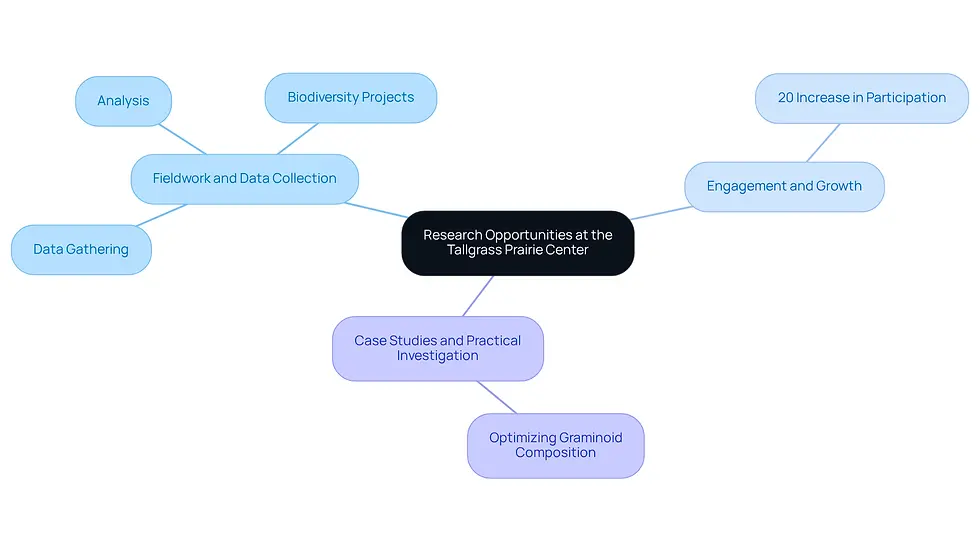
The Tallgrass Prairie Center at the University of Northern Iowa provides unique opportunities for undergraduate learners in the field of prairie ecology and restoration.
Fieldwork and Data Collection: Learners actively participate in fieldwork, gather data, and analyze findings, all while contributing to projects that aim to boost biodiversity and improve ecosystem health. This practical experience is essential for individuals pursuing careers in environmental science and conservation, as it equips them with the skills needed to tackle real-world ecological challenges.
Engagement and Growth: Recent data indicates a 20% increase in student participation in scholarly activities at the center over the past year, underscoring its commitment to fostering engagement.
Case Studies and Practical Investigation: Case studies, such as 'Optimizing Graminoid Composition in Prairie Seed Mixes,' illustrate successful outcomes in prairie restoration initiatives, emphasizing the importance of practical investigation in cultivating future environmental stewards.
As Laura Jackson, director of the Tallgrass Prairie Center, emphasizes, 'Although we think of restoration as a science, it's also about creativity. Prairie restoration begins with a vision.' This approach not only fosters academic growth but also cultivates a new generation of environmental leaders equipped to address pressing ecological issues.
Amgen Scholars Program: Conduct Research at Leading Institutions
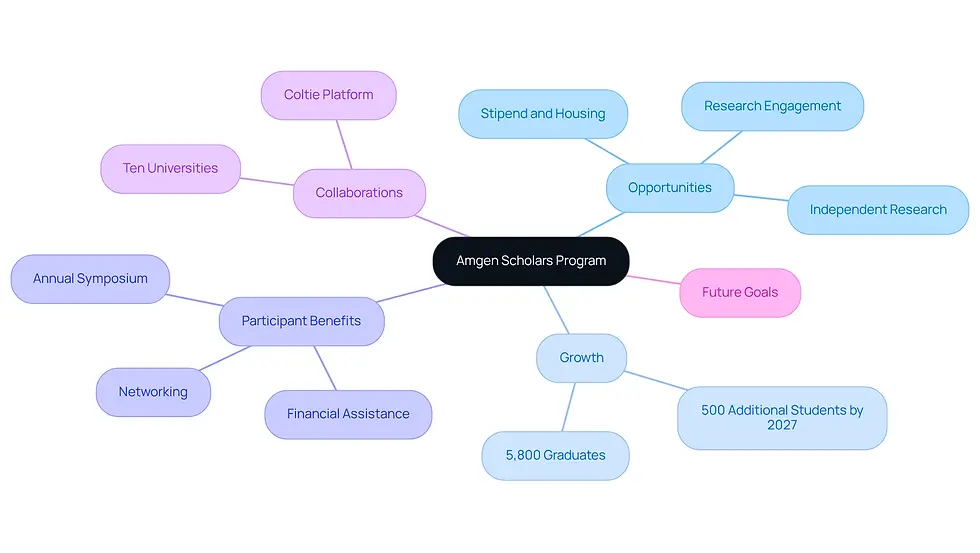
The Amgen Scholars Program provides undergraduates with unparalleled opportunities to engage in research at leading institutions, addressing the challenges of securing such positions. This competitive initiative provides participants with a stipend and housing, while also enabling them to conduct independent research under the guidance of experienced faculty. With more than 5,800 graduates since its inception, the program has proven to be a catalyst for inspiring individuals to pursue careers in the sciences.
In 2026, the initiative continues to grow, with a commitment to assist an additional 500 undergraduate students, bringing the total number of participants to over 6,000 by 2027. This expansion reflects the program's dedication to enhancing undergraduate research opportunities for biology students and cultivating a strong network of peers and mentors.
Participants benefit from a comprehensive educational experience that includes attending an annual three-day symposium in California, where they can showcase their findings and connect with industry leaders. The Amgen Scholars Program provides financial assistance to ensure all qualified individuals can participate, while emphasizing the importance of collaboration and networking in shaping scientific careers.
Through its collaborations with ten prominent universities, the program has positioned itself as one of the most competitive summer study opportunities available, significantly influencing the educational paths of its participants and motivating them to pursue advanced degrees in science.
In this context, platforms like Coltie can further improve educational connections by intelligently pairing potential learners with faculty advisors based on common areas of inquiry. Coltie's innovative application of video profiles enables learners to display their personal statements and interests, while faculty can share their studies and advising approaches, promoting deeper engagement and collaboration. This synergy between Coltie and the Amgen Scholars Program can significantly enhance the study experience for participants, helping them to build meaningful connections that support their academic and professional growth. By fostering these connections, the Amgen Scholars Program and platforms like Coltie are not just shaping careers; they are redefining the future of scientific inquiry.
NIH Summer Internship Program: Gain Research Experience in a Prestigious Setting
The NIH Summer Internship Program offers undergraduate research opportunities for biology students to immerse themselves in hands-on research within a prestigious biomedical setting. Each year, about 1,000 to 1,500 candidates are selected from approximately 7,500 applicants, highlighting the program's competitive acceptance rate of 10-15%. Interns collaborate with leading scientists on innovative projects, gaining invaluable firsthand experience that can significantly influence their academic and career paths.
In addition to hands-on experience, the program includes workshops designed to enhance students' skills and prepare them for careers in research. These workshops cover essential topics such as:
Data analysis
Scientific communication
Ethical considerations in research
This equips interns with a well-rounded skill set.
The 2026 updates reflect a strong commitment to nurturing future researchers, with application deadlines usually falling in mid-February. Potential candidates must be at least 18 years old by September 30, 2026, and the organized application procedure necessitates submitting a CV, personal statement, and references, ensuring that applicants are well-prepared and aligned with the initiative's rigorous standards.
Pnina Laric, M.S., a training coordinator, emphasizes, "The NIH Summer Internship Initiative is a wonderful opportunity for students to gain firsthand research experience while working alongside some of the most accomplished scientists in the world."
Case studies from previous participants, such as Rhea Wyse and Josephine Sanchez, illustrate the initiative's impact. Wyse, who interned with Dr. Charles N. Rotimi, concentrated on health disparities associated with obesity and diabetes, while Sanchez highlighted the practical experience acquired through the initiative. Both interns reported significant professional growth and a deeper understanding of their areas of interest, underscoring the program's value in shaping future leaders in the biomedical field.
Ultimately, engaging in undergraduate research opportunities for biology students through this program can be a pivotal step in launching a successful career in the sciences.

Massachusetts Life Sciences Center: Participate in the Internship Challenge
The Massachusetts Life Sciences Center's Internship Challenge addresses the critical need for internship opportunities in the life sciences sector for college students and recent graduates from May 1, 2026, to April 30, 2027. This program connects students with host organizations and provides financial support for intern stipends, reimbursing eligible organizations up to $9,600 for a 12-week internship. Participating in the Internship Challenge allows students to gain practical experience and improve their employability in the life sciences job market.
Since its inception in 2009, the Internship Challenge has successfully facilitated over 8,300 internships across nearly 300 academic institutions and more than 1,250 organizations in Massachusetts. This year alone, the program is set to provide over 600 paid internships, with interns earning $20 per hour for a 12-week period. The initiative primarily focuses on individuals from various majors, including:
Engineering
Biology
Chemistry
Computer/Data Science
Business
A notable aspect of the Internship Challenge is its commitment to mentorship. Each intern is paired with a dedicated mentor, allowing for meaningful guidance and support throughout their internship experience. This structure not only promotes professional growth but also assists individuals in exploring potential career paths within the life sciences industry.
The initiative's impact is further emphasized by its collaborations with entities such as Project Onramp and the UNCF Ernest E. Just Initiative, which concentrate on offering internship opportunities for low-income and underrepresented individuals, bridging the opportunity gap for those from Historically Black Colleges and Universities (HBCUs) and other Minority Serving Institutions (MSIs). It is important to note that individuals in doctoral or other advanced degree programs are not eligible for the internship.
Overall, the Massachusetts Life Sciences Center's Internship Challenge stands as a vital resource for students seeking to engage in undergraduate research and development, equipping them with the skills and experiences necessary to thrive in their future careers. Without initiatives like the Internship Challenge, many aspiring professionals would struggle to gain the essential experience needed to succeed in the life sciences field.

Conclusion
For biology students, actively pursuing undergraduate research opportunities is crucial for advancing their academic and professional careers. The article highlights various programs and initiatives that provide invaluable experiences, from the innovative Coltie platform that fosters academic connections to the National Science Foundation's REU program, which offers hands-on research experiences. Each opportunity discussed not only equips students with practical skills but also helps them build meaningful relationships with faculty and peers, ultimately shaping their future careers in the sciences.
Key insights from the article emphasize the importance of structured research experiences, such as those offered by the University of Utah, University of Georgia, and the Amgen Scholars Program. These initiatives not only improve students' understanding of scientific inquiry but also promote diversity and equity within STEM fields. Furthermore, resources like the Council on Undergraduate Research and the Massachusetts Life Sciences Center's Internship Challenge play a crucial role in connecting students with tailored opportunities that align with their interests and career goals.
In conclusion, these opportunities present diverse pathways for personal and professional growth. Aspiring researchers are encouraged to explore these programs actively, as they provide not only essential skills and experiences but also the chance to contribute to meaningful scientific advancements. By neglecting these opportunities, students risk limiting their potential for impactful contributions in the field of biological sciences.
Frequently Asked Questions
What is Coltie and how does it enhance academic connections?
Coltie is a platform that connects learners with faculty through an intelligent matching system, allowing learners to create detailed profiles and video resumes (Visumes) to showcase their skills and interests. Faculty can also enhance their profiles with videos about their studies and advising styles, promoting personalized educational experiences.
What are the key benefits of using Coltie?
The key benefits of Coltie include a streamlined recruitment process, improved engagement among learners, and enhanced visibility of study opportunities for undergraduates.
How does Coltie support university departments?
Coltie Hive is a solution designed for university departments to help them recruit, engage, and support graduates more effectively.
What concerns do learners have regarding AI in academic settings?
Approximately 60% of learners globally are concerned about peers misusing AI for unfair advantages, highlighting the need for trust in AI systems used in education.
What is the NSF REU program and what opportunities does it provide?
The NSF Research Experiences for Undergraduates (REU) program offers aspiring researchers hands-on experience in biological disciplines by working directly with faculty mentors on innovative projects. It typically hosts 8 to 10 participants per site for 9 to 10 weeks during the summer.
What financial support do REU participants receive?
REU participants receive stipends averaging about $700 per week, along with travel allowances and housing support, making it accessible for a diverse range of learners.
How does the NSF promote diversity within the REU program?
The NSF encourages REU Sites to recruit participants from underrepresented groups in STEM fields, which is crucial for providing essential research experience to individuals from institutions with limited opportunities.
What are the summer research internships offered by the University of Utah?
The University of Utah offers 10-week summer research internships for biology students, allowing them to collaborate with faculty and graduate scholars on impactful research projects.
What financial support is available for interns at the University of Utah?
Interns receive a stipend of $5,000 and may be eligible for travel reimbursements of up to $500 for those relocating to Salt Lake City, although this reimbursement is not available for University of Utah students.
What is the application deadline for the SPUR program at the University of Utah?
The application deadline for the SPUR program is January 25, 2026.
List of Sources
Coltie: Enhance Your Academic Connections with Intelligent Matching Coltie | Uniting prospective students with faculty for optimal graduate paths and more intentional faculty-student connections (https://coltie.com/oldhome) Comparing Cognitive Science Research Opportunities for Undergraduates (https://coltie.com/post/comparing-cognitive-science-research-opportunities-for-undergraduates) Digital Education Council (https://digitaleducationcouncil.com/resource-library-items/ai-in-higher-education-global-survey-2026) 25 AI in Education Statistics to Guide Your Learning Strategy in 2026 (https://engageli.com/blog/ai-in-education-statistics) Effect of social media use on learning, social interactions, and sleep duration among university students - PMC (https://pmc.ncbi.nlm.nih.gov/articles/PMC8071811)
NSF REU: Gain Hands-On Research Experience in Biology Summer Research Programs in Jeopardy as NSF Cuts REU Funding | Insight Into Academia (https://insightintoacademia.com/summer-research-programs-in-jeopardy-as-nsf-cuts-reu-funding) NSF REU Guide 2026: Sites, Supplements & How to Apply | Grantsights (https://grantsights.com/blog/nsf-reu-guide) Trump's cuts threaten NSF REU programs | News (https://epscorideafoundation.org/news/2025/trump-cuts-threaten-reu-programs) Funding Alert! Grants for Research Experiences for Undergraduates - Assel Grant Services (https://asselgrantservices.com/funding-alert-grants-for-research-experiences-for-undergraduates) NSF downsizes summer research program for undergraduates (https://science.org/content/article/nsf-downsizes-summer-research-program-undergraduates)
University of Utah: Explore Summer Research Internships in Biology Waterford News - University of Utah Summer Research Internship (https://waterfordschool.org/blog/university-utah-summer-research-internship) The Impact of Summer Internships on Your Future Career (https://careers.herbert.miami.edu/blog/2026/05/21/the-impact-of-summer-internships-on-your-future-career) Summer Program for Undergraduate Research (SPUR) - Office of Undergraduate Research (https://our.utah.edu/research-scholarship-opportunities/spur) Summer Program for Undergraduate Research (SPUR) – University of Utah | Pacific Lutheran University (https://plu.edu/physics/news/summer-program-for-undergraduate-research-spur-university-of-utah) Undergraduate Research Experiences Grow Career-Ready Transferable Skills - The Council on Undergraduate Research (https://cur.org/journal-article/undergraduate-research-experiences-grow-career-ready-transferable-skills)
University of Georgia: Engage in Meaningful Undergraduate Research How Well Do Undergraduate Research Programs Promote Engagement and Success of Students? | CBE—Life Sciences Education (https://lifescied.org/doi/10.1187/cbe.10-10-0130) 2026 CURO Symposium breaks record with over 900 presenters - UGA Today (https://news.uga.edu/2026-curo-symposium-breaks-record-with-over-900-presenters) CURO ignites passion for research with student symposium (https://albanyherald.com/news/curo-ignites-passion-for-research-with-student-symposium) Participation in Undergraduate Research Reduces Equity Gaps in STEM Graduation Rates | CBE—Life Sciences Education (https://lifescied.org/doi/10.1187/cbe.22-03-0061)
CUR: Access a Comprehensive List of Research Opportunities News - The Council on Undergraduate Research (https://cur.org/news) Internship and Research Opportunities - The Council on Undergraduate Research (https://cur.org/resources-publications/student-resources/internship-and-research-opportunities) A Culture of Undergraduate Research at a Diverse Public University Leads to Unprecedented Student Success - The Council on Undergraduate Research (https://cur.org/journal-article/a-culture-of-undergraduate-research-at-a-diverse-public-university-leads-to-unprecedented-student-success) CUR Names 2026-2027 Elected Councilors, Division Reps, and NLDC | Newswise (https://newswise.com/articles/cur-names-2026-2027-elected-councilors-division-reps-and-nldc) Famous Quotes on Research and Well-Being - Center for the Advancement of Well-Being (https://wellbeing.gmu.edu/famous-quotes-on-research-and-well-being)
Sanford Health SPUR: Explore Scientific Research Careers Sanford Research Summer 2026 Research Programs in Cellular and Molecular Biology and Biomedical Research - Carleton College (https://carleton.edu/biology/biology-opportunities/news/sanford-research-summer-2026-research-programs-in-cellular-and-molecular-biology-and-biomedical-research) Sanford program opens research lab to range of experiences (https://news.sanfordhealth.org/research/sanford-program-opens-experiences) Sanford Program for Undergraduate Research (SPUR) | Sanford Research (https://research.sanfordhealth.org/academic-programs/undergraduates/spur) Sanford Program for Undergraduate Research (SPUR) (https://pathwaystoscience.org/programhub.aspx?sort=SUM-SanfordResearch-SPUR)
University of Northern Iowa: Join Research at the Tallgrass Prairie Center Tallgrass Conversations Quotes by Cindy Crosby (https://goodreads.com/work/quotes/69098826-tallgrass-conversations-in-search-of-the-prairie-spirit) UNI Tallgrass Prairie Center included in National Geographic (https://insideuni.uni.edu/environment/uni-tallgrass-prairie-center-included-national-geographic) Current Research | Tallgrass Prairie Center (https://tallgrassprairiecenter.org/research/current-research) Vegetation Community Monitoring at Tallgrass Prairie National Preserve (U.S. National Park Service) (https://nps.gov/articles/taprvegmon.htm)
Amgen Scholars Program: Conduct Research at Leading Institutions Amgen Scholars' Summer Research Helps Lead to Science Careers (https://prnewswire.com/news-releases/amgen-scholars-summer-research-helps-lead-to-science-careers-98738674.html) Amgen Foundation Launches $25 Million Undergraduate Research Program | Amgen Inc. (https://investors.amgen.com/news-releases/news-release-details/amgen-foundation-launches-25-million-undergraduate-research) New Amgen Scholars Web site Launches to Build a Global Network for Future Scientists | Amgen Inc. (https://investors.amgen.com/news-releases/news-release-details/new-amgen-scholars-web-site-launches-build-global-network-future) Amgen Foundation Renews Commitment to Signature Amgen Scholars Program (https://amgen.com/stories/2025/11/amgen-foundation-renews-commitment-to-signature-amgen-scholars-program)
NIH Summer Internship Program: Gain Research Experience in a Prestigious Setting NIH Summer Internship Program: Acceptance Rate & How to Apply (https://pioneeracademics.com/news/nih-summer-internship-program-acceptance-rate-how-to-apply) Cancellation of NIH summer internships disrupts ‘vital’ training program for U.S. scientists (https://statnews.com/2025/03/05/trump-nih-freeze-cancels-summer-internships-vital-pipeline-develops-young-scientists) Students gain real world experience through NIH summer internship program (https://genome.gov/27545918/students-gain-real-world-experience-through-nih-summer-internship-program)
Massachusetts Life Sciences Center: Participate in the Internship Challenge
High School Apprenticeship Challenge (https://masslifesciences.com/programs/high-school-apprenticeship)
Massachusetts Life Sciences Internship Challenge – Open for summer 2026 applications : Office of Undergraduate Research and Studies : UMass Amherst (https://umass.edu/ours/news/massachusetts-life-sciences-internship-challenge-open-summer-2026-applications)
MLSC Internship Challenge 2026–2027 Applications Now Open | Computer Science (https://bu.edu/csmet/2025/11/19/mlsc-internship-challenge-2026-2027-applications-now-open)
Internship Challenge (https://masslifesciences.com/programs/internship-challenge)



Comments