

Best Ways for Graduate School Applicants to Join a Research Lab

Introduction
Securing a position in a research lab that aligns with academic interests is a critical step for aspiring graduate students. Understanding how to effectively define research interests and identify suitable labs is crucial for enhancing applications. Many students struggle to find labs that match their interests, leading to frustration and uncertainty. Articulating these interests clearly and connecting with faculty members are essential challenges for applicants.
What strategies can applicants use to distinguish themselves and secure a position in a research lab that will influence their academic path? Understanding how to navigate this process can significantly impact an applicant's academic trajectory.
Define Your Research Interests
Many students find it challenging to express their academic interests effectively, which can hinder their opportunities for study placements. To outline your study preferences, start by reflecting on your educational experiences and the classes that have inspired you. Consider the subjects that captivated you and the types of questions you find intriguing. Interact with scholarly journals and publications in your field to identify current trends and gaps in studies. This exploration will help you articulate your interests clearly, which is essential when reaching out to potential study facilities. For instance, if you are drawn to environmental science, you might focus on sustainability practices or climate change impacts. Record your ideas and polish them into a brief declaration that summarizes your academic ambitions.
Coltie's platform can help you access valuable information and build connections more effectively. Key features like the Opportunity Planner and Event Management tools can enhance your interaction with study facilities. Recent trends show that graduate students are focusing more on interdisciplinary approaches, especially in growing fields like Management Science and Health Care Administration. Notably, over 500,000 international students registered in graduate programs last year. By aligning your preferences with these trends, you can significantly improve your chances of acceptance into desired programs. Coltie's resources can ensure a more transparent and student-centered recruitment experience. Ultimately, a well-articulated academic ambition can set you apart in a competitive landscape, opening doors to valuable opportunities.

Identify Suitable Research Labs
Identifying suitable study facilities is one of the best ways for graduate school applicants to join a research lab and align their research interests with academic opportunities. To effectively identify appropriate study facilities, begin by utilizing university resources:
Utilizing university resources is one of the best ways for graduate school applicants to join a research lab, starting with exploring departmental websites and faculty profiles to identify suitable study facilities.
Attending seminars and workshops is among the best ways for graduate school applicants to join a research lab, as these events enhance your understanding of ongoing projects and help you connect with faculty members.
Networking with graduate students is among the best ways for graduate school applicants to join a research lab, as they can provide valuable insights into lab culture and expectations, aiding your decision-making process.
Attending academic conferences, joining alumni networks, and participating in professional associations are some of the best ways for graduate school applicants to join a research lab.
If you are passionate about neuroscience, one of the best ways for graduate school applicants to join a research lab is to target facilities that specialize in cognitive processes or neurodegenerative diseases.
Create a shortlist by identifying the best ways for graduate school applicants to join a research lab, ranking potential labs based on how closely they align with your preferences and the faculty's research focus.
One of the best ways for graduate school applicants to join a research lab is to prepare thoughtful questions for lab directors, which can showcase your engagement and enthusiasm.
By following this strategic approach and utilizing Coltie's resources, you can enhance your chances of finding a lab that aligns with your academic and career goals. Ultimately, a strategic approach to selecting a lab can profoundly impact your academic journey and future career prospects.

Reach Out to Professors
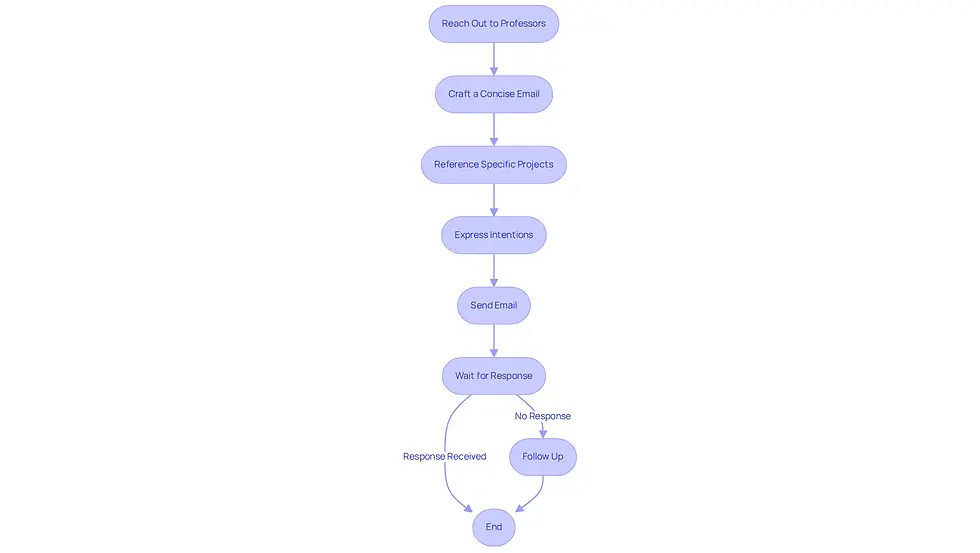
Crafting a concise and respectful email to professors is essential for establishing a professional connection. To demonstrate your knowledge and enthusiasm, reference specific projects or publications that align with your interests. For instance, if you appreciate a professor's work on renewable energy, cite a recent paper they published to show your involvement with their studies. Clearly express your intentions, whether you are pursuing a position in academia or seeking advice on your educational path.
If you do not receive a response within a week or two, a polite follow-up can reinforce your interest and commitment. Building a rapport with faculty members is among the best ways for graduate school applicants to join a research lab. Keeping your emails professional and concise is essential, given professors' busy schedules. Additionally, attaching your CV or resume provides a quick overview of your background, further supporting your outreach efforts.
Enhance Your Application Strategy
To enhance your competitiveness in laboratory applications, a strategic approach to your resume and cover letter is crucial. Customize these documents to highlight experiences that align with the lab's focus. Consider the following points:
Emphasize scholarly experience, internships, or relevant coursework that showcase your skills and dedication.
Secure strong letters of recommendation from faculty who can attest to your abilities and potential. Request these letters well in advance, ideally 6-8 weeks before application deadlines, to avoid negative perceptions regarding your time management.
Craft a compelling personal statement that clearly articulates your research interests and career aspirations, ensuring it is tailored to each institution. For instance, if you have volunteered in a lab, detail your specific contributions and the insights you gained.
Research indicates that tailored resumes significantly enhance acceptance rates; for example, candidates who customize their application materials have been shown to improve their chances of acceptance by up to 30%. A well-articulated personal statement can significantly differentiate you from other candidates. This thorough strategy not only enhances your application but also makes you a more attractive candidate for graduate programs.

Conclusion
Graduate school applicants often find themselves at a crossroads when defining their research interests and identifying suitable labs. Clearly articulating academic ambitions and aligning them with current trends can significantly enhance applicants' chances of acceptance into their desired programs. Utilizing resources like Coltie can further streamline this process, ensuring that students are well-prepared to navigate the competitive landscape of graduate studies.
The article emphasizes several key strategies, including:
The importance of networking with faculty and peers
Attending relevant events
Crafting thoughtful outreach communications
By engaging with professors and showcasing genuine interest in their work, applicants can establish valuable connections that may lead to research opportunities. Additionally, enhancing application materials - such as resumes and personal statements - tailored to specific labs can significantly improve acceptance rates.
Ultimately, joining a research lab goes beyond just securing a position; it involves aligning personal interests with academic goals and fostering meaningful professional relationships. Graduate school applicants are encouraged to take proactive steps in defining their research interests, reaching out to potential mentors, and refining their application strategies. Taking these proactive measures can significantly influence the trajectory of their academic and research careers.
Frequently Asked Questions
Why is it important to define your research interests?
Defining your research interests is crucial as it helps articulate your academic ambitions, which can enhance your opportunities for study placements.
How can students identify their research interests?
Students can identify their research interests by reflecting on their educational experiences, considering inspiring classes, and exploring subjects that captivate them. Engaging with scholarly journals can also help identify current trends and gaps in studies.
What should students do after identifying their interests?
After identifying their interests, students should record their ideas and refine them into a brief declaration that summarizes their academic ambitions.
How can Coltie's platform assist students in their academic pursuits?
Coltie's platform offers valuable resources like the Opportunity Planner and Event Management tools, which can enhance interactions with study facilities and help students access information effectively.
What recent trends are influencing graduate students' research interests?
Recent trends indicate that graduate students are increasingly focusing on interdisciplinary approaches, particularly in fields like Management Science and Health Care Administration.
How many international students registered in graduate programs last year?
Over 500,000 international students registered in graduate programs last year.
What is the benefit of aligning research interests with current trends?
Aligning research interests with current trends can significantly improve a student's chances of acceptance into desired programs.
What role does a well-articulated academic ambition play in the application process?
A well-articulated academic ambition can set students apart in a competitive landscape, opening doors to valuable opportunities.
List of Sources
Define Your Research Interests 5 Graduate Education Trends to Watch in 2025 (https://ruffalonl.com/blog/enrollment/5-graduate-education-trends-to-watch-in-2025) Clearinghouse Enrollment Insights Report Series (https://nscresearchcenter.org/enrollment-insights) Research Reports | National Student Clearinghouse (https://studentclearinghouse.org/nscblog/research-reports) Browse Library | NCSES | NSF (https://ncses.nsf.gov/browse-library) Data & Insights - CGS (https://cgsnet.org/data-insights)
Identify Suitable Research Labs Finding the Perfect Fit: A Guide to Choosing the Right Research Lab - Plexon (https://plexon.com/blog-post/finding-the-perfect-fit-a-guide-to-choosing-the-right-research-lab) 4 Best Ways for Underrepresented Students to Join a Research Lab (https://coltie.com/post/4-best-ways-for-underrepresented-students-to-join-a-research-lab) Academic Networking Tips for College Students: Connecting With Professors and Peers (https://post.edu/blog/academic-networking-tips-for-college-students-connecting-with-professors-and-peers) Finding a Research Lab as a High School Student – IECA (https://iecaonline.com/journal-article/finding-a-research-lab-as-a-high-school-student) How to Choose the Best Lab for PhD? | Plantae (https://plantae.org/how-to-choose-the-best-lab-for-phd)
Reach Out to Professors Contacting Faculty About Research Opportunities (https://careers.tufts.edu/blog/2025/09/16/contacting-faculty-about-research-opportunities) Tips for Writing an Email to Faculty about Research | Office for Undergraduate Research (https://our.unc.edu/find/emails-to-faculty) Cracking Cold Emails: Reaching Out to Professors in a Way that Works (https://pcur.princeton.edu/2025/04/cracking-cold-emails-reaching-out-to-professors-in-a-way-that-works) Guest Post: Tips on Emailing a Professor to Ask for a Research (https://undergradinthelab.com/node/203) How to Reach Out to Professors (https://exl.cns.utexas.edu/do-research/find-research-lab/how-reach-out-professors)
Enhance Your Application Strategy Why Letters of Recommendation are so Important for Grad School | ETS.org (https://ets.org/grad-school-journey/letters-of-recommendation.html) Recommendation Letters - Arts and Sciences (https://graduateschool.camden.rutgers.edu/elevating-your-application-with-strong-recommendations) How Important Are Letters of Recommendation for Graduate School Applications? - Graduate Programs for Educators (https://graduateprogram.org/blog/how-important-are-letters-of-recommendation-for-graduate-school-applications) How to Apply to a Research-Based Graduate Program - Koniag Education Foundation (https://koniageducation.org/how-to-apply-to-a-research-based-graduate-program) How to Construct a Compelling Research Statement (https://grad.ncsu.edu/news/2020/04/how-to-construct-a-compelling-research-statement)



Comments