

How to Find a Professor for Research: 4 Essential Steps

Updated: Aug 29
Introduction
Many students struggle to find a suitable mentor amidst the vast array of options available in the academic landscape. Identifying a professor who aligns with specific academic interests is not just beneficial; it can significantly shape a student's educational journey. However, how does one effectively connect with a professor who not only shares their passions but also fosters a productive research environment? In this article, I will share four essential steps to help you find a research advisor who will enhance your academic journey and open doors to future opportunities.
Define Your Research Interests
Without a clear understanding of your academic interests, knowing how to find a professor for research to guide your studies can be a daunting task. To begin the process of locating a professor for study, it is crucial to clearly outline your academic focuses. Here’s how to effectively navigate this process with the support of Coltie's innovative platform:
Self-Reflection: Begin by reflecting on the subjects that ignite your passion. Consider the courses you found most engaging and the topics that piqued your curiosity. Coltie provides a platform for students to create profiles, showcase their work, and connect with faculty who share similar interests.
List Your Interests: Document 3-5 specific areas or questions you wish to explore further. This could include themes from your coursework, current events in your field, or recognized gaps in existing studies. For example, applicants are encouraged to express general questions that captivate them, which can assist in refining their focus. Additionally, consider what you do not want to pursue, as this can help filter out unsuitable opportunities.
Consult Academic Literature: Engage with recent publications in your field to uncover trending topics and unresolved questions. This practice not only sharpens your interests but also aligns them with ongoing studies, situating your inquiries within the current scholarship landscape. As Matthew Holsapple notes, understanding current questions in your field is crucial for effective research. Coltie facilitates this process by connecting students with faculty insights and resources.
Seek Feedback: Talk to your peers, mentors, or academic advisors about your passions; their insights can help you express your preferences more effectively and may highlight aspects you hadn’t considered. Coltie's platform encourages collaboration and communication, making it easier to engage with your academic network.
Narrow Down: Concentrate on a specific niche within your wider passions. This targeted approach enhances your search for a professor, making it more efficient and aligned with your academic goals. Identifying leading scholars and their methodologies is crucial for this step, as it enables you to link your passions with potential mentors. Remember, a well-crafted statement of purpose is essential for graduate school applications, showcasing your ideas and plans for inquiry.
Ultimately, a well-defined academic focus not only streamlines your search for a mentor but also teaches you how to find a professor for research, enhancing your overall educational experience.

Research Faculty Profiles and Publications
Identifying the right academic mentor is crucial for your educational journey. After outlining your academic preferences, the next step is to investigate instructor profiles and their publications. Follow these steps:
University Websites: Start by visiting the websites of universities you are interested in. Navigate to the department pages related to your field of study.
Instructor Directory: Look for an instructor directory or a list of professors. Most universities offer comprehensive profiles that encompass their areas of interest, publications, and contact details.
Read Publications: Access recent publications by the teaching staff. Use platforms like Google Scholar or ResearchGate to find their work. Pay attention to the subjects they address and their study methodologies.
Identify Alignment: Compare your academic pursuits with the staff’s work. Seek out educators whose studies closely match your preferences. Take notes on specific projects or papers that resonate with you.
Networking Opportunities: Attend departmental seminars or workshops where instructors present their research. This can provide insights into their work and help you identify potential advisors.
Researching instructor profiles is essential for understanding how to find a professor for research who is an expert in your field and eager to mentor students. Data shows that instructor profiles are the most visited pages on department websites, highlighting their significance. Additionally, the upcoming option for individuals to maintain their own profiles after training will further enhance faculty engagement strategies, making it essential for university administrators to prioritize the development of comprehensive faculty profiles. Ultimately, the right mentor can significantly influence your academic success and career trajectory.

Craft Personalized Communication
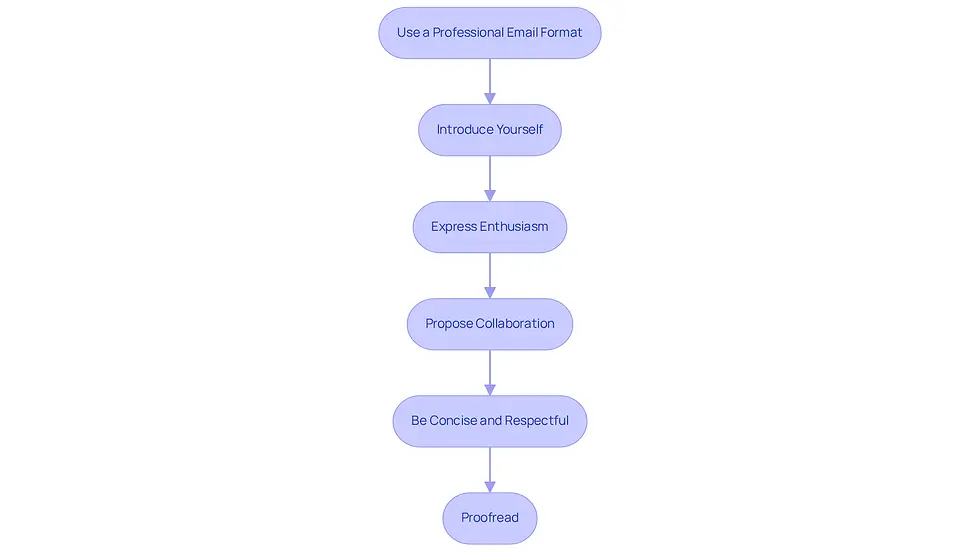
Crafting personalized communication with potential professors is essential for establishing meaningful academic connections:
Use a Professional Email Format: Begin with a clear subject line that indicates the purpose of your email, such as 'Inquiry About Research Opportunities in [Lab Name].' Use a formal greeting, like 'Dear Dr. [Last Name].'
Introduce Yourself: Briefly introduce yourself, including your name, major, year, and any relevant experiences. This helps the professor understand your background and interests better.
Express Enthusiasm: Clearly articulate your enthusiasm for their studies by mentioning specific papers or projects that resonate with you. Explain how these relate to your academic goals and personal interests.
Propose Collaboration: If applicable, express your desire to discuss potential research opportunities or collaborations. Be specific about what you hope to achieve and how your skills can contribute to their work.
Be Concise and Respectful: Keep your email concise and respectful, avoiding jargon. Professors often have demanding schedules, making it crucial to communicate effectively and respectfully. Aim for a professional tone, and remember to thank them for their time.
Proofread: Before sending, carefully proofread your email for spelling and grammatical errors. A well-crafted email reflects your professionalism and attention to detail.
By adhering to these guidelines, you not only enhance your chances of a positive reply but also understand how to find a professor for research, laying the groundwork for a productive academic relationship. Ultimately, effective communication can pave the way for valuable academic opportunities and collaborations.
Follow Up and Maintain Communication
Effective communication with professors is crucial after your initial outreach. Here’s how to do it effectively:
Timing Your Follow-Up: If you do not receive a response within one to two weeks, send a polite follow-up email. This demonstrates your ongoing engagement without being overly persistent.
Reaffirm Your Interest: In your follow-up, briefly reaffirm your interest in their work and mention any specific points from your previous email. This helps jog their memory.
Be Respectful of Their Time: Acknowledge that professors are busy and may not have had the chance to respond. Keep your follow-up concise and to the point.
Engage with Their Work: If they have published new work or presented at a conference, mention it in your follow-up. This shows that you are involved and curious about their studies.
Maintain Professionalism: Always maintain a professional tone in your communications. Thank them for their time and consideration, regardless of their response.
Schedule a Meeting: If you receive a positive response, suggest scheduling a brief meeting to discuss your interests further. This can be a great opportunity to establish a more personal connection.
Following up helps you build rapport with professors, thereby increasing your chances of securing a suitable research opportunity.

Conclusion
Many students struggle to identify the right faculty member who aligns with their research interests. By clearly defining research interests and exploring faculty profiles, students can enhance their search process and foster meaningful academic relationships that can significantly impact future success. This structured approach not only streamlines the search but also encourages ongoing engagement with potential mentors.
The article outlines essential steps to navigate this journey, starting with self-reflection and narrowing down specific interests. It emphasizes the importance of researching faculty profiles and publications to identify alignment with personal academic pursuits. Additionally, it provides practical tips for crafting effective communication and following up respectfully, ensuring that students can establish and maintain productive connections with professors.
Finding a research advisor is about more than just securing a mentor; it’s about building a collaborative relationship that enriches your educational journey. Engaging actively with faculty and demonstrating genuine interest in their work can open doors to invaluable opportunities. Investing time and effort into this critical aspect of education can lead to transformative academic experiences.
Frequently Asked Questions
Why is it important to define your research interests?
Defining your research interests is crucial because it helps you identify suitable professors to guide your studies and enhances your overall educational experience.
How can I begin to identify my academic interests?
Start by reflecting on subjects that ignite your passion, considering engaging courses and topics that piqued your curiosity.
What steps should I take to list my research interests?
Document 3-5 specific areas or questions you wish to explore, including themes from coursework, current events, or gaps in existing studies. Also, consider what you do not want to pursue to filter out unsuitable opportunities.
How can academic literature help in defining my research interests?
Engaging with recent publications in your field uncovers trending topics and unresolved questions, aligning your interests with ongoing studies and situating your inquiries within the current scholarship landscape.
What role does seeking feedback play in identifying research interests?
Talking to peers, mentors, or academic advisors can provide insights that help you express your preferences more effectively and highlight aspects you may not have considered.
How can I narrow down my research interests?
Concentrate on a specific niche within your wider passions, which enhances your search for a professor and aligns with your academic goals. Identifying leading scholars and their methodologies is key in this process.
Why is a well-crafted statement of purpose important for graduate school applications?
A well-crafted statement of purpose showcases your ideas and plans for inquiry, making it essential for effectively communicating your academic focus to potential graduate programs.
List of Sources
Define Your Research Interests How to Write About Your Research Interests (https://blog.accepted.com/writing-about-research-interests) Identify Your Research Interests (https://ur.arizona.edu/getting-started/first-steps/identify-your-research-interests) Spring 2026 Enrollment Trends: Undergraduate Growth Continues as Graduate Enrollment Levels Off | National Student Clearinghouse (https://studentclearinghouse.org/nscblog/spring-2026-enrollment-trends-undergraduate-growth-continues-as-graduate-enrollment-levels-off) 6 Strategies to Strengthen Graduate Student Recruitment (https://hanoverresearch.com/insights-blog/higher-education/a-tactical-guide-to-graduate-student-recruitment)
Research Faculty Profiles and Publications Data Show Faculty Profiles are Important | ANSCI (https://ansci.osu.edu/newsletter/department-roundup/department-roundup-2015-10-09/data-show-faculty-profiles-are-important) How U.S. News Calculated the 2026-2027 Best Global Universities Rankings (https://usnews.com/education/best-global-universities/articles/methodology) Website matches students and faculty for research (https://news.unm.edu/news/website-matches-students-and-faculty-for-research)
Craft Personalized Communication How to Reach Out to Professors (https://exl.cns.utexas.edu/do-research/find-research-lab/how-reach-out-professors) Communicating with Professors: Sample Emails | Office of Undergraduate Research (https://our.uky.edu/sample-emails) Tips for Writing an Email to Faculty about Research | Office for Undergraduate Research (https://our.unc.edu/find/emails-to-faculty) How International Students Should Email Professors for Research Opportunities | Sukant Khurana (https://linkedin.com/posts/sukant-khurana_how-international-students-should-email-professors-activity-7310100629551476738-rDTt) Cracking Cold Emails: Reaching Out to Professors in a Way that Works (https://pcur.princeton.edu/2025/04/cracking-cold-emails-reaching-out-to-professors-in-a-way-that-works)
Follow Up and Maintain Communication Email follow-up statistics: Why persistence pays off in business communication — Stripo.email (https://stripo.email/blog/email-follow-up-statistics-why-persistence-pays-off-in-business-communication) Salesgenie® | Business & Consumer Data to Reach Your Audience (https://salesgenie.com/blog/follow-up-statistics) Tips for Writing an Email to Faculty about Research | Office for Undergraduate Research (https://our.unc.edu/find/emails-to-faculty) How to Follow Up With Professors | Greener (https://greenereduconsult.com/how-to-follow-up-with-professors-after-email) Featuring Advising as Teaching with Mike Olin (Quotes from Professors Cliff Reiter & Kira Lawrence) · CITLS · Lafayette College (https://citls.lafayette.edu/2020/02/06/featuring-advising-as-teaching-with-mike-olin-quotes-from-professors-cliff-reiter-kira-lawrence)



Comments