

Unlock Undergraduate Research Career Benefits for Student Success

Introduction
Engaging in undergraduate research is a pivotal step that can profoundly influence a student's career path. By delving into research, students not only enhance their understanding of their fields but also acquire critical skills that are highly sought after in the job market. However, many students hesitate to begin this journey due to the complexities involved. This hesitation often stems from a lack of clarity about the research process and its benefits. By addressing these challenges, students can gain invaluable experience that enhances their employability.
Define Undergraduate Research and Its Importance
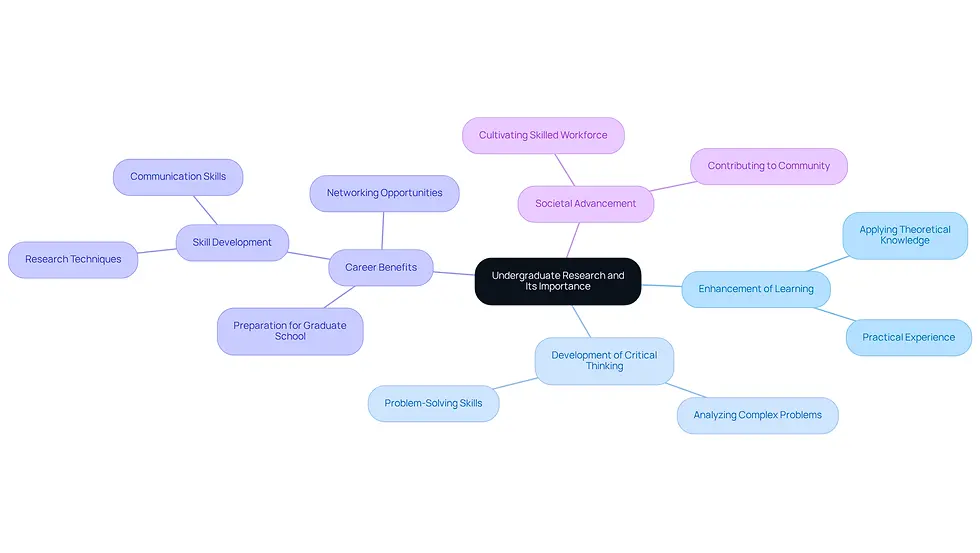
Engaging in undergraduate inquiry provides significant undergraduate research career benefits, allowing students to connect deeply with their fields of study and promoting both personal and professional growth. This scholarly activity encompasses various forms of exploration, including experiments, surveys, and creative projects, often guided by faculty mentorship. The significance of undergraduate inquiry is evident in several key areas:
Enhancement of Learning: Undergraduate inquiry enhances learning by allowing students to apply theoretical knowledge in practical settings, deepening their understanding of their field.
Development of Critical Thinking: Engaging in inquiry cultivates critical thinking skills, equipping students to analyze and solve complex problems effectively.
This experience provides undergraduate research career benefits by preparing individuals for future academic and professional endeavors, clarifying their career trajectories.
However, many students may find the process of engaging in inquiry daunting due to the complexity of research methodologies. Ultimately, this engagement not only enhances individual learning but also contributes to societal advancement by producing skilled professionals. This transformative experience not only shapes the learners' futures but also enriches the broader community by cultivating a workforce equipped with critical skills and knowledge.
Explore Career Benefits of Undergraduate Research
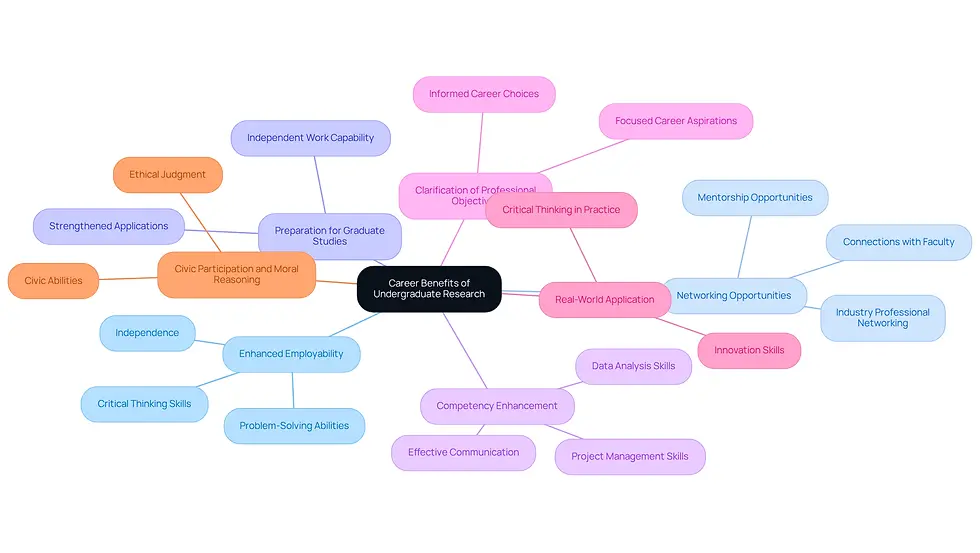
Participating in undergraduate research provides significant undergraduate research career benefits that enhance career prospects for students. The benefits include:
Enhanced Employability: Employers highly value research experience for its demonstration of critical thinking, problem-solving, and independence. Studies suggest that individuals involved in inquiry cultivate abilities appreciated across multiple sectors, which contributes to the undergraduate research career benefits and improves their job prospects.
Networking Opportunities: Research engagement provides valuable networking opportunities with faculty and industry professionals. Platforms like Coltie enhance these connections by intelligently suggesting matches between potential candidates and graduate advisors, leading to internships, job offers, and valuable mentorship, which are crucial for career advancement.
Preparation for Graduate Studies: Research experience significantly strengthens applications for graduate programs. It demonstrates a student's capability to conduct independent work and contribute meaningfully to their field, making them more competitive candidates.
Competency Enhancement: Learners engaged in inquiry develop a range of transferable abilities, such as data analysis, effective communication, and project management. These skills are essential in today’s job market and are highly regarded by employers.
Clarification of Professional Objectives: By exploring specific interests within their domain, individuals can make informed choices about their future vocational paths. Programs such as the Undergraduate Research Opportunity Program at Florida State University have shown that hands-on research provides undergraduate research career benefits by helping individuals gain clarity on job opportunities, leading to more focused career aspirations.
Real-World Application: Research fosters innovation and critical thinking, skills prioritized by over 90% of employers. This real-world application of knowledge is crucial for learners as they transition into the workforce.
Civic Participation and Moral Reasoning: Participating in inquiry also improves learners' civic abilities and ethical judgment, which are increasingly appreciated by employers. This holistic development equips individuals to navigate complex professional environments effectively.
Ultimately, engaging in research not only equips students with essential skills but also shapes their professional identities in meaningful ways.
Identify Skills Gained Through Research Participation
Participating in undergraduate projects provides undergraduate research career benefits by equipping individuals with essential skills that significantly enhance their academic and career trajectories. Platforms like Coltie further support these connections. Key skills gained include:
Critical Thinking: Students learn to analyze data, evaluate sources, and develop logical arguments based on evidence. Experiences in inquiry enhance critical thinking abilities, with studies indicating that individuals involved in undergraduate projects exhibit greater proficiency levels compared to those finishing different capstone activities.
Communication Skills: Research often requires presenting findings, writing reports, and collaborating with peers, enhancing both verbal and written communication abilities. Notably, 80% of employers favor a greater focus on these skills in undergraduate recruits, especially through capstone projects showcased to the public. Coltie makes this easier by enabling students to create engaging video personal statements that highlight their research and communication skills.
Technical Proficiency: Depending on the field, individuals gain hands-on experience with specific tools, technologies, or methodologies relevant to their discipline. This technical expertise is increasingly appreciated by employers, as it equips learners for real-world challenges. Coltie's platform links learners with faculty who assist them in developing these abilities.
Time Management: Balancing studies with coursework instructs individuals on how to prioritize tasks and manage their time efficiently. Programs such as FGCUScholars, which incorporate investigative experiences throughout the curriculum, strengthen these vital abilities, improving learners' capacity to manage academic challenges.
Cooperation and Partnership: Numerous projects involve engaging with others, promoting teamwork abilities and the capacity to collaborate across fields. This collaborative experience is crucial, as employers increasingly seek candidates who can work effectively in team settings. Programs such as the Civil Society Initiative Undergraduate Fellowships offer organized chances for learners to acquire significant investigative experience, further improving their teamwork abilities. Coltie's intelligent matching system facilitates these connections, ensuring that learners find the right mentors and collaborators.
Overall, the benefits of undergraduate research career not only enhance academic learning but also prepare individuals for successful careers by developing a comprehensive skill set that meets the demands of today's job market. By fostering these connections, Coltie ensures that students are not only academically prepared but also equipped to thrive in a competitive job market.

Understand the Role of Faculty Mentorship in Research
Faculty mentorship is crucial for undergraduate research success, providing essential support and guidance throughout the research journey. Mentorship plays a pivotal role in several key areas:
Providing Guidance: Mentors assist learners in navigating the complexities of research, offering insights into methodologies, data analysis, and interpretation of results. This guidance is vital for developing research acumen.
Encouraging Independence: While providing support, mentors motivate learners to take ownership of their projects. This fosters autonomy and self-assurance, preparing them for future academic and professional challenges.
Facilitating Networking: Faculty often possess extensive professional networks, creating opportunities for learners in terms of internships, job openings, and further academic pursuits. This enhances their career prospects.
Providing Feedback: Constructive input from mentors is essential for enhancing investigative skills. Studies show that students with mentors often achieve higher GPAs than those without, highlighting the impact of mentorship on academic success. Good feedback is honest and useful, emphasizing both strengths and areas for improvement.
Inspiring Passion: Faculty mentors can ignite a passion for research in learners, motivating them to pursue further studies or careers in their field. This significantly impacts their long-term professional development.
Research indicates that mentored individuals demonstrate 15-20% higher retention rates in STEM fields, particularly benefiting first-generation and underrepresented individuals. By investing in mentorship, institutions can enhance learner engagement and success, ultimately leading to improved graduation rates and a more vibrant academic community. As Nobel laureate Robert Lefkowitz stated, "Research takes guts. Students need to be willing to be wrong, to defend ideas that might get challenged, to push through when an experiment fails." This emphasizes the essential role of mentorship in nurturing resilience and determination in learners. Ultimately, effective mentorship cultivates resilience and determination, equipping learners with the skills necessary for success in their academic and professional endeavors.

Implement Strategies for Engaging in Research Opportunities
Engaging in undergraduate research career benefits can be a pivotal step for students seeking to enhance their academic and professional trajectories. Here are several strategies to effectively engage in this process:
Identify Interests: Students should reflect on their academic passions and career aspirations to pinpoint study areas that resonate with their goals. This alignment is crucial for sustained motivation and success in academic pursuits.
Contact Faculty: Initiating communication with professors whose work aligns with learners' interests is essential. Students should convey their enthusiasm and ask about available study opportunities, demonstrating their preparedness and commitment.
Make Use of University Resources: Numerous institutions provide specialized offices for undergraduate projects, like the College Center for Research and Fellowships (CCRF), which helps individuals in locating project opportunities and funding. Engaging with these resources can streamline the search for suitable projects and mentors.
Engage in Workshops: Attending workshops or seminars centered on methodologies and skills can offer learners a strong base before starting their projects. These educational experiences improve their preparedness and confidence in carrying out investigations.
Connect with Colleagues: Establishing relationships with other individuals engaged in scholarly activities can provide valuable insights and guidance. Gaining insights from their experiences can assist newcomers in navigating the complexities of beginning their own academic journeys.
By implementing these strategies, students can significantly enhance their research skills and career readiness. Ultimately, the skills gained through undergraduate research career benefits can set students apart in a competitive job market, opening doors to future opportunities.

Conclusion
Undergraduate research presents a unique opportunity for students to enhance their academic and career trajectories significantly. By immersing themselves in inquiry, learners deepen their understanding of their fields while cultivating essential skills that are highly valued in the job market. This pursuit helps students sharpen their critical thinking, improve their communication skills, and gain technical know-how, all of which are crucial for success in various professional environments.
The article highlights several key benefits of undergraduate research, including:
Improved employability
Networking opportunities
Preparation for graduate studies
Students gain clarity on their career objectives while developing a comprehensive skill set that meets the demands of today’s workforce. Furthermore, the role of faculty mentorship is emphasized as a vital component in guiding students through their research journeys, providing support, and fostering independence.
The significance of undergraduate research is profound and far-reaching. It not only equips students with the tools necessary for personal and professional growth but also contributes to the development of a skilled workforce that can address complex societal challenges. By prioritizing research engagement, students position themselves as competitive candidates in a challenging job market, ready to tackle the complexities of their chosen fields.
Frequently Asked Questions
What is undergraduate research?
Undergraduate research is a scholarly activity that involves various forms of exploration, such as experiments, surveys, and creative projects, often guided by faculty mentorship. It allows students to connect deeply with their fields of study and promotes personal and professional growth.
Why is undergraduate research important?
Undergraduate research is important because it enhances learning by allowing students to apply theoretical knowledge in practical settings, develops critical thinking skills, prepares individuals for future academic and professional endeavors, and contributes to societal advancement by producing skilled professionals.
What are the career benefits of participating in undergraduate research?
The career benefits include enhanced employability, valuable networking opportunities, better preparation for graduate studies, competency enhancement, clarification of professional objectives, real-world application of knowledge, and improved civic participation and moral reasoning.
How does undergraduate research enhance employability?
Employers value research experience as it demonstrates critical thinking, problem-solving, and independence. Engaging in inquiry cultivates abilities that are appreciated across multiple sectors, improving job prospects for students.
What networking opportunities does undergraduate research provide?
Research engagement offers valuable networking opportunities with faculty and industry professionals, which can lead to internships, job offers, and mentorship crucial for career advancement.
How does undergraduate research prepare students for graduate studies?
Research experience strengthens applications for graduate programs by demonstrating a student's capability to conduct independent work and contribute meaningfully to their field, making them more competitive candidates.
What transferable skills do students develop through undergraduate research?
Students engaged in inquiry develop skills such as data analysis, effective communication, and project management, which are essential in today’s job market and highly regarded by employers.
How can undergraduate research clarify professional objectives for students?
By exploring specific interests within their domain, students can make informed choices about their future vocational paths, leading to more focused career aspirations.
What is the significance of real-world application in undergraduate research?
Real-world application of knowledge fosters innovation and critical thinking, skills prioritized by over 90% of employers, which is crucial for students as they transition into the workforce.
How does participating in undergraduate research improve civic participation and moral reasoning?
Engaging in inquiry enhances learners' civic abilities and ethical judgment, equipping them to navigate complex professional environments effectively, which is increasingly appreciated by employers.
List of Sources
Define Undergraduate Research and Its Importance The Importance of Undergraduate Research (https://science.org/content/article/importance-undergraduate-research) How Undergraduates Benefit From Doing Research (https://usnews.com/education/best-colleges/articles/how-undergraduates-benefit-from-doing-research) UT San Antonio celebrates the innovative research from undergraduate students - UT San Antonio Today (https://news.utsa.edu/2026/04/ut-san-antonio-celebrates-the-innovative-research-from-undergraduate-students) Why You Should Try an Undergrad Research Experience | Undergraduate Research, Scholarship & Creativity (https://ursco.uncg.edu/2025/09/why-you-should-try-undergrad-research)
Explore Career Benefits of Undergraduate Research Is Undergraduate Research Worth It? (https://berry.edu/articles/blog/2024/undergraduate-research) How Undergraduates Benefit From Doing Research (https://usnews.com/education/best-colleges/articles/how-undergraduates-benefit-from-doing-research) Benefits of Undergraduate Research (https://undergradresearch.washu.edu/benefits-undergraduate-research) Lab Research Focuses Undergraduates’Career Options and Boosts Job Prospects | Newswise (https://newswise.com/articles/lab-research-focuses-undergraduates’career-options-and-boosts-job-prospects)
Identify Skills Gained Through Research Participation Benefits of Undergraduate Research (https://undergradresearch.washu.edu/benefits-undergraduate-research) Undergraduate Research Experiences Grow Career-Ready Transferable Skills - The Council on Undergraduate Research (https://cur.org/journal-article/undergraduate-research-experiences-grow-career-ready-transferable-skills) 7 Benefits of Becoming Involved in Undergraduate Research (https://tamuugr.wordpress.com/2016/01/20/7-benefits-of-becoming-involved-in-undergraduate-research)
Understand the Role of Faculty Mentorship in Research The Faculty Powering Student Discovery (https://pace.edu/news/faculty-powering-student-discovery) The Hidden ROI of Faculty Mentorship (https://scholaro.com/db/News/how-faculty-mentor-students-308) The Benefits of Mentoring Students Through Undergraduate Research (https://jmu.edu/news/cfi/2024/09-19-benefits-of-mentoring-students.shtml)
Implement Strategies for Engaging in Research Opportunities Undergraduate Research (https://engagedlearning.web.baylor.edu/undergraduate-research) Undergraduate Research Portal and Opportunities (https://engage.ucr.edu/research/portal) How Undergraduates Find Research Opportunities (https://college.uchicago.edu/news/how-undergraduates-find-research-opportunities) Getting Involved In Research as an Undergraduate - SEEDS – Access Changes Everything (https://seedsaccess.org/getting-involved-in-research-as-an-undergraduate)
Comments