

4 Steps to Find Biotechnology Research Opportunities as an Undergraduate

Updated: Jun 17
Introduction
Many undergraduates feel overwhelmed by the vastness of biotechnology research opportunities. With numerous options available, understanding how to effectively identify and secure these positions is essential for aspiring researchers.
What strategies can students employ to not only find these coveted roles but also stand out in a competitive field?
This guide will help students discover and secure valuable biotechnology research opportunities, paving the way for a successful academic and professional journey.
Understand Biotechnology Research Opportunities
Navigating the diverse landscape of life sciences research can be overwhelming for newcomers, but understanding the available opportunities is crucial for success. To effectively identify and pursue these opportunities, consider the following steps:
Research Types: Explore the various fields of biological technology. For example, medical bioengineering concentrates on creating therapies and diagnostics, while agricultural bioengineering seeks to enhance crop yields and resilience.
Identify Skills Needed: Each field of study may require specific skills. For instance, molecular biology methods are essential in medical studies, while an understanding of genetic engineering is critical in agricultural biotechnology.
Make Use of Online Resources: Websites like Pathways to Science and CUR offer listings of internships and study opportunities.
Attend Workshops and Seminars: Many universities organize events that familiarize students with ongoing projects. Participating in these can provide insights into what researchers are currently working on and what skills are in demand.
Consult Faculty: Faculty members can offer valuable insights about their fields of study and any openings for undergraduate researchers. This can also help you identify potential mentors in your field of interest.
By taking these steps, you position yourself to uncover valuable research opportunities that align with your career aspirations.

Network with Faculty and Utilize University Resources
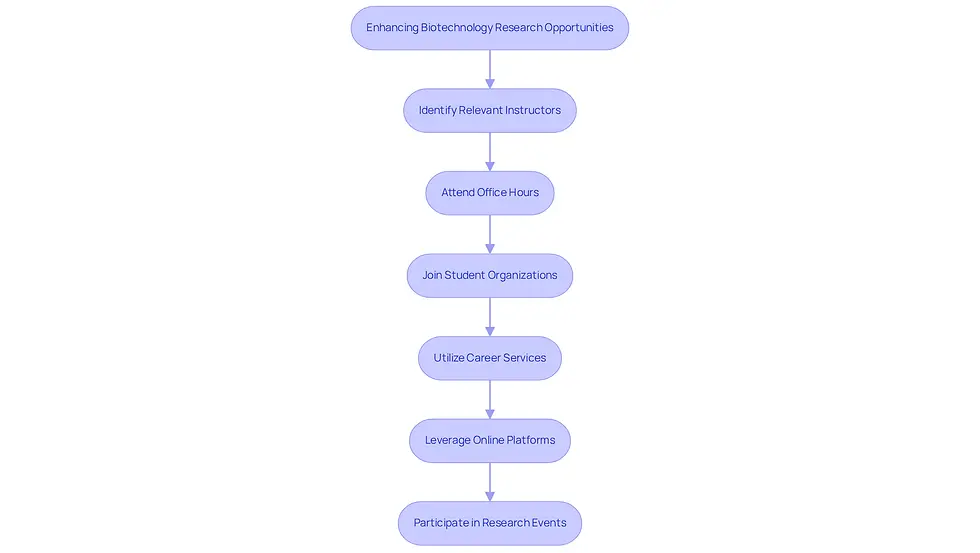
Many undergraduates struggle to navigate the complexities of securing opportunities in the life sciences field, making it crucial to learn how to find biotechnology research opportunities as an undergraduate by establishing a strong network and effectively utilizing university resources. Here are essential steps to enhance your chances:
Identify Relevant Instructors: Investigate staff members within your department who focus on biotechnology. Examine their recent publications and areas of focus to identify common interests, which can promote meaningful discussions.
Attend Office Hours: Regularly attend faculty office hours. Prepare insightful questions about their studies and show sincere interest in their work. This personal engagement can open doors to potential research opportunities and collaborations.
Join Student Organizations: Engage with biotechnology or science-related clubs at your university. These organizations host networking events, guest speakers, and workshops that connect students with faculty and industry professionals, enriching their academic experience.
Utilize Career Services: Leverage your university's career services for resources on internships and research positions. They often organize career fairs, providing a platform to meet potential employers and learn about available opportunities.
Leverage Online Platforms: Utilize professional networking platforms like LinkedIn to connect with educators and industry experts. Actively engage with their posts and share relevant content to foster relationships and demonstrate your interest in the field.
Participate in Research Events: Attend seminars, workshops, and conferences focused on biotechnology. These events provide outstanding chances to connect with faculty, gain understanding of current projects, and broaden your professional network.
By actively engaging with faculty and utilizing available resources, students can significantly enhance their understanding of how to find biotechnology research opportunities as an undergraduate in the competitive life sciences landscape.
Apply for Research Positions and Prepare for Interviews
Identifying potential study opportunities is just the beginning; the next step is to effectively apply and prepare for interviews. Follow these steps:
Create a Strong Resume: Emphasize pertinent coursework, skills, and any prior experience from internships or projects. Customize your resume to highlight your enthusiasm for the life sciences, ensuring it is well-organized and ATS-compliant to stand out in a competitive job market. It is essential to demonstrate the tangible impact of your work by including quantifiable results where applicable.
Write a Compelling Cover Letter: Your cover letter should express your enthusiasm for the position and explain why you are a good fit. Mention specific faculty members you wish to collaborate with and how their studies align with your interests, showcasing your understanding of their work and its relevance to your career goals.
Prepare for Interviews: Research common interview questions for biotechnology positions. Be ready to discuss your academic background, relevant skills, and why you are interested in the specific research area. Practicing your responses with a friend or mentor can enhance your confidence and delivery.
Showcase Your Skills: Be prepared to discuss any laboratory techniques or software you are familiar with, as this can enhance your candidacy. Providing examples of how you have applied these skills in past experiences can strengthen your application, particularly in areas like bioinformatics or bioprocess engineering, which are in high demand. Highlighting your adaptability and problem-solving skills can also set you apart.
Follow Up: After interviews, send a thank-you email to express your appreciation for the opportunity. Failing to follow up may lead to missed opportunities. This action reinforces your interest in the position, making a positive impression on hiring managers who value candidates who demonstrate initiative and gratitude.
Leverage LinkedIn: Ensure your LinkedIn profile is complete and reflects your resume. Many recruiters prefer candidates with well-optimized profiles, so include relevant keywords and showcase your skills and experiences effectively. As the biotechnology industry continues to grow, with employment projected to increase by 7% by 2032, a well-optimized LinkedIn profile can be the difference between landing an interview and being overlooked.

Follow Up and Maintain Connections
In academia, following up after interviews is crucial for building lasting professional relationships. Here’s how to effectively nurture these connections:
Send Thank-You Notes: After interviews, promptly send personalized thank-you emails to the instructors you met. Express gratitude for their time and reiterate your interest in their research, reinforcing a positive impression.
Stay Connected: Regularly check in with instructors and peers. Share updates about your academic progress or relevant experiences in the field of biological technology to understand how to find biotechnology research opportunities as an undergraduate. This keeps you on their radar and demonstrates your ongoing commitment to the field.
Engage on Social Media: Follow educators and industry professionals on platforms like LinkedIn. Actively engage with their posts by commenting or sharing relevant articles. This not only maintains visibility but also fosters professional relationships.
Attend Networking Events: Participate in university events, seminars, and conferences, such as the upcoming LAC Connections Symposium 2026. These gatherings provide chances to reconnect with instructors and meet new professionals in biotechnology, which can teach you how to find biotechnology research opportunities as an undergraduate while broadening your network.
Seek Mentorship: Ask faculty members for mentorship. A mentor can provide invaluable guidance and support, helping you learn how to find biotechnology research opportunities as an undergraduate, which significantly enhances your academic journey. Also, look for NIH Summer Internships in 2026 to enhance your experience in the field. Remember, the biotech sector generates over $3 trillion for the U.S. economy, highlighting the importance of networking within this dynamic industry. Neglecting these connections could restrict your future opportunities.

Conclusion
Securing biotechnology research opportunities is essential for undergraduates aiming to excel in the life sciences. By understanding the landscape of available research, networking effectively, and preparing thoroughly for applications and interviews, students can position themselves for success in this competitive field.
The article outlines essential strategies, including:
Exploring various biotechnology fields
Identifying necessary skills
Utilizing online resources
Engaging with faculty and university services
Networking through student organizations and attending relevant events can significantly enhance a student's visibility and access to opportunities. Additionally, crafting a strong resume and cover letter, preparing for interviews, and maintaining connections post-interview are crucial components of the application process.
Ultimately, pursuing biotechnology research opportunities involves more than just landing a position; it’s about building relationships that can support future endeavors. By actively engaging with faculty, peers, and industry professionals, undergraduates can unlock a wealth of resources and insights that will propel their academic and career journeys in biotechnology. By cultivating these connections, students can significantly influence their future in biotechnology.
Frequently Asked Questions
What are the main types of biotechnology research opportunities?
The main types of biotechnology research opportunities include medical bioengineering, which focuses on creating therapies and diagnostics, and agricultural bioengineering, which aims to enhance crop yields and resilience.
What skills are needed for different fields of biotechnology?
Different fields require specific skills; for example, molecular biology methods are essential in medical studies, while an understanding of genetic engineering is critical in agricultural biotechnology.
Where can I find online resources for biotechnology research opportunities?
Online resources such as Pathways to Science and CUR provide listings of internships and study opportunities in biotechnology.
How can attending workshops and seminars benefit someone interested in biotechnology?
Attending workshops and seminars can familiarize students with ongoing projects and provide insights into what researchers are currently working on and what skills are in demand.
Why is it important to consult faculty members in biotechnology?
Faculty members can offer valuable insights about their fields of study, inform students about openings for undergraduate researchers, and help identify potential mentors in their area of interest.
List of Sources
Understand Biotechnology Research Opportunities What’s New in Biotech in 2026? Breakthroughs and Research Trends | ZAGENO (https://go.zageno.com/blog/whats-new-in-biotech-2026) Biotechnology News (https://sciencedaily.com/news/plants_animals/biotechnology) Internship and Research Opportunities - The Council on Undergraduate Research (https://cur.org/resources-publications/student-resources/internship-and-research-opportunities) Top Biotechnology Innovations Shaping Life Sciences in 2026 - Award Winning Full Stack Digital Service Transformation Company | INT Global (https://intglobal.com/blogs/top-biotechnology-innovations-shaping-life-sciences-in-2026)
Network with Faculty and Utilize University Resources Upcoming opportunities (https://asbmb.org/asbmb-today/careers/041526/opportunities-for-scientists-4-15-2026) Biotechnology Research Fellowship Program 2026 – Caldwell University (https://caldwell.edu/academics/academic-departments/department-of-natural-sciences/biotechnology-research-fellowship-program-2026) InnovATEBIO Newsletters | InnovATEBIO (https://innovatebio.org/newsletters) Technology Licensing Office at the University of Utah - SBIR Seminar: Navigating Funding and Innovation in Biotech-Partner Events (https://technologylicensing.utah.edu/news-events/upcoming-events/partner-events/sbir-seminar-navigating-funding-and-innovation-in-biotech)
Apply for Research Positions and Prepare for Interviews Biotech Jobs in 2025: Top Roles, Salaries, and How to Get Hired (https://hcrnetwork.com/biotech-jobs-2025-career-guide) Breaking into Biotech & Pharma- Summer 2026 Recruiting (https://careerservices.fas.harvard.edu/blog/2025/11/14/breaking-into-biotech-pharma-summer-2026-recruiting) Strengthening Your Life Sciences Resume for 2026 (https://epmscientific.com/en-us/industry-insights/career-advice/strengthening-your-life-sciences-resume-for-2026) U.S. Bureau of Labor Statistics (https://bls.gov/ooh/life-physical-and-social-science/biological-technicians.htm) Top Biotechnology Resume Tips For Freshers in 2026 (https://biotecnika.org/2026/06/biotechnology-resume-tips-2026-what-recruiters-actually-want)
Follow Up and Maintain Connections InnovATEBIO Newsletters | InnovATEBIO (https://innovatebio.org/newsletters) LAC Connections Symposium 2026 (https://nationalacademies.org/programs/PGA-CAPACITY-20-02/event/46282) Biotechnology in the FY 2026 NDAA: Strategic Implications — and Recommendations — for Join (https://inss.ndu.edu/news/Article/4358679/biotechnology-in-the-fy-2026-ndaa-strategic-implications-and-recommendations-fo)


Comments