

How to Find Linguistics Research Opportunities as an Undergraduate
- Mahua Majumdar
- Jul 5
- 7 min read

Updated: 3 hours ago
Introduction
For undergraduates, the journey into linguistics research presents both exciting opportunities and significant challenges. With a plethora of sub-disciplines ranging from phonetics to sociolinguistics, students have a unique opportunity to explore diverse research avenues that align with their interests. Many students struggle to navigate the competitive landscape of linguistics research.
How can aspiring linguists not only find but also excel in research positions that will shape their academic and professional futures? Understanding how to navigate these challenges is crucial for shaping a successful future in linguistics.
Understand the Landscape of Linguistics Research Opportunities
Navigating how to find linguistics research opportunities as an undergraduate can be challenging without a clear understanding of the diverse sub-disciplines in the field. Linguistics includes sub-disciplines such as phonetics, syntax, semantics, sociolinguistics, and psycholinguistics. Each offers unique avenues for exploration, from language acquisition to the social implications of language use.
Explore Sub-disciplines: Familiarize yourself with the various branches of language study. Resources such as the Linguistic Society of America (LSA) provide comprehensive overviews, helping students identify their interests.
Identify Your Interests: Reflect on which aspects of language study resonate with you most. This could range from language processing to historical studies, guiding your area of focus.
Explore Current Trends: Stay updated on the latest academic trends by engaging with scholarly journals and attending language conferences. Platforms like ScienceDirect and Linguist List serve as valuable resources for accessing cutting-edge studies and discussions. The field is currently experiencing a shift towards publication quality, with an increasing focus on multilingualism and positive psychology in language studies.
Utilize University Resources: Explore your institution's website for programs and opportunities tailored to aspiring linguists. Many universities have specialized linguistics departments that offer resources and assistance for undergraduates. Additionally, understanding the concentration of highly cited papers (HCPs) in specific journals can direct students toward significant fields of study. For example, publications such as Bilingualism Language and Cognition and the International Journal of Bilingual Education and Bilingualism are prominent contributors to the field, reflecting current trends and scholarly excellence.
By leveraging available resources and staying informed about current trends, students can significantly enhance their understanding of how to find linguistics research opportunities as an undergraduate.

Identify Specific Research Opportunities in Linguistics
Navigating the landscape of study opportunities in linguistics involves understanding how to find linguistics research opportunities as an undergraduate. Here are effective methods to navigate this process:
Utilize Online Databases: Platforms such as Pathways to Science and the LINGUIST List serve as valuable resources, offering directories of internships, fellowships, and positions in linguistics. Regularly checking these sites can reveal new postings that align with your interests.
Explore University Programs: Numerous institutions have specific pages for undergraduate study options. For instance, Emory University and Indiana University provide tailored resources for undergraduates, highlighting available projects and funding options.
Connect with Instructors: Interacting with teaching staff during departmental events and seminars can lead to opportunities for ongoing projects. Faculty often seek undergraduate assistants, making personal connections essential for uncovering these prospects. Students are encouraged to proactively seek mentors by familiarizing themselves with faculty work and requesting appointments to discuss potential project roles.
Join Language Clubs: Joining language clubs at your university can really help you discover more about the study options available to you. These groups often share insights and connect students with peers who have similar interests.
Utilize Social Media: Following language departments and scholars on platforms such as Twitter and LinkedIn can keep you updated about new prospects. Numerous scholars provide insights into their work and announce openings for assistants through these channels.
The evolving landscape of study opportunities in linguistics in 2026 emphasizes collaborative projects and interdisciplinary approaches. For instance, the Department of Linguistics at Indiana University motivates students to participate in studies through various labs, each with its own application process, fostering hands-on experience in diverse linguistic inquiries. Furthermore, the Summer Undergraduate Research Experience (SURE) program provides a 10-week paid internship, giving students practical experience while earning a stipend of $8,500.
By actively engaging with these resources, students can significantly enhance their academic journey and career prospects by learning how to find linguistics research opportunities as an undergraduate.

Prepare Application Materials and Leverage Networks
To secure research positions in linguistics, candidates must navigate a competitive landscape with well-prepared application materials and strategic networking:
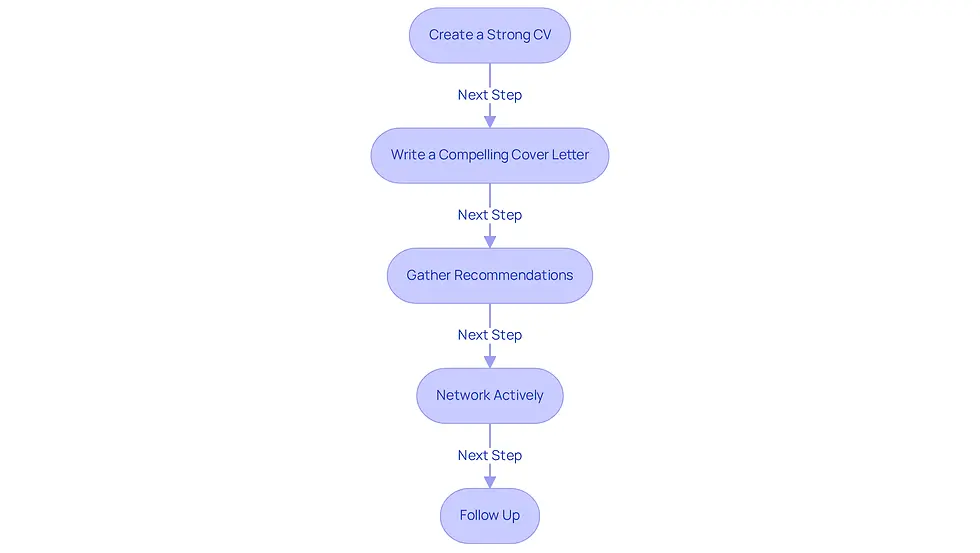
Create a Strong CV: Your CV must clearly showcase your academic achievements, relevant coursework, and any prior experience in the field. Customize it to emphasize abilities that are directly relevant to the position, ensuring clarity and significance.
Write a Compelling Cover Letter: A well-crafted cover letter is crucial. It should express your enthusiasm for the particular project and explain why you are an ideal candidate. Incorporate pertinent skills and experiences that correspond with the project goals, showcasing your suitability for the position.
Gather Recommendations: Secure letters of recommendation from professors or previous employers who can attest to your academic capabilities and work ethic. Select individuals who are knowledgeable about your areas of interest and can offer specific insights into your qualifications.
Network Actively: Participate in academic conferences, workshops, and seminars to connect with faculty and peers. Networking is essential for understanding how to find linguistics research opportunities as an undergraduate. Utilize professional platforms like LinkedIn to connect with industry professionals and expand your network.
Follow Up: After submitting your application, consider sending a courteous follow-up email to express your ongoing interest in the position. This demonstrates professionalism and can keep your application top of mind for hiring committees.
By concentrating on these strategies, you can distinguish yourself from other applicants and make a significant impact in your academic journey.
Engage with Faculty and Apply for Research Positions
Connecting with faculty members is crucial for understanding how to find linguistics research opportunities as an undergraduate. Here’s how to effectively connect with faculty members and enhance your chances of success:
Schedule Meetings: Identify faculty whose work aligns with your interests and reach out to them to request a meeting. Reaching out directly shows that you're proactive and eager to learn, allowing you to discuss their work in detail.
Be Prepared: Arrive at meetings equipped with thoughtful questions about their studies. Showing genuine enthusiasm and understanding of their work can significantly impact their perception of your potential as a research assistant.
Submit Applications: Adhere strictly to application guidelines. Timeliness and attention to detail in your submissions reflect your professionalism and commitment.
Stay Professional: Maintain a respectful and professional tone in all communications. Acknowledge staff members' busy schedules and respond promptly to any correspondence, which fosters a positive impression.
Seek Feedback: Facing rejection can be disheartening, but seeking feedback can provide valuable insights for improvement. Faculty members often appreciate the initiative and can provide insights that will strengthen your future applications.
While specific statistics on staff involvement with undergraduate researchers were not provided, it is widely recognized that knowing how to find linguistics research opportunities as an undergraduate can lead to enhanced academic performance and increased retention rates. For example, programs that actively engage undergraduates in scholarly activities often report higher levels of student satisfaction and enhanced graduation outcomes.
Case studies highlight successful engagements, such as Dr. Shannon Barrios and Dr. Rachel Hayes-Harb, who presented at the 12th Annual Pronunciation in Second Language Learning and Teaching conference. Their collaborative research efforts with students exemplify the potential benefits of proactive engagement with faculty, paving the way for fruitful research experiences.

Conclusion
Many students struggle to identify suitable research opportunities in linguistics due to a lack of guidance and resources. Understanding how to navigate this landscape is crucial for undergraduates eager to explore the complexities of language study.
To effectively find research opportunities, students should consider the following strategies:
Explore online databases for available projects.
Connect with faculty members who can provide guidance.
Participate in university programs and language clubs to expand their network.
Crafting strong application materials, such as a tailored CV and compelling cover letter, alongside effective networking, can significantly enhance a student's chances of securing a research position. Engaging with faculty and seeking feedback after applications further solidifies a proactive approach to finding opportunities in this dynamic field.
By taking initiative and leveraging available resources, undergraduates can significantly enhance their career prospects in the field of linguistics.
Frequently Asked Questions
What are the main sub-disciplines of linguistics?
The main sub-disciplines of linguistics include phonetics, syntax, semantics, sociolinguistics, and psycholinguistics.
How can I familiarize myself with the various branches of language study?
You can familiarize yourself with the various branches of language study by utilizing resources such as the Linguistic Society of America (LSA), which provides comprehensive overviews to help identify your interests.
What should I consider when identifying my interests in linguistics?
When identifying your interests in linguistics, reflect on which aspects resonate with you most, such as language processing or historical studies, to guide your area of focus.
How can I stay updated on current trends in linguistics?
You can stay updated on current trends in linguistics by engaging with scholarly journals, attending language conferences, and using platforms like ScienceDirect and Linguist List for access to cutting-edge studies and discussions.
What are some current trends in linguistics research?
Current trends in linguistics research include a shift towards publication quality, with an increasing focus on multilingualism and positive psychology in language studies.
How can I utilize university resources to find linguistics research opportunities?
You can utilize university resources by exploring your institution's website for programs and opportunities tailored to aspiring linguists, as many universities have specialized linguistics departments that offer resources and assistance for undergraduates.
What are highly cited papers (HCPs) and why are they important?
Highly cited papers (HCPs) are significant publications in specific journals that reflect current trends and scholarly excellence, guiding students toward important fields of study in linguistics.
Which journals are considered prominent contributors to the field of linguistics?
Prominent journals in the field of linguistics include Bilingualism Language and Cognition and the International Journal of Bilingual Education and Bilingualism.
List of Sources
Understand the Landscape of Linguistics Research Opportunities Trends and hot topics in linguistics studies from 2011 to 2021: A bibliometric analysis of highly cited papers - PMC (https://pmc.ncbi.nlm.nih.gov/articles/PMC9875073) 2nd International Applied Linguistics Research Conference – International Applied Linguistics Research Conference (https://appling-research.org/appling2026) Current Trends in Linguistics (https://medium.com/@riazleghari/current-trends-in-linguistics-6c1519c90c5e)
Identify Specific Research Opportunities in Linguistics Research Internships | Linguistics (https://linguistics.stanford.edu/degree-programs/undergraduate-programs/research-internships) Undergraduate Research Resources (https://linguistics.emory.edu/undergraduate/experience/research.html) Language and linguistics - Latest research and news | Nature (https://nature.com/subjects/language-and-linguistics) News & Announcements - Department of Linguistics - The University of Utah (https://linguistics.utah.edu/news) Research Opportunities (https://linguistics.indiana.edu/research/research-opportunities.html)
Prepare Application Materials and Leverage Networks Career Development Information | Undergraduate Research (https://undergradresearch.oregonstate.edu/career-development-information) Undergraduate Research Experiences Grow Career-Ready Transferable Skills - The Council on Undergraduate Research (https://cur.org/journal-article/undergraduate-research-experiences-grow-career-ready-transferable-skills) How to Write a Good Cover Letter for a Research Position | Earthlab (https://earthlab.colorado.edu/blog/how-write-good-cover-letter-research-position) Academic CV (Curriculum Vitae) for Research: CV Examples - Wordvice (https://wordvice.com/blog/academic-cv-examples-format) Beyond the basics: Writing a STEM cover letter - ORISE (https://orise.orau.gov/internships-fellowships/blog/writing-a-stem-cover-letter.html)
Engage with Faculty and Apply for Research Positions News - Department of Linguistics (https://linguistics.unc.edu/news-menu/news) Linguistics moves towards becoming its own academic unit following vote at faculty meeting (https://dailyprincetonian.com/article/2025/11/princeton-news-adpol-faculty-meeting-linguistics-academic-unit) News & Announcements - Department of Linguistics - The University of Utah (https://linguistics.utah.edu/news) News | Linguistics | Humanities (https://humanities.uoregon.edu/linguistics/contact-us/news)


Comments