

Maximize Architecture Research Opportunities for Undergraduates

Updated: Jul 14
Introduction
Undergraduates often struggle to navigate the complexities of architecture research, yet mastering these challenges can unlock valuable opportunities. As the demand for innovative design solutions grows, the importance of undergraduate research in shaping the next generation of architects becomes increasingly evident. This article will explore key strategies that can help students maximize their research opportunities, including:
Building a strong academic profile
Leveraging networking
Seeking mentorship
By effectively positioning themselves, students can not only discover these opportunities but also distinguish themselves in a competitive landscape.
Identify Available Architecture Research Opportunities
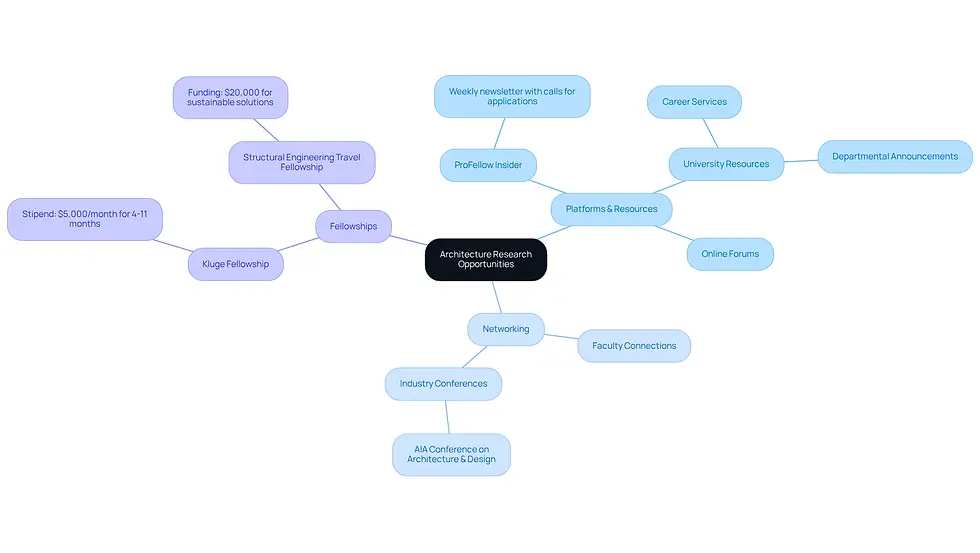
Navigating the landscape of design research opportunities can be daunting for students without the right tools and connections. To enhance design research possibilities, students should actively investigate various platforms and resources that feature internships, fellowships, and research programs. Directories such as ProFellow Insider, which has over 100,000 subscribers, highlight various opportunities for undergraduates in design. Additionally, leveraging university resources, including career services and departmental announcements, is crucial for staying informed about upcoming positions.
Networking with faculty members and attending industry conferences, such as the AIA Conference on Architecture & Design, can unveil hidden opportunities. Joining professional organizations like the National Organization of Minority Architects (NOMA) can be particularly advantageous; for instance, 43 young professionals have connected with design firms and fellowships through NOMA initiatives in recent years. Online forums and social media platforms also improve learners' awareness of available opportunities in academia.
Recent design exploration options for undergraduates in 2026 include fellowships such as the Kluge Fellowship, which funds original inquiries in humanities and social sciences with a stipend of $5,000 per month for four to eleven months, and the Structural Engineering Travel Fellowship, providing $20,000 to individuals focused on sustainable solutions. By actively seeking out these resources and networking effectively, students can uncover and apply for opportunities that align with their career aspirations.
Build a Strong Academic Profile for Research Applications
Many students find it challenging to navigate the complexities of building a strong academic profile that includes architecture research opportunities for undergraduates. To enhance their prospects, students should concentrate on several critical areas:
Academic Performance: A strong GPA is crucial, particularly in architecture-related courses, as it reflects both dedication and competence. Approximately 72% of accredited U.S. design programs require a minimum GPA of 3.0, with competitive candidates often exceeding 3.5.
Relevant Coursework: Enrolling in courses that improve analytical skills, such as statistics, design theory, and architectural history, is vital. These subjects not only enhance academic performance but also equip students for the analytical requirements of inquiry.
Projects and Portfolios: It's essential to create a portfolio that highlights your design projects, research papers, and relevant work experience. A well-organized portfolio can significantly impact applications, with a maximum of 25 spreads (50 numbered pages) allowed for submission.
Extracurricular Activities: Participation in architecture clubs, workshops, and competitions demonstrates commitment and passion for the field. Engaging in these activities can lead to valuable networking connections and partnerships that enhance learning.
Investigation Experience: Actively seeking opportunities to assist faculty with projects, even if unpaid, provides invaluable hands-on experience. This participation can result in compelling letters of recommendation and a deeper understanding of the investigation process. Coltie’s Graduate School Guidance Series offers sessions like 'A Peek Behind the Curtain: Faculty Panel' and 'Hear from Those Who Know Best: Current Grad Students Panel,' which provide insights into faculty expectations and learner experiences, further supporting individuals in their academic endeavors.
Online Academic Presence: In today's digital age, having an online academic presence is more important than ever. Profiles on platforms such as Google Scholar and LinkedIn improve visibility and acknowledgment of scholarly work, showcasing professionalism and assisting collaborators and funding organizations in evaluating expertise.
By concentrating on these fields, learners can develop an impressive academic profile that greatly enhances their chances of securing architecture research opportunities for undergraduates. Furthermore, by understanding the holistic admissions process, students can better position themselves for success in their academic pursuits. Coltie’s resources can further assist learners in this journey, ensuring they are well-prepared for the challenges ahead.

Leverage Networking and Mentorship for Research Success
For architecture students, securing architecture research opportunities for undergraduates relies heavily on effective networking and mentorship. Here are effective strategies to maximize these relationships:
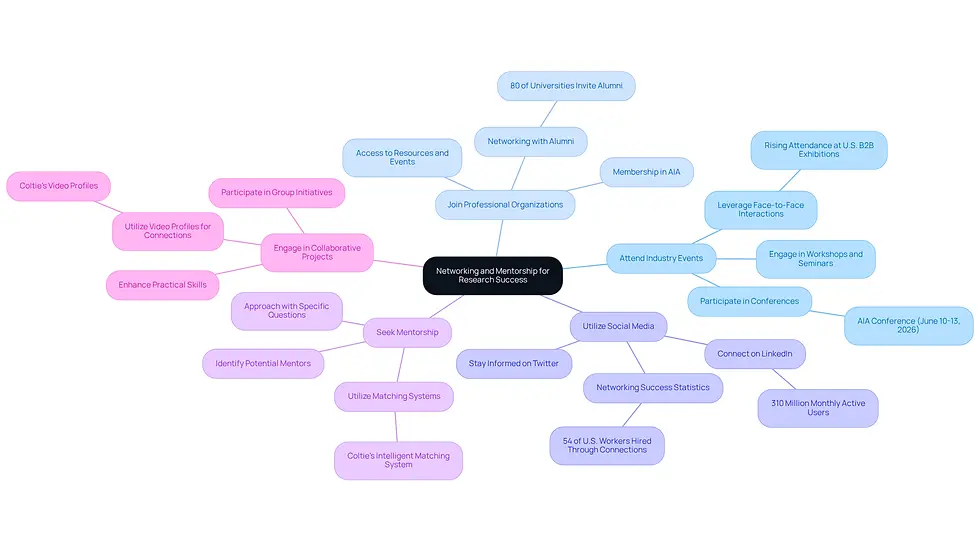
Attend Industry Events: Participating in conferences, workshops, and seminars, such as the AIA Conference from June 10 to June 13, 2026, provides invaluable networking experiences with professionals and peers in the field. In-person events are making a comeback, as evidenced by the rising attendance at U.S. B2B exhibitions, highlighting the value of face-to-face interactions.
Join Professional Organizations: Membership in organizations like the American Institute of Architects (AIA) provides access to resources, events, and a robust network of professionals. Approximately 80% of universities now invite alumni to mentoring or networking events, enhancing professional connections.
Utilize Social Media: Platforms such as LinkedIn and Twitter serve as powerful tools for connecting with industry leaders and staying informed about trends and opportunities. LinkedIn boasts around 310 million monthly active users, emphasizing its role in professional networking. Notably, 54% of U.S. workers were hired through personal connections in 2025, highlighting the effectiveness of networking.
Seek Mentorship: Identify potential mentors among faculty, alumni, or industry professionals. Approach them with specific questions or requests for guidance, as mentorship has been shown to accelerate career advancement and improve retention rates. Research indicates that mentored employees experience faster promotions and better performance. Utilizing Coltie's intelligent matching system can assist individuals in finding suitable mentors and advisors based on their specific interests and goals, enhancing the mentorship experience.
Engage in Collaborative Projects: Participate in group projects or initiatives that involve faculty or industry professionals. This not only fosters relationships but also enhances practical skills, making individuals more competitive in the job market. Coltie's video profiles enable faculty to display their scholarly work and advising approaches, facilitating connections for individuals with suitable mentors for collaborative opportunities.
Avoid Common Pitfalls: While networking and mentorship are beneficial, individuals should be cautious of overextending themselves or approaching mentors without clear objectives. However, establishing meaningful connections requires patience and dedication.
Ultimately, the strategic pursuit of networking and mentorship can redefine career trajectories in architecture.
Enhance Applications with Tailored Resumes and Video Profiles
To enhance their research applications, students must adopt effective strategies that highlight their qualifications. Consider the following approaches:
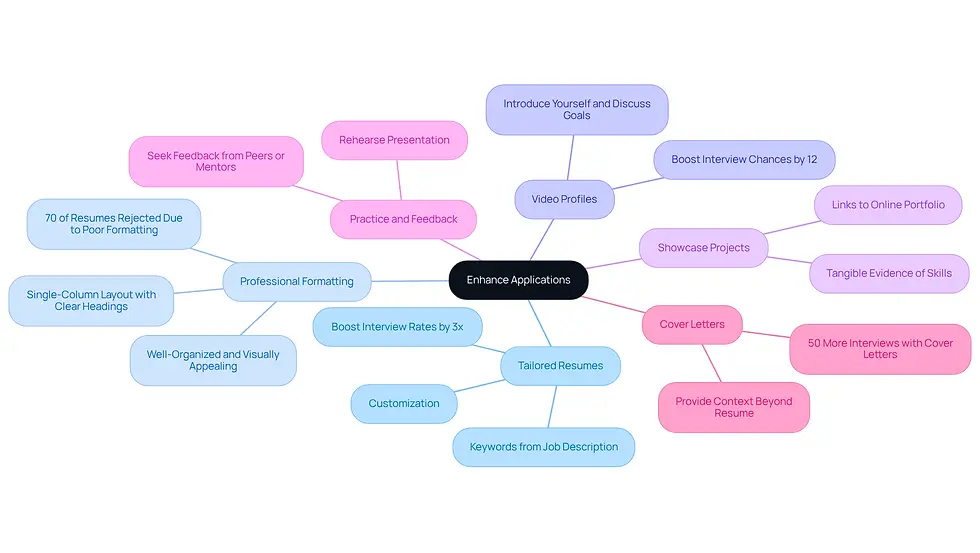
Tailored Resumes: Customize resumes for each application by emphasizing relevant experiences, skills, and coursework. Incorporating keywords from the job description can significantly increase the chances of landing an interview. Tailored resumes are known to boost interview rates by three times (Jobscan).
Professional Formatting: Ensure that resumes are well-organized, visually appealing, and free of errors. Many applicants face disqualification due to poor formatting, which accounts for 70% of resume rejections (SHRM). A clean, single-column layout with clear headings and bullet points enhances readability.
Video Profiles: Creating a video introduction can boost your interview chances by 12% at supportive companies, adding a personal touch to your application. This short video profile (Visume) should introduce yourself, discuss your academic interests, and outline your goals related to architecture research opportunities for undergraduates.
Showcase Projects: Include links to an online portfolio or relevant projects in both resumes and video profiles. This allows reviewers to see tangible evidence of your skills and creativity, which can set you apart in a competitive field where the average job advert receives around 250 resumes.
Practice and Feedback: Rehearsing your presentation can help you feel more confident and ensure that you communicate your qualifications and passion effectively. Seek feedback from peers or mentors to refine your delivery and content.
Cover Letters: Consider including a cover letter, as applications with cover letters receive 50% more interviews than those without (CareerBuilder). This additional document can provide context that your resume may not convey.
Ultimately, these strategies can transform a standard application into a compelling narrative that resonates with potential employers.
Conclusion
Maximizing architecture research opportunities is crucial for undergraduates aiming to excel in their academic and professional journeys. By actively enhancing their academic profiles and engaging with the architectural community, students can significantly improve their prospects of securing valuable research experiences that align with their career aspirations.
Key strategies discussed include:
Identifying various research opportunities through platforms and networking events.
Maintaining a strong GPA and relevant coursework.
Creating tailored resumes and video profiles that effectively showcase individual qualifications.
Additionally, the importance of mentorship and professional connections cannot be overstated, as these relationships often lead to hidden opportunities and invaluable guidance.
In conclusion, the pursuit of architecture research opportunities is fundamentally about building a strong foundation for future success. By taking proactive steps to enhance their academic profiles and engage with the architectural community, undergraduates can position themselves for success and make meaningful contributions to the field. Ultimately, these strategies will empower students to navigate their careers effectively and contribute significantly to the architectural field.
Frequently Asked Questions
What should students do to identify design research opportunities?
Students should actively investigate various platforms and resources that feature internships, fellowships, and research programs, such as directories like ProFellow Insider.
How can university resources assist students in finding research opportunities?
University resources, including career services and departmental announcements, are crucial for staying informed about upcoming positions in design research.
What role does networking play in discovering design research opportunities?
Networking with faculty members and attending industry conferences can unveil hidden opportunities, while joining professional organizations can connect students with design firms and fellowships.
What is the National Organization of Minority Architects (NOMA) and how can it help students?
NOMA is a professional organization that has helped young professionals connect with design firms and fellowships, providing valuable networking opportunities.
What online resources can students use to find design research opportunities?
Online forums and social media platforms can improve students' awareness of available opportunities in academia.
What are some recent design exploration options for undergraduates in 2026?
Recent options include the Kluge Fellowship, which offers a stipend of $5,000 per month for four to eleven months, and the Structural Engineering Travel Fellowship, which provides $20,000 for sustainable solutions.
How can students effectively uncover and apply for design research opportunities?
By actively seeking out resources, networking effectively, and staying informed about available opportunities, students can align their applications with their career aspirations.
List of Sources
Identify Available Architecture Research Opportunities INNOVATION 2030: Top Architecture Firms Offer Students Paid Summer Internships – Architecture 2030 (https://architecture2030.org/innovation-2030-top-architecture-firms-offer-students-paid-summer-internships) 13 Fellowships for Architects in the U.S. and Abroad | ProFellow (https://profellow.com/fellowships/15-fellowships-for-architects-in-the-u-s-and-abroad) NOMA summer programs saw 43 young professionals connected with architecture firms, fellowships, and grants (https://archinect.com/news/article/150445780/noma-summer-programs-saw-43-young-professionals-connected-with-architecture-firms-fellowships-and-grants) News (https://gsd.harvard.edu/news) NOMA summer programs saw 43 young professionals connected with architecture firms, fellowships, and grants (https://noma.net/news/noma-summer-programs-saw-43-young-professionals-connected-with-architecture-firms-fellowships-and-grants)
Build a Strong Academic Profile for Research Applications How to Build a Successful Portfolio for Architecture School - NewSchool of Architecture & Design (https://newschoolarch.edu/how-to-build-a-successful-portfolio-for-architecture-school) Admissions & Applying | Illinois (https://arch.illinois.edu/programs-applying/admissions) How to Build a Strong Academic Profile: A Complete Guide for Aspiring Researchers (https://globalxpublications.com/blog/how-to-build-a-strong-academic-profile) 2026 GPA, Test Scores, and Experience Needed for Architecture Degree Programs | Research.com (https://research.com/advice/gps-test-scores-and-experience-needed-for-architecture-degree-programs) Maximize Architecture Research Assistant Opportunities for Undergraduates (https://coltie.com/post/maximize-architecture-research-assistant-opportunities-for-undergraduates)
Leverage Networking and Mentorship for Research Success The Importance of Positive Leadership and Mentorship in Architecture (https://archinect.com/news/article/150237142/the-importance-of-positive-leadership-and-mentorship-in-architecture) THE ULTIMATE GUIDE TO AIA26 FOR STUDENTS AND EMERGING PROFESSIONALS - Architecture Careers Guide (https://archcareersguide.com/ultimateguidetoaia26) Networking Statistics 2026: Industry Data, Trends & Insights (https://wavecnct.com/blogs/networking-statistics) Using Mentorship as a Strategic Tool to Attract and Retain Architecture Talent (https://archipro.com/blog/using-mentorship-as-a-strategic-tool-to-attract-and-retain-architecture-talent)
Enhance Applications with Tailored Resumes and Video Profiles Resume tip: Tailor to the job (https://archinect.com/news/article/150163554/resume-tip-tailor-to-the-job) Resume statistics USA - The latest data for 2026 (https://standout-cv.com/usa/stats-usa/resume-statistics) The jobseekers boosting their applications with video CVs (https://bbc.com/worklife/article/20220121-the-jobseekers-boosting-their-applications-with-video-cvs) Resume Statistics 2026: ATS, Hiring, and Job Search Data | Resume Optimizer Pro (https://resumeoptimizerpro.com/blog/resume-statistics-2026) 100+ Resume Statistics for 2026 (https://resumefast.io/blog/resume-statistics-2026)



Comments