

How to Find Nursing Research Opportunities as an Undergraduate

Introduction
Undergraduate nursing students face significant challenges in accessing research opportunities that bridge theory and practice in healthcare. Participating in research boosts critical thinking and analytical skills while providing networking and mentorship opportunities that can significantly influence career paths. These challenges can lead to missed opportunities that are essential for career development.
How can aspiring nurses effectively navigate this landscape to find meaningful research positions that will enrich their educational journey and professional development?
Understand the Importance of Nursing Research Opportunities
Nursing research opportunities are essential for undergraduates to learn how to find nursing research opportunities as an undergraduate, bridging the gap between theory and practice. Participating in inquiry enhances critical thinking abilities, broadens comprehension of evidence-based practice, and prepares individuals for future healthcare positions. Furthermore, participation in studies creates pathways to networking connections, guidance, and possible career progressions. By engaging in research, individuals actively contribute to the profession's body of knowledge, ultimately improving patient care and health outcomes. Acknowledging the importance of these chances is essential for a successful nursing career.
Coltie provides guidance on how to find nursing research opportunities as an undergraduate by matching students with faculty advisors who fit their interests. With elements such as video personal statements and improved faculty profiles that highlight scholarly work and advising approaches, Coltie facilitates connections for individuals with mentors who align with their aspirations.
Key Benefits of Nursing Research Opportunities
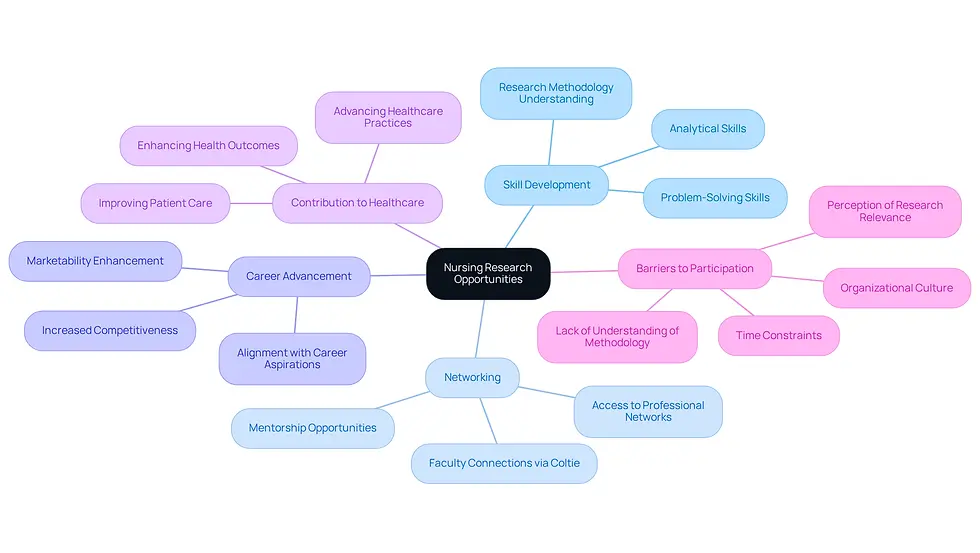
Skill Development: Engaging in research sharpens analytical and problem-solving skills, essential for effective nursing practice. Coltie's platform facilitates this by linking learners with faculty who can assist them through intricate investigative methodologies.
Networking: Research positions often grant access to professional networks and mentors, facilitating valuable connections in the field. Coltie enhances this by allowing learners to view faculty videos about their studies, fostering deeper connections.
Career Advancement: Research experience enhances candidates' competitiveness in the job market, making them more attractive to potential employers. Coltie assists learners in discovering how to find nursing research opportunities as an undergraduate that align with their career aspirations, thereby enhancing their marketability.
Contribution to Healthcare: Students play a vital role in advancing healthcare practices and enhancing patient care through their scholarly contributions. By connecting with faculty through Coltie, learners can participate in meaningful studies that benefit the healthcare profession.
However, many students face significant barriers that hinder their participation in nursing research. Addressing these challenges is vital for fostering an environment that encourages student engagement in research activities. As Marian Altman highlights, "Through investigation, we showcase our contribution to health and wellness, address inquiries about our practice, and validate our knowledge." By overcoming these barriers, educational institutions can significantly enhance the quality of nursing education and better prepare students for their future roles in healthcare.
Identify Resources for Nursing Research Opportunities
Finding nursing research opportunities can be challenging for students, but utilizing a variety of resources can simplify the process:
University Websites: Numerous universities maintain specific pages detailing academic prospects for undergraduate students. For instance, the University of Pennsylvania and Johns Hopkins University offer extensive listings of faculty scholarly interests and available positions.
Professional Organizations: Groups like the American Nurses Association and the National Institute of Nursing Research frequently share opportunities and funding.
Networking Events: Attend conferences, workshops, and seminars related to healthcare studies to connect with faculty and other scholars.
Online Platforms: Websites such as NurseJournal.org and Reddit forums can offer insights and leads on available positions in the field.
Internship Programs: Seek internship programs specifically tailored for individuals in the healthcare field, such as those provided by the Mayo Clinic or the University of Virginia.
Many students struggle to identify suitable research opportunities due to a lack of centralized information. By leveraging these resources, students can streamline their search and learn how to find nursing research opportunities as an undergraduate, increasing their chances of success in the competitive field of nursing research. Ultimately, a proactive approach in exploring these avenues can lead to valuable research experiences that shape a successful nursing career.

Connect with Faculty and Mentors for Research Guidance
For undergraduate nursing students, establishing connections with faculty and mentors is crucial for exploring academic opportunities. Here are effective strategies to foster these relationships:
Attend Office Hours: Regular visits to faculty during their office hours can facilitate discussions about academic interests and uncover potential opportunities.
Participate in Class: Engaging actively in class discussions not only showcases your interest but also helps faculty remember you, increasing the likelihood of mentorship.
Join Research Groups: Many universities host research groups or clubs, which can serve as valuable networking platforms and provide exposure to ongoing projects.
Utilize Social Media: Professional platforms like LinkedIn are effective for connecting with faculty and healthcare professionals. Following their work and engaging with their posts can enhance visibility and rapport.
Seek Formal Mentorship: Investigate formal mentorship programs at your institution that connect individuals with faculty members, providing structured guidance and support.
Guidance plays a pivotal role in healthcare studies, influencing students' academic and professional development. Research shows that students with mentors tend to engage more in scholarly activities, resulting in improved academic performance and career preparedness. For instance, a recent survey emphasized that mentorship greatly influences learners' opportunities for inquiry, with many indicating enhanced confidence and skill growth through guided experiences. Furthermore, with 5,491 qualified applications rejected from master's programs in 2023 due to faculty shortages, the demand for mentorship becomes even more essential. By prioritizing these relationships, students can significantly enhance their academic experiences and career trajectories.

Apply for Research Positions Effectively
To secure nursing research positions, candidates must navigate a competitive landscape with strategic preparation:
Customize Your Resume: Highlight pertinent coursework, skills, and any previous project experience. Customizing your resume for each application is crucial, as research indicates that tailored resumes are favored by recruiters.
Craft a Strong Cover Letter: Create a persuasive cover letter that expresses your enthusiasm for the field and emphasizes how your experience corresponds with the position. Personalizing your cover letter can significantly enhance your chances of making a positive impression, as many applicants overlook the importance of personalization, leading to missed opportunities.
Prepare for Interviews: If chosen for an interview, thoroughly investigate the faculty member's work. Be prepared to discuss how your interests and experiences align with their work, demonstrating your comprehension and passion for the field. Additionally, prepare thoughtful questions for the hiring manager to showcase your engagement and interest in the role.
Follow Up: After submitting your application or attending an interview, send a thank-you email to express your gratitude for the opportunity and reiterate your interest. A simple thank-you email can make a significant impact.
To enhance your job search process, it's important to understand how to find nursing research opportunities as an undergraduate. Contact mentors, faculty, or other experts in the field to gain insights and potential leads on projects.
Be Persistent: If you don’t receive a response, follow up after a reasonable period. Demonstrating persistence can reflect your enthusiasm and commitment to the role, which is often valued by hiring managers.
Ultimately, a proactive approach can set candidates apart in a crowded field.

Conclusion
The pursuit of nursing research opportunities is crucial for undergraduate students seeking to integrate theoretical knowledge with practical skills. These experiences enhance critical thinking and analytical skills while fostering connections in the healthcare community, which ultimately leads to better patient care and health outcomes. Aspiring nurses must recognize the importance of these opportunities to make a meaningful impact in their field.
Throughout this article, various strategies for finding nursing research opportunities have been explored. From leveraging university resources and professional organizations to actively connecting with faculty and mentors, students are equipped with practical tools to navigate their research journey. The importance of tailored applications and persistent follow-up further underscores the competitive nature of securing these positions, emphasizing that a proactive approach can significantly enhance one’s chances of success.
In conclusion, embracing these research opportunities will not only advance individual careers but also significantly enhance the quality of care provided in the healthcare system.
Frequently Asked Questions
Why are nursing research opportunities important for undergraduates?
Nursing research opportunities are essential for undergraduates as they help bridge the gap between theory and practice, enhance critical thinking abilities, broaden understanding of evidence-based practice, and prepare individuals for future healthcare positions.
How does participating in nursing research benefit students?
Participating in nursing research sharpens analytical and problem-solving skills, provides networking opportunities, enhances career advancement prospects, and allows students to contribute to the profession's body of knowledge, ultimately improving patient care and health outcomes.
What role does Coltie play in helping students find nursing research opportunities?
Coltie provides guidance by matching students with faculty advisors who align with their interests, facilitating connections through video personal statements and improved faculty profiles that highlight scholarly work and advising approaches.
What are the key benefits of engaging in nursing research?
Key benefits include skill development in analytical and problem-solving areas, access to professional networks and mentors, enhanced competitiveness in the job market, and the opportunity to contribute to advancements in healthcare practices.
What barriers do students face in participating in nursing research?
Many students encounter significant barriers that hinder their participation in nursing research, which need to be addressed to foster an environment that encourages student engagement in research activities.
How can overcoming barriers to nursing research participation improve nursing education?
By addressing these barriers, educational institutions can enhance the quality of nursing education and better prepare students for their future roles in healthcare, as highlighted by Marian Altman.
List of Sources
Understand the Importance of Nursing Research Opportunities How Undergraduates Benefit From Doing Research (https://usnews.com/education/best-colleges/articles/how-undergraduates-benefit-from-doing-research) Why should I participate in nursing research? - AACN (https://aacn.org/blog/why-should-i-participate-in-nursing-research) BLOG (https://fninr.org/news)
Identify Resources for Nursing Research Opportunities NINR - National Institute of Nursing Research | National Institute of Nursing Research (https://ninr.nih.gov) Office of Nursing Research (https://nursing.emory.edu/research/office-nursing-research) Six AACN Member Schools Receive Funding to Support Efforts to Accelerate Nursing Research and Advance Precision Health (https://aacnnursing.org/news-data/all-news/six-aacn-member-schools-receive-funding-to-support-efforts-to-accelerate-nursing-research-and-advance-precision-health) Nursing Workforce Fact Sheet (https://aacnnursing.org/news-data/fact-sheets/nursing-workforce-fact-sheet)
Connect with Faculty and Mentors for Research Guidance Research: Advancing New Knowledge | Joe C. Wen School of Nursing (https://nursing.ucla.edu/news/research-advancing-new-knowledge) Nursing Faculty Shortage Fact Sheet (https://aacnnursing.org/news-data/fact-sheets/nursing-faculty-shortage) The Importance of Mentorship through your Nursing Degree and Career - Johns Hopkins School of Nursing (https://nursing.jhu.edu/magazine/articles/2024/03/the-importance-of-mentorship-through-your-nursing-degree-and-career) Faculty Link Newsletter: June 2023 (https://aacnnursing.org/news-data/all-news/faculty-link-newsletter-june-2023) NINR - National Institute of Nursing Research | National Institute of Nursing Research (https://ninr.nih.gov/newsandevents/news)
Apply for Research Positions Effectively Launching Your Nursing Career: 5 Tips to Get Hired as a New Grad Nurse (https://brgeneral.org/news-blog/2023/october/launching-your-nursing-career-5-tips-to-get-hire) 165 Resume Statistics: Cover Letters and Valuable Skills (https://flair.hr/en/blog/resume-statistics) 5 Tips for Nurses Seeking New Job Opportunities | Shiftmed Blog (https://shiftmed.com/professionals/blog/5-tips-for-nurses-seeking-new-job-opportunities) Key Strategies to Enhance Your Nursing Resume (https://news.cuanschutz.edu/nursing/key-strategies-to-enhance-your-nursing-resume) Step-by-Step Guide to Applying for Nursing Jobs (https://nurseamerica.us/step-by-step-guide-to-applying-for-nursing-jobs)



Comments