

4 Steps to Choose a Research Mentor for Graduate Success

Updated: Aug 9
Introduction
Choosing the right research mentor is a critical decision that can profoundly impact a graduate student's academic journey. These mentors provide essential guidance, support, and access to valuable networking opportunities and constructive feedback. Choosing the right mentor can be a complex and overwhelming process; how can graduate students ensure they make the best choice? This article outlines four crucial steps to help students identify, connect with, and cultivate a successful mentoring relationship that can significantly enhance their graduate experience.
Understand the Role of Research Mentors
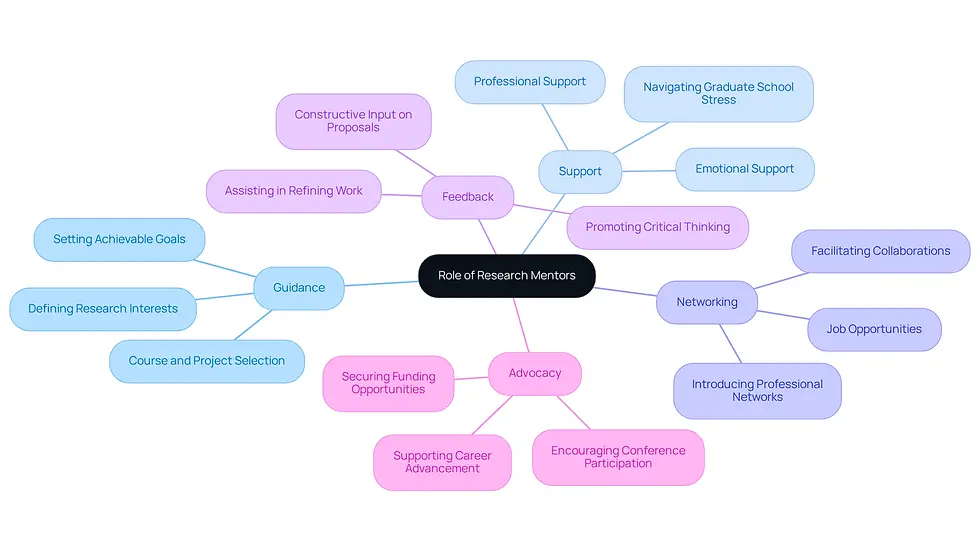
Navigating the complexities of graduate education requires effective guidance, making advisors indispensable to scholars. Advisors play a crucial role in directing graduate scholars through their academic and investigative paths, providing both knowledge and assistance to maneuver through the intricacies of advanced education. Key aspects of a research mentor's role include:
Guidance: Mentors assist students in defining their research interests and setting achievable goals. They offer guidance on choosing courses and research projects that correspond with individuals' career aspirations, which is essential for their academic trajectory.
Support: A strong mentor offers emotional and professional support. They help students navigate the overwhelming stresses of graduate school. This includes being available for discussions about challenges and celebrating successes, fostering a supportive environment.
Networking: Networking is crucial; in fact, 64% of Gen Z students prioritize career growth opportunities. Mentors play a vital role in introducing individuals to professional networks, facilitating connections that can lead to collaborations, internships, and job opportunities.
Feedback: Constructive input on proposals, presentations, and publications is essential for learner development. Mentors promote critical thinking and assist learners in refining their work, which is backed by evidence indicating that doctoral candidates with strong faculty mentorship exhibit higher levels of research productivity.
Advocacy: Effective guides advocate for their learners, whether it’s securing funding opportunities, encouraging conference participation, or supporting career advancement. This advocacy is crucial, as studies indicate that mentoring significantly enhances learners' academic success and career readiness.
Comprehending these roles allows students to recognize their requirements from a guide on how to choose a research mentor, enabling them to pursue individuals who can meet these expectations and ultimately improve their graduate experience. By understanding these roles, students can strategically learn how to choose a research mentor that aligns with their academic and professional goals.
Identify and Research Potential Mentors
Finding the right mentor for your academic journey requires a thoughtful and systematic approach. Here are steps to identify and research potential mentors:
Define Your Academic Interests: Start by clarifying your scholarly and investigative interests. Consider what topics excite you and what skills you want to develop.
Utilize Academic Resources: Visit your university's department website to explore faculty profiles. Seek faculty members whose work aligns with your interests, paying attention to their publications and ongoing projects. Nearly half of the national sample of Summer 2022 REU participants had postgraduate advisors, emphasizing the significance of aligning interests with advisor expertise.
Attend Academic Events: Participate in seminars, workshops, and conferences related to your field. These events allow you to meet faculty and learn about their research, helping you build connections for mentorship.
Connect with Colleagues: Converse with current graduate scholars and alumni regarding their experiences with advisors. They can offer insights into faculty members' guidance approaches and availability. Research shows that graduate student guides typically spend about 23 hours per week with their mentees, enhancing the guidance experience.
Create a Shortlist: Compile a list of possible advisors based on your investigation. Include their areas of expertise, recent publications, and any notable projects they are involved in. This targeted approach can streamline your search for a suitable guide.
Evaluate Fit: Consider not only the advisor's academic interests but also their guidance approach. Seek guides who are recognized for being encouraging, approachable, and committed to their students' achievements. Studies show that strong mentorship is essential for success in securing research funding and career development opportunities. Without effective mentorship, securing research funding and advancing your career may become significantly more difficult. Ultimately, the right mentorship can be a decisive factor in your academic and professional success.

Contact and Communicate with Potential Mentors
Once you have identified potential guides, the next step is to reach out to them effectively. Here’s how to communicate with potential mentors using Coltie's platform:
Craft a Professional Email: Begin with a clear and concise subject line. Introduce yourself briefly, mentioning your academic background and areas of interest. Clearly articulate why you are interested in their work, as this sets a positive tone for your outreach.
Personalize Your Message: Avoid generic emails. Reference specific aspects of their study that resonate with you, demonstrating genuine interest and effort in your outreach. Personalization can significantly increase the likelihood of a positive response.
Be Respectful of Their Time: Acknowledge that faculty members are busy. Keep your email brief and focused, expressing your willingness to meet at their convenience. This respect for their time can foster a more favorable impression.
Request a Meeting: Politely inquire if they would be open to a brief meeting or phone call to discuss possible collaboration opportunities. Flexibility with your availability shows consideration and eagerness to engage.
Follow Up: If you don’t receive a response within a week, consider sending a polite follow-up email. Reiterate your interest and inquire if they had a chance to review your previous message. Following up can demonstrate persistence and commitment.
Prepare for the Meeting: If a meeting is scheduled, come prepared with thoughtful questions about their research, guidance style, and expectations. Being well-prepared shows that you value the mentorship and can make your discussion more fruitful.
Many students hesitate to reach out to busy faculty members, fearing they may not receive a response. However, effective communication with advisors can greatly enhance student engagement and retention rates. For instance, mentees in structured mentorship programs experience a retention rate of 72%, compared to just 49% for non-participants. By utilizing Coltie's features, such as creating profiles and connecting across the academic ecosystem, you can foster meaningful relationships that contribute to your academic success. Ultimately, the effort you invest in establishing these connections can lead to transformative academic experiences.

Follow Up and Clarify Expectations with Mentors
To foster a productive coaching relationship, it is crucial to establish clear communication and expectations from the outset. Here are steps to take:
Schedule Regular Check-Ins: Agree on a schedule for regular meetings or check-ins. Consistent communication helps maintain the relationship and allows for ongoing feedback. Studies show that regular check-ins improve mentoring effectiveness by fostering accountability and engagement.
Set Clear Goals: Discuss your academic and research objectives with your advisor. Be specific about what you hope to achieve during your time together, whether it’s completing a project, publishing a paper, or developing specific skills. Lacking clear goals can lead to a stagnant relationship.
Establish Communication Preferences: Ask your advisor how they prefer to communicate (e.g., email, in-person meetings, phone calls) and how often they expect updates on your progress. This clarity helps streamline interactions and ensures both parties are aligned.
Be Open to Feedback: Encourage your advisor to provide constructive feedback on your work. Be receptive to their suggestions and willing to adapt your approach based on their insights. Mutual respect and open communication are essential for a successful mentoring relationship.
Document Your Discussions: After meetings, summarize key points and action items in an email to your advisor. This helps keep both parties accountable and ensures clarity on expectations. This practice reinforces the importance of maintaining a structured approach to the guidance relationship.
Express Gratitude: Always thank your guide for their time and support. Acknowledging their efforts fosters a positive relationship and encourages continued engagement. Mutual respect is the foundation of this exchange, and expressing gratitude can strengthen this bond.
Be Flexible: As the mentoring relationship evolves, be open to adjusting your goals and communication methods. Flexibility allows both mentor and mentee to adapt to changing circumstances and ensures that the relationship remains productive and beneficial for both parties.
Ultimately, a flexible approach to communication and goals can significantly enhance the mentoring experience for both parties.

Conclusion
Selecting the right research mentor can be challenging, yet it is essential for graduate success. A mentor provides essential guidance and support, significantly influencing a student's academic journey. Understanding the various roles of research mentors enables students to make informed decisions that align with their academic and professional goals.
The article outlines essential steps for selecting a mentor, including:
Identifying personal academic interests
Researching potential mentors
Establishing effective communication
Each step emphasizes the importance of a thoughtful approach, from crafting personalized outreach messages to setting clear expectations for the mentoring relationship. These strategies are designed to foster a productive partnership that enhances the overall graduate experience.
A strong mentorship can profoundly impact a student's academic and professional journey. Research mentors are instrumental in navigating the complexities of graduate education, providing not only academic support but also valuable networking opportunities and advocacy. By actively engaging in the mentor selection process and maintaining open lines of communication, graduate students can cultivate relationships that lead to greater academic achievement and career readiness. By prioritizing the mentor selection process, students can unlock opportunities that significantly enhance their academic and professional trajectories.
Frequently Asked Questions
What is the role of research mentors in graduate education?
Research mentors provide guidance, support, networking opportunities, feedback, and advocacy to help graduate scholars navigate their academic and investigative paths.
How do mentors assist students in defining their research interests?
Mentors help students identify their research interests and set achievable goals, guiding them in selecting courses and research projects that align with their career aspirations.
What kind of support do mentors offer to graduate students?
Mentors provide both emotional and professional support, helping students manage the stresses of graduate school and fostering a supportive environment for discussions and celebrations of successes.
Why is networking important in graduate education, and how do mentors facilitate it?
Networking is crucial for career growth, and mentors introduce students to professional networks, helping them make connections that can lead to collaborations, internships, and job opportunities.
What type of feedback do mentors provide to their mentees?
Mentors offer constructive feedback on proposals, presentations, and publications, promoting critical thinking and helping students refine their work.
How does mentorship impact research productivity among doctoral candidates?
Studies indicate that doctoral candidates with strong faculty mentorship exhibit higher levels of research productivity due to the guidance and support they receive.
In what ways do mentors advocate for their students?
Mentors advocate for their students by securing funding opportunities, encouraging participation in conferences, and supporting career advancement, which enhances academic success and career readiness.
How can students choose the right research mentor for their needs?
By understanding the roles of research mentors, students can identify their requirements and strategically select mentors who align with their academic and professional goals.
List of Sources
Understand the Role of Research Mentors The Role of Mentorship in Graduate Studies (https://lincolnu.edu/news/2025/05/mentorship-in-graduate-studies.html) Mentoring in an Era of Uncertainty for Higher Education (https://insidehighered.com/news/faculty/career-development/2025/04/18/mentoring-era-uncertainty-higher-education) Enhancing faculty mentoring of graduate students: A Q&A with Vice Dean Hendrik Lorenz (https://gradschool.princeton.edu/news/2024/enhancing-faculty-mentoring-graduate-students-qa-vice-dean-hendrik-lorenz) naspa.org (https://naspa.org/blog/reimagining-mentorship-in-higher-education-addressing-the-academic-and-career-needs-of-first-year-students) Mentoring Statistics You Need to Know - 2026 (https://mentorloop.com/blog/mentoring-statistics)
Identify and Research Potential Mentors Call for Mentors (https://climatehealthcafe.org/news/call-for-mentors) 2025 News (https://medschool.umaryland.edu/carti/about-carti/news/2025-news/new-research-mentor-matching-program-at-carti.html) The Impact of Postgraduate Mentors on Undergraduate Researcher Gains | CBE—Life Sciences Education (https://lifescied.org/doi/10.1187/cbe.24-05-0141) Mentoring Matters: Supporting Students’ Development of Mentoring Constellations in Higher Education - Center for Engaged Learning (https://centerforengagedlearning.org/mentoring-matters) College mentors are helpful: But too many students aren’t finding them – The Chronicle of Evidence-Based Mentoring (https://evidencebasedmentoring.org/savvy-students-get-the-guidance)
Contact and Communicate with Potential Mentors Mentoring Statistics You Need to Know - 2026 (https://mentorloop.com/blog/mentoring-statistics) How to Reach Out to Potential Mentors and Foster That Relationship (https://careercenter.fresnostate.edu/blog/2024/11/25/how-to-reach-out-to-potential-mentors-and-foster-that-relationship) 4 Steps for College Students to Find Research Mentors Easily (https://coltie.com/post/4-steps-for-college-students-to-find-research-mentors-easily) How to Contact a Potential Mentor (https://curf.ku.edu/how-contact-potential-mentor)
Follow Up and Clarify Expectations with Mentors 8 Tips To Maintain a Good Mentor/Mentee Relationship (https://eller.arizona.edu/news/2022/07/8-tips-maintain-good-mentormentee-relationship) College mentors are helpful: But too many students aren’t finding them – The Chronicle of Evidence-Based Mentoring (https://evidencebasedmentoring.org/savvy-students-get-the-guidance) Creating and cultivating successful mentoring relationships (https://iod.com/resources/employment-and-skills/mentoring-relationship-tips) Want a Successful Mentoring Relationship? Focus on Building Trust - Washington State Bar News (https://wabarnews.org/2021/12/07/want-a-successful-mentoring-relationship-focus-on-building-trust)



Comments