

Enhance Education Pathways and Research Opportunities with Best Practices

Introduction
To thrive in a competitive academic landscape, educational institutions must enhance pathways and research opportunities for student success. By implementing best practices that prioritize intentional student-faculty relationships, personalized learning experiences, and the integration of technology, educational institutions can create environments that engage learners and support their unique needs.
Yet, a pressing question arises: how can institutions effectively adapt these strategies? Without effective adaptation, institutions risk losing student engagement and success in a competitive academic environment.
Foster Intentional Student-Faculty Relationships
To enhance educational experiences, establishing purposeful connections between learners and instructors is crucial. Here are some best practices:
Encourage Open Communication: Faculty should create an environment where learners feel comfortable expressing their thoughts and concerns. Regular check-ins and open office hours can help. Positive student-faculty connections significantly influence retention and success.
Implement Mentorship Programs: Create mentorship initiatives that connect learners with instructors based on common interests. Research shows that effective mentorship can deepen engagement and offer personalized guidance. This can lead to improved academic performance and student satisfaction.
Promote Collaborative Projects: Encourage faculty to involve learners in research or projects, allowing them to work closely together. This enhances learning and builds rapport. Collaborative initiatives lead to meaningful interactions that strengthen community ties.
Recognize and Celebrate Achievements: Acknowledging accomplishments, whether scholarly or extracurricular, fosters a sense of belonging and encourages further engagement. Acknowledgment of efforts can offer positive reinforcement, encouraging learners to engage actively in their academic journeys.
Collect Input: Many educators struggle to understand the needs of their learners. Regular feedback can bridge this gap, assisting in recognizing areas for enhancement and fortifying connections.
Implementing these practices fosters a supportive academic atmosphere. This benefits both learners and educators, leading to greater academic achievement.

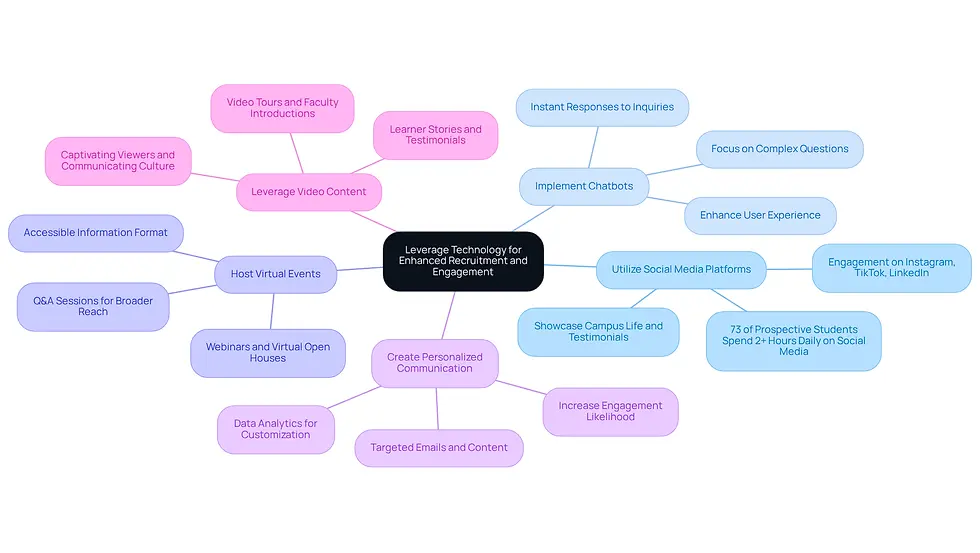
Leverage Technology for Enhanced Recruitment and Engagement
Traditional recruitment methods often fall short in engaging potential learners effectively. Incorporating technology into recruitment and engagement strategies can significantly enhance their effectiveness. Here are some best practices:
Utilize Social Media Platforms: Engage potential learners through platforms like Instagram, TikTok, and LinkedIn. Distributing genuine material that showcases campus life, faculty perspectives, and testimonials from learners resonates well with today's individuals, who spend an average of 73% of potential first-year enrollees dedicating two or more hours daily on social media.
Implement Chatbots: AI-driven chatbots on your website can provide instant responses to inquiries, enhancing user experience and ensuring that potential applicants receive timely information. This technology allows admissions teams to focus on more complex questions while enhancing overall engagement.
Host Virtual Events: Organizing webinars, virtual open houses, and Q&A sessions broadens your reach and engagement, particularly for those unable to visit campus. These events foster connections and provide valuable information in an accessible format.
Create Personalized Communication: Utilizing data analytics to customize communication based on potential learners' interests and behaviors can significantly enhance engagement. Personalized emails and targeted content ensure that messages resonate with recipients, enhancing the likelihood of conversion.
Leverage Video Content: Incorporating video tours, faculty introductions, and learner stories into your recruitment strategy is essential. Video content not only captivates viewers but also effectively communicates the institution's culture and values, making it a powerful tool in attracting potential enrollees.
Embracing these technological advancements not only streamlines recruitment but also cultivates meaningful relationships with prospective students.
Implement Personalized Academic Pathways and Support Systems
Education pathways and research opportunities are crucial for addressing the diverse needs of learners and enhancing their success. Here are some best practices to consider:
Conduct Needs Assessments: Regularly evaluate learners' academic and personal needs through surveys, focus groups, or one-on-one meetings. This approach enables institutions to customize support services efficiently, ensuring they address the distinct needs of each learner.
Create Customized Learning Plans: Collaborate with learners to formulate tailored learning plans that align with their objectives, strengths, and interests. This customized guidance can significantly improve their educational journey and involvement, especially when backed by platforms like Coltie that empower learners with better information and connections.
Offer Flexible Learning Options: Provide a variety of learning formats, including online, hybrid, and in-person classes, to accommodate different learning styles and schedules. Flexibility is essential since learners seek educational experiences that fit their individual needs.
Integrate Support Services: Ensure that academic advising, counseling, and tutoring services are easily accessible and seamlessly incorporated into the learner experience. This holistic approach helps learners navigate challenges more effectively and fosters a supportive environment. Coltie's tools, such as the Opportunity Planner and Event Management features, can facilitate this integration, enhancing communication and support.
Monitor Progress and Adjust Plans: Regularly review learners' progress and make necessary adjustments to their learning plans. This ongoing evaluation ensures that support remains relevant and effective throughout their academic journey.
Implementing tailored education pathways and research opportunities can significantly enhance learner engagement and success, leading to better academic outcomes. As universities prepare for 2026, the emphasis on personalized learning will be vital in adapting to the evolving landscape of higher education, with platforms like Coltie playing a key role in this transformation.

Embrace Continuous Improvement and Adaptation in Educational Practices
Continuous improvement is not just beneficial; it is vital for sustaining effective teaching practices in today's educational environment. Here are some best practices to consider:
Establish Feedback Loops: Implement mechanisms for gathering input from learners, faculty, and staff to identify areas needing improvement. This can involve surveys, focus groups, and suggestion boxes, fostering a responsive educational environment.
Implement Data-Driven Decision Making: Leverage data analytics to guide decisions regarding curriculum, support services, and resource allocation. This approach ensures that changes are evidence-based and aligned with the evolving needs of students. This statistic underscores a significant gap in teacher training that must be addressed to enhance educational effectiveness, as only 17% of teachers learned how to use data effectively during their educator preparation programs.
Foster a Culture of Innovation: Fostering a culture of innovation means encouraging faculty and staff to actively explore new teaching methods and technologies. Providing professional development opportunities is essential for nurturing this culture, which is crucial as K-12 organizations increasingly recognize the need to adapt to new educational landscapes. This trend necessitates a reevaluation of teaching strategies to incorporate technology effectively, as 72% of teenagers have used AI companions.
Regularly Review and Update Curriculum: Keep the curriculum relevant by routinely assessing and updating course content based on industry trends and learner feedback. This practice is especially crucial as states concentrate on establishing strong education pathways and research opportunities to better equip individuals for future employment. For example, the case study on 'Continuous Improvement in California's K-12 Education System' demonstrates how local control and continuous improvement can enhance learning outcomes.
Engage in Collaborative Enhancement Initiatives: Involve all stakeholders in the ongoing enhancement process, including learners, faculty, and administration. Collaborative initiatives can lead to more comprehensive and effective solutions, enhancing the overall learning experience.
Ultimately, institutions that prioritize continuous improvement will not only enhance their educational offerings but also significantly impact student success in a rapidly evolving world.

Conclusion
Establishing strong connections between students and faculty is vital for enhancing educational experiences and fostering academic success. By prioritizing intentional relationships, institutions create an environment that supports learners and enriches teaching experiences. The practices outlined in this article serve as a roadmap for educators and administrators aiming to cultivate a more engaged and supportive academic community.
Key strategies discussed include:
Fostering open communication
Implementing mentorship programs
Leveraging technology for recruitment and engagement
Additionally, the importance of personalized academic pathways and continuous improvement in educational practices cannot be overstated. These elements work together to create a holistic approach that addresses the diverse needs of learners, ultimately leading to improved academic outcomes and student satisfaction.
Navigating the complexities of modern learning environments presents significant challenges for educational institutions. Embracing these best practices will be crucial. By investing in student-faculty relationships, utilizing technology effectively, and committing to continuous improvement, schools can significantly enhance the educational landscape. The commitment to these strategies will determine the success of educational institutions in meeting the evolving needs of their students.
Frequently Asked Questions
Why are intentional student-faculty relationships important?
Intentional student-faculty relationships enhance educational experiences, significantly influencing student retention and success.
How can faculty encourage open communication with students?
Faculty can create an environment for open communication by holding regular check-ins and maintaining open office hours, making students feel comfortable expressing their thoughts and concerns.
What role do mentorship programs play in student-faculty relationships?
Mentorship programs connect learners with instructors based on common interests, deepening engagement and providing personalized guidance, which can lead to improved academic performance and student satisfaction.
How can collaborative projects benefit student-faculty relationships?
Collaborative projects allow students to work closely with faculty on research or initiatives, enhancing learning and building rapport, which strengthens community ties.
Why is it important to recognize and celebrate student achievements?
Recognizing and celebrating achievements fosters a sense of belonging and encourages further engagement, providing positive reinforcement for students to actively participate in their academic journeys.
How can faculty collect input from students to improve relationships?
Faculty can collect regular feedback from students to understand their needs better, helping to identify areas for enhancement and strengthen connections.
What overall benefits do these practices provide?
Implementing these practices fosters a supportive academic atmosphere that benefits both learners and educators, leading to greater academic achievement.
List of Sources
Foster Intentional Student-Faculty Relationships Positive teacher-student relationships lead to better teaching (https://showme.missouri.edu/2022/positive-teacher-student-relationships-lead-to-better-teaching) Study Reveals Importance of Student-Teacher Relationships In Early Childhood Education | Society for Research in Child Development SRCD (https://srcd.org/news/study-reveals-importance-student-teacher-relationships-early-childhood-education) The Benefits of Student-Faculty Relationships Mentoring (https://watermarkinsights.com/resources/blog/building-bridges-strengthening-the-faculty-student-connection-for-academic-success) Research on meaningful faculty-student interactions (https://news.ku.edu/news/article/new-books-examine-how-to-foster-meaningful-interactions-between-students-faculty-to-bolster-college-success)
Leverage Technology for Enhanced Recruitment and Engagement Social Media for Higher Education: Trends, Tools, and Best Practices (https://concept3d.com/blog/higher-ed/social-media-higher-education-trends-tools-best-practices) Student Engagement Through Social Media: #IsItPossible? - Josie Ahlquist (https://josieahlquist.com/student-engagement-through-social-media-isitpossible) Best Higher Education Marketing Strategies for 2026 (https://engineerica.com/academic-centers/post/higher-education-marketing-strategies) How AI Is Reshaping College Enrollment Strategy in 2026 (https://cengagegroup.com/news/perspectives/2026/how-technology-ai-and-career-readiness-are-reshaping-enrollment-strategy) How Higher Ed Can Use Social to Keep Students Engaged and Excited About College (https://agorapulse.com/blog/social-media-management/how-universities-social-media-keep-students-engaged)
Implement Personalized Academic Pathways and Support Systems How American Universities Are Using AI to Personalize Learning in 2026 | Acacia (https://acacia.edu/blog/how-american-universities-are-using-ai-to-personalize-learning-in-2026) 7 Trends That Will Reshape Higher Education in 2026 (https://ets.org/insights-and-perspectives/7-trends-that-will-reshape-higher-education-in-2026.html) 10 higher education trends for the new year (https://insidetrack.org/blog/10-higher-education-trends-to-watch-in-2026) Top 10 Higher Ed Predictions for 2026 (https://linkedin.com/pulse/top-10-higher-ed-predictions-2026-evan-kropp-ph-d--tgaie) Charting a Path to the Future through Individualized Learning Plans | Rennie Center (https://renniecenter.org/research/reports/charting-path-future-through-individualized-learning-plans)
Embrace Continuous Improvement and Adaptation in Educational Practices 8 Education Policy Trends for State Lawmakers in 2026 (https://excelined.org/2026/01/09/8-education-policy-trends-for-state-lawmakers-in-2026) 5 Biggest K–12 Education Trends for 2026 | Discovery Education Blog (https://discoveryeducation.com/blog/educational-leadership/2026-education-trends) Top Trends for Boosting K-12 Student Outcomes in 2026–27 (https://hanoverresearch.com/insights-blog/k-12-education/top-trends-for-boosting-k-12-student-outcomes) PACE - Continuous school improvement & support (https://edpolicyinca.org/topics/continuous-school-improvement-support) Continuous Improvement in Education - Carnegie Foundation for the Advancement of Teaching (https://carnegiefoundation.org/continuous-improvement-in-education)



Comments