

How to Find Bioinformatics Research Opportunities as an Undergraduate

Updated: Jun 21
Introduction
For undergraduates in bioinformatics, the journey into research presents both significant opportunities and formidable challenges. There are numerous opportunities, from internships to collaborative projects, that can provide students with invaluable experiences to shape their futures. Many students struggle to find suitable research opportunities due to the competitive nature of the field. Strategic positioning is essential for students to capitalize on these opportunities and advance their careers in bioinformatics.
Understand Bioinformatics Research Opportunities
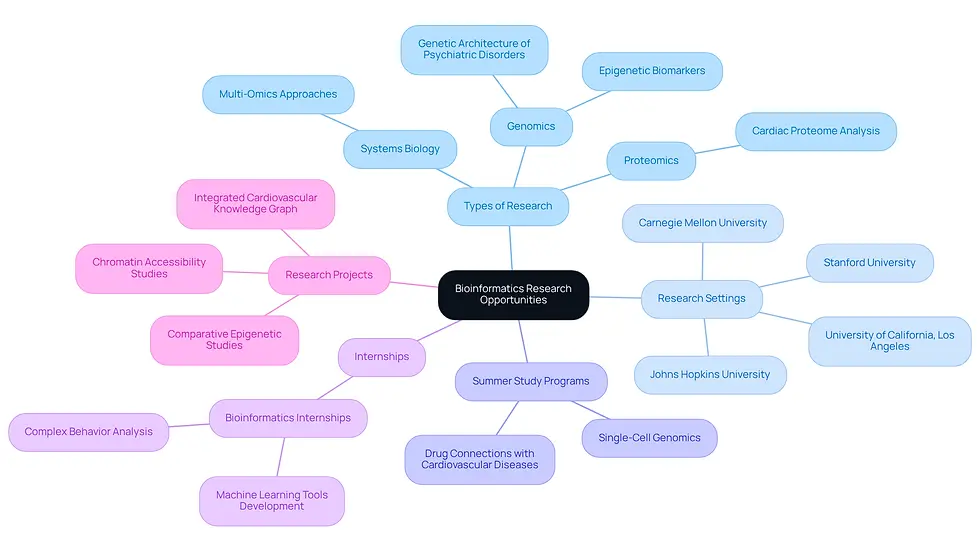
Navigating the multifaceted landscape of bioinformatics requires a clear understanding of its diverse research avenues. Here are key areas to explore:
Types of Research: Delve into branches of bioinformatics such as genomics, proteomics, and systems biology. Each area offers unique study opportunities designed for various interests. For example, projects on the genetic structure of psychiatric disorders utilize genomic data to examine conditions such as schizophrenia and bipolar disorder, allowing students to engage with innovative studies. By participating in these projects, students will develop essential skills in data management with Neo4j and gain insights into biomedical ontologies and coding systems.
Research Settings: Opportunities exist across academic institutions, government laboratories, and private industry. Understanding your preferred work environment can streamline your search for suitable positions. For instance, projects at institutions like Johns Hopkins University and Stanford University provide unique insights into bioinformatics applications in health and disease.
Summer Study Programs: Numerous universities offer summer study programs specifically tailored for undergraduates, providing practical experience that can open doors for future opportunities. These programs often concentrate on fields such as single-cell genomics and drug connections with cardiovascular diseases, enabling learners to apply their skills in real-world contexts. Additionally, funding opportunities may be available for individuals participating in these research projects, addressing financial concerns.
Internships: Internships are invaluable for gaining practical experience. Seek out positions that emphasize bioinformatics, as they often provide individuals with essential skills and networking opportunities. For instance, individuals engaged in projects analyzing complex behaviors or developing machine learning tools for biomedical questions can significantly enhance their expertise.
Research Projects: Engage with ongoing projects that resonate with your interests. Numerous universities encourage undergraduate involvement in scholarly activities, offering a platform to collaborate with faculty on innovative studies. Projects such as building integrated cardiovascular knowledge graphs or examining chromatin accessibility alterations during cell quiescence illustrate how students can contribute to significant studies.
By strategically exploring these areas, undergraduates can discover how to find bioinformatics research opportunities as an undergraduate while aligning their academic pursuits with promising career paths.
Explore Resources for Research Opportunities
Navigating the diverse landscape of bioinformatics study options requires a strategic approach to resource utilization. Here are essential avenues to explore:
University Websites: Many institutions maintain dedicated pages for undergraduate study options. For instance, UCLA's Bioinformatics Undergraduate Research page highlights ongoing projects and faculty members actively seeking researchers, making it a valuable resource for learners.
Internship Directories: Platforms such as Pathways to Science provide extensive listings of internships and research roles specifically in bioinformatics and related areas, assisting individuals in finding appropriate positions. In 2026, numerous internship programs are available, highlighting the strong demand for practical experience in this field.
Professional Organizations: Membership in groups like the International Society for Computational Biology provides access to exclusive job boards and networking events, improving individuals' chances of discovering relevant positions.
Networking Platforms: Utilizing LinkedIn to connect with industry professionals is crucial. Following companies and researchers allows students to stay informed about new openings and trends in the field.
Social Media and Forums: Engaging with communities on platforms like Reddit can be beneficial. Subreddits like r/bioinformatics frequently showcase conversations regarding internships and research options, offering insights and leads.
Job Boards: Regularly checking job boards like Indeed and Prosple is essential for discovering internships and job openings in the field of biology. These sites regularly refresh their listings, ensuring learners have access to the most recent options.
By strategically leveraging these resources, learners can significantly enhance their chances of securing valuable internships. The proactive use of these resources not only aids in securing internships but also fosters a deeper engagement with the field of bioinformatics.

Prepare and Submit Applications for Research Positions
Effectively preparing and submitting your applications is crucial in a competitive job market. Here’s how to do it:
Tailor Your Resume: Customize your resume to emphasize relevant coursework, skills, and experiences related to the field. Highlight any programming languages, software, or laboratory techniques you are proficient in, as these are crucial in the field.
Craft a Strong Cover Letter: Write a compelling cover letter that expresses your interest in the specific position and outlines how your background aligns with the role. Mention relevant projects or experiences that demonstrate your capabilities and enthusiasm for bioinformatics. As noted by career advisors, avoiding generic openings and instead using personal anecdotes can make your cover letter stand out.
Gather Recommendations: Request letters of recommendation from professors or professionals who can vouch for your abilities and potential as a researcher. Provide them with details about the position to help them tailor their letters effectively.
Prepare for Interviews: If chosen for an interview, examine the faculty member’s work and the specific project thoroughly. Be ready to discuss how your skills and interests correspond with their goals, demonstrating your comprehension of the field.
Follow Application Instructions: Carefully read and adhere to the application instructions provided by the institution or organization. Ensure that you submit all required documents by the specified deadline to avoid disqualification.
Keep Track of Applications: Maintain a spreadsheet or document to track the positions you have applied for, including deadlines and follow-up dates. This organizational tool will help you manage your applications and ensure you don’t miss any opportunities. Typically, undergraduates submit about 10 to 15 applications for life sciences positions, highlighting the field's competitiveness.
By following these steps, you can greatly enhance your chances of securing a position in the increasingly competitive field of biological data analysis. Additionally, gaining industry experience not only enhances your application but also sets you apart in a crowded job market. In biological data analysis, entry-level positions typically start at around $48,000, while experienced professionals can earn over $101,554, indicating a promising career trajectory.

Network with Faculty and Research Advisors
Networking is essential for learning how to find bioinformatics research opportunities as an undergraduate in biological data analysis, a field where connections can significantly impact your career trajectory. Here are effective strategies to connect with faculty and research advisors:
Attend Seminars and Workshops: Participate in departmental seminars, workshops, and conferences centered on biological data analysis. With more than 296 conferences planned throughout the USA in 2026, these events are excellent chances to connect with faculty and discover their studies. Notably, July is the most active month for such gatherings, offering unparalleled networking potential.
Engage in Class: Actively participate in classes, particularly those related to bioinformatics. Engaging with professors during lectures can help you stand out and create a lasting impression.
Reach Out via Email: Don’t hesitate to contact faculty members whose work aligns with your interests. Introduce yourself, share your excitement for their work, and ask about possible projects. Ensure your communication is concise and professional.
Utilize Office Hours: Take advantage of professors’ office hours to discuss your interests and seek guidance. This personal interaction can help build rapport and may lead to academic prospects.
Join Academic Groups: Engage in academic groups related to bioinformatics or biology. These groups frequently organize events and offer networking chances with faculty and industry experts, providing guidance on how to find bioinformatics research opportunities as an undergraduate and nurturing connections that can result in collaborative projects.
Leverage Coltie's Intelligent Matching: Consider using Coltie, which intelligently suggests matches between prospective students and graduate advisors. This platform enables you to produce a video personal statement and access faculty profiles enriched with videos that outline their studies and advising styles, facilitating a connection with the appropriate advisors.
Follow Up: After meeting someone or having a conversation, send a follow-up email thanking them for their time and reiterating your interest in their work. This practice keeps you on their radar and reinforces your commitment.
Ultimately, the relationships you cultivate today can shape the trajectory of your future in bioinformatics.

Conclusion
Navigating the landscape of bioinformatics research opportunities is crucial for undergraduates aiming to establish a successful career in this dynamic field. By understanding the various types of research, settings, and resources available, students can strategically position themselves to gain invaluable experience and skills that will serve them well in their future endeavors.
Key insights from this guide highlight the importance of identifying specific research areas, such as genomics and proteomics, and utilizing resources like university websites, internship directories, and professional organizations to uncover potential positions. Additionally, the significance of tailoring applications, networking with faculty, and actively engaging in academic communities cannot be overstated, as these actions can greatly enhance one's chances of securing a research opportunity.
Many students find themselves overwhelmed by the vast array of research options available, making it challenging to identify the right path. Failing to take these steps could result in missed opportunities that could significantly impact their career trajectory. Ultimately, finding bioinformatics research opportunities is about more than just securing a position; it’s about establishing a strong foundation for a fulfilling career. By actively pursuing opportunities, utilizing available resources, and building meaningful connections, undergraduates can open doors to exciting possibilities in bioinformatics, paving the way for impactful contributions to science and technology.
Frequently Asked Questions
What are the main branches of bioinformatics research?
The main branches of bioinformatics research include genomics, proteomics, and systems biology. Each area offers unique study opportunities tailored to various interests.
How can students engage with bioinformatics research projects?
Students can engage with bioinformatics research projects by participating in studies that utilize genomic data, such as those examining the genetic structure of psychiatric disorders like schizophrenia and bipolar disorder.
What skills can students develop through bioinformatics research projects?
Students can develop essential skills in data management using Neo4j, as well as gain insights into biomedical ontologies and coding systems.
Where can bioinformatics research opportunities be found?
Bioinformatics research opportunities can be found in academic institutions, government laboratories, and private industry. Notable institutions include Johns Hopkins University and Stanford University.
Are there summer study programs available for undergraduates in bioinformatics?
Yes, many universities offer summer study programs specifically for undergraduates, focusing on practical experience in fields like single-cell genomics and drug connections with cardiovascular diseases.
What are the benefits of participating in summer study programs?
Participating in summer study programs provides practical experience and can open doors for future opportunities. Additionally, funding opportunities may be available to help address financial concerns.
How important are internships in bioinformatics?
Internships are invaluable for gaining practical experience in bioinformatics. They provide essential skills and networking opportunities, particularly in projects analyzing complex behaviors or developing machine learning tools for biomedical questions.
How can undergraduates get involved in research projects?
Undergraduates can get involved in research projects by collaborating with faculty on ongoing studies at their universities, which often encourage student participation in scholarly activities.
Can you give examples of specific research projects in bioinformatics?
Examples of specific research projects include building integrated cardiovascular knowledge graphs and examining chromatin accessibility alterations during cell quiescence.
List of Sources
Understand Bioinformatics Research Opportunities The Best Undergraduate Bioinformatics/Biotechnology Programs (https://usnews.com/best-colleges/rankings/computer-science/biocomputing-bioinformatics-biotechnology) Bioinformatics and Genomics Research Opportunities | Penn CURF (https://curf.upenn.edu/rd/bioinformatics-and-genomics-research-opportunities) Undergraduate and Masters Research | UCLA | Bioinformatics (https://bioinformatics.ucla.edu/undergraduate-research) Nationwide Research Opportunities | Bioinformatics and Systems Biology (https://bioinformatics.ucsd.edu/undergrad/nationwide-opportunities)
Explore Resources for Research Opportunities Bioinformatics: Jobs Galore (https://science.org/content/article/bioinformatics-jobs-galore) Free Bioinformatics Career Resources & Tools | Hire Omics (https://hire-omics.com/resources) Upcoming opportunities (https://asbmb.org/asbmb-today/careers/011426/opportunities-for-scientists-11426) Internship and Research Opportunities - The Council on Undergraduate Research (https://cur.org/resources-publications/student-resources/internship-and-research-opportunities)
Prepare and Submit Applications for Research Positions Writing a winning cover letter (https://science.org/content/article/writing-winning-cover-letter) 7 Popular Bioinformatics Careers (https://graduate.northeastern.edu/knowledge-hub/top-bioinformatics-careers) Bioinformatics Jobs: How to Succeed in This Competitive Space (https://xtalks.com/bioinformatics-jobs-how-to-succeed-in-this-competitive-space-2650) What jobs can you get with a bioinformatics degree? | University of Idaho (https://uidaho.edu/newsroom/blog/bioinformatics-careers) How to Write a Good Cover Letter for a Research Position | Earthlab (https://earthlab.colorado.edu/blog/how-write-good-cover-letter-research-position)
Network with Faculty and Research Advisors A Strategic Partnership to Advance AI Applications in Genomics and Bioinformatics for Health Innovation (https://bioinform.jmir.org/2026/1/e93272) Connect with fellow delegates: Join the Florence 2026 Networking Group (https://sebiology.org/resource/connect-with-fellow-delegates-join-the-florence-2026-networking-group.html) Women in Bioinformatics Workshop (https://go.southernct.edu/women-in-bioinformatics) The Importance of Academic Conferences (https://mdpiblog.wordpress.sciforum.net/2026/04/15/the-importance-of-academic-conferences) Upcoming Bioinformatics Conferences in USA 2026 (https://allconferencealert.com/usa/bioinformatics)



Comments