

How to Find Public Health Research Opportunities as an Undergraduate

Updated: Jun 1
Introduction
Identifying public health research opportunities is crucial for undergraduates aiming to build impactful careers in community wellness. With a variety of options ranging from internships to volunteer roles, students can immerse themselves in vital research that shapes public health policies and practices. However, many students struggle to navigate the multitude of resources and strategies available to uncover these opportunities. Without a strategic approach, aspiring public health professionals may miss out on valuable experiences that align with their career aspirations.
Understand Public Health Research Opportunities
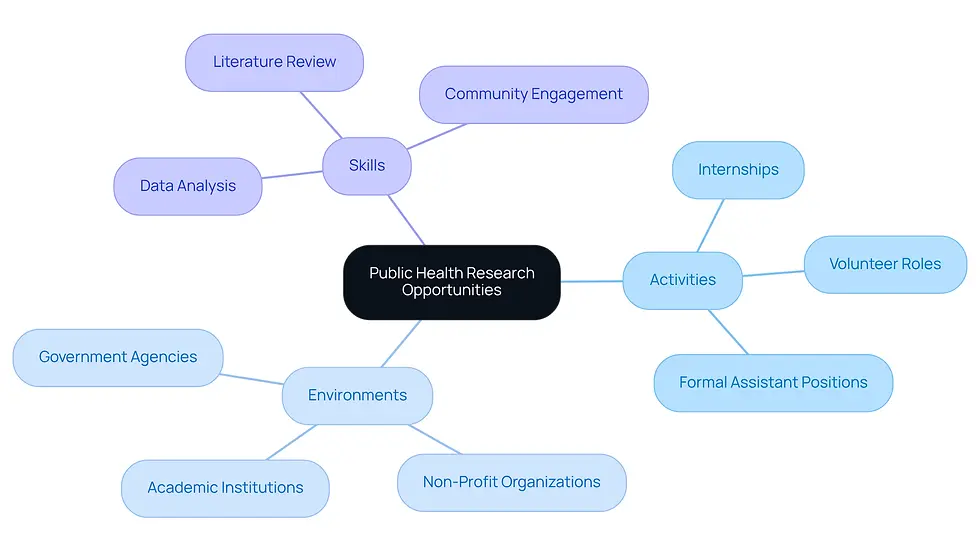
Exploring how to find public health research opportunities as an undergraduate can be a complex yet rewarding endeavor. Public wellness study options encompass various activities, including:
Internships
Volunteer roles
Formal assistant positions
These opportunities are available in diverse environments such as government agencies, non-profit organizations, and academic institutions. Understanding the available study categories, including epidemiological investigations, policy analysis, and community assessments, will help you identify areas that align with your interests. Additionally, familiarize yourself with the skills required for these roles, such as data analysis, literature review, and community engagement, as they will be essential in your applications. Understanding these roles and their requirements is crucial for making informed decisions about your career path in public wellness.
Identify Key Resources for Research Opportunities
For students navigating their academic and career paths, understanding how to find public health research opportunities as an undergraduate can be challenging. Here are key resources to consider:
University Career Centers: Most universities have specialized career services that offer listings of internships and academic positions.
Professional Organizations: Organizations such as the American Public Health Association (APHA) and the Society for Public Health Education (SOPHE) often post internship and fellowship openings.
Online Databases: Websites such as Pathways to Science and NIH Research Training provide searchable collections of scholarly options designed for undergraduates.
Networking Platforms: Leverage professional networking platforms, such as LinkedIn, to connect with industry professionals and uncover unadvertised opportunities.
Academic Journals and Conferences: Attend conferences and read journals to learn about current studies and potential openings.
By utilizing these resources, students can significantly enhance their chances of learning how to find public health research opportunities as an undergraduate, leading to meaningful research experiences that enhance both academic and professional growth.

Search for Opportunities Using Academic Databases
For students seeking research opportunities in public health, learning how to find public health research opportunities as an undergraduate can be overwhelming due to the multitude of options. To effectively search for public health research opportunities using academic databases, consider the following strategies:
Access Relevant Databases: Start with essential databases like PubMed, CINAHL, and Scopus, which provide extensive literature and scholarly options. W. Edwards Deming's assertion that "Without data, you're just another person with an opinion" underscores the necessity of relying on credible sources.
Use Specific Keywords: Employ targeted keywords like "undergraduate research internships in public health" or "public health research assistant positions" to refine your search results. Research indicates that using specific keywords can increase search effectiveness by up to 50%.
Set Up Alerts: Utilize database functionalities that enable you to establish notifications for new postings aligning with your criteria, ensuring you stay updated about the latest prospects. This proactive approach aligns with Peter Drucker's assertion that understanding user needs is crucial for effective searches.
Review Listings Regularly: Establish a routine to check these databases weekly, enabling you to discover new prospects promptly. Regular engagement with these resources can significantly enhance your chances of finding suitable positions.
Utilize Filters: Apply filters to narrow your search by date, type of option, or specific community wellness topics, helping you find the most relevant positions. As noted by library experts, effective filtering can streamline the search process and yield better results.
Implementing these strategies not only enhances search effectiveness but also empowers students to learn how to find public health research opportunities as an undergraduate, securing meaningful experiences in community well-being.

Network with Faculty and Research Advisors
Many students overlook the importance of establishing connections with faculty and advisors, which can be crucial for discovering community welfare options. Here are effective strategies to enhance your networking efforts:
Attend office hours to regularly visit faculty, discuss your interests in public health, and learn how to find public health research opportunities as an undergraduate. Many students struggle to find meaningful connections with faculty, often missing out on valuable opportunities. This direct engagement often results in valuable insights and mentorship opportunities. According to external sources, students can take 5 to 10 minutes to discuss the meaning of a quote in groups or pairs, which can be a useful timeframe for meaningful conversations during office hours.
Engage in Class: Actively participate in class discussions, showcasing your enthusiasm for subject matters. Faculty members often take note of engaged students and may recommend them for research positions. As George Evans states, "Every child can learn, but not in the same way or time," highlighting the importance of personalized engagement in the learning process.
Join Relevant Clubs: Get involved in public health or research-related student organizations. Joining these platforms allows you to connect with faculty and peers who share your interests, creating a collaborative environment.
Follow Up: After initial meetings, send a thank-you email to express your appreciation for their time. Reiterate your interest in inquiry, which helps maintain the lines of communication open. This practice not only demonstrates professionalism but also strengthens your dedication to seeking avenues for exploration.
Harness Social Media: Use platforms like LinkedIn to connect with faculty and professionals in the community wellness sector. Share relevant articles or insights to maintain an ongoing dialogue and demonstrate your commitment to the field. Engaging with faculty online can complement your in-person efforts and broaden your network.
Ultimately, the relationships you build with faculty can teach you how to find public health research opportunities as an undergraduate, opening doors to opportunities that shape your career in community wellbeing. Additionally, consider the success stories of peers who have engaged with faculty during office hours, as these examples can inspire your approach and demonstrate the potential outcomes of effective networking.

Evaluate and Apply for Research Opportunities
To effectively navigate how to find public health research opportunities as an undergraduate, it is essential to adopt a strategic approach that aligns with your academic and career objectives. Consider the following steps:
Assess Fit: Evaluate whether the opportunity aligns with your academic goals and interests. Consider the skills you will gain and how they will benefit your career.
Prepare Your Application Materials: Tailor your resume and cover letter to highlight relevant experiences and skills. Include specific examples of your interest in community wellness studies.
Seek Feedback: Before submitting your application, ask a mentor or advisor to review your materials and provide constructive feedback.
Follow Application Instructions: Carefully read and follow all application instructions to ensure you submit a complete and compliant application.
Prepare for Interviews: If chosen for an interview, investigate the organization and get ready to talk about how your background and interests match their work. Practice common interview questions related to public health research.
Ultimately, understanding how to find public health research opportunities as an undergraduate can set you apart in a competitive field, making your application stand out.

Conclusion
Navigating public health research opportunities is crucial for undergraduates aiming to build impactful careers in community wellness. Students can enhance their academic journey by exploring various avenues, such as internships and volunteer roles, that align with their interests. This foundational knowledge empowers aspiring public health professionals to make informed decisions and pursue paths that resonate with their career aspirations.
Key insights discussed throughout the article emphasize the importance of utilizing diverse resources, such as university career centers, professional organizations, and academic databases. Networking with faculty and advisors also plays a crucial role in uncovering hidden opportunities and gaining valuable mentorship. Moreover, adopting strategic approaches when evaluating and applying for positions can significantly enhance one's chances of securing impactful research experiences.
Many students find it challenging to navigate the myriad of public health research options available. Ultimately, pursuing public health research opportunities goes beyond gaining experience; it plays a vital role in improving community health and tackling urgent issues. By actively engaging in research, undergraduates can cultivate essential skills, foster professional relationships, and make a meaningful impact in the field. Taking the initiative to explore these opportunities can set the stage for a rewarding career dedicated to improving public health outcomes.
Frequently Asked Questions
What types of public health research opportunities are available for undergraduates?
Public health research opportunities for undergraduates include internships, volunteer roles, and formal assistant positions in various environments such as government agencies, non-profit organizations, and academic institutions.
What are some key areas of study within public health research?
Key areas of study within public health research include epidemiological investigations, policy analysis, and community assessments.
What skills are important for pursuing public health research opportunities?
Important skills for public health research opportunities include data analysis, literature review, and community engagement.
Where can students find public health research opportunities?
Students can find public health research opportunities through university career centers, professional organizations like the American Public Health Association (APHA) and the Society for Public Health Education (SOPHE), online databases such as Pathways to Science and NIH Research Training, professional networking platforms like LinkedIn, and academic journals and conferences.
How can networking help in finding public health research opportunities?
Networking can help uncover unadvertised opportunities by connecting students with industry professionals who may share insights and leads on available positions.
List of Sources
Search for Opportunities Using Academic Databases 70 Research Quotes to Inspire Your Work - Qualtrics (https://qualtrics.com/articles/strategy-research/research-quotes)
Network with Faculty and Research Advisors 30+ Quotes to Help Student Engagement and Learning | Roundup (https://slideswith.com/blog/quotes-to-help-student-engagement)



Comments