

Comparing Public Health Research Opportunities for Undergraduates: Internships vs. Volunteering

Updated: Sep 1
Introduction
Students often feel overwhelmed by the multitude of options available in public health research. Choosing between structured internships, which offer professional mentorship and hands-on training, and flexible volunteer positions, which focus on community engagement, raises an important question: which aligns better with one’s career goals in public health? Each pathway presents unique benefits and experiences that can significantly shape a student’s career trajectory. Understanding the nuances of these opportunities is essential for students eager to make informed decisions that will enhance their professional development. Making an informed choice can significantly influence their future career success in public health.
Understanding Public Health Research Opportunities
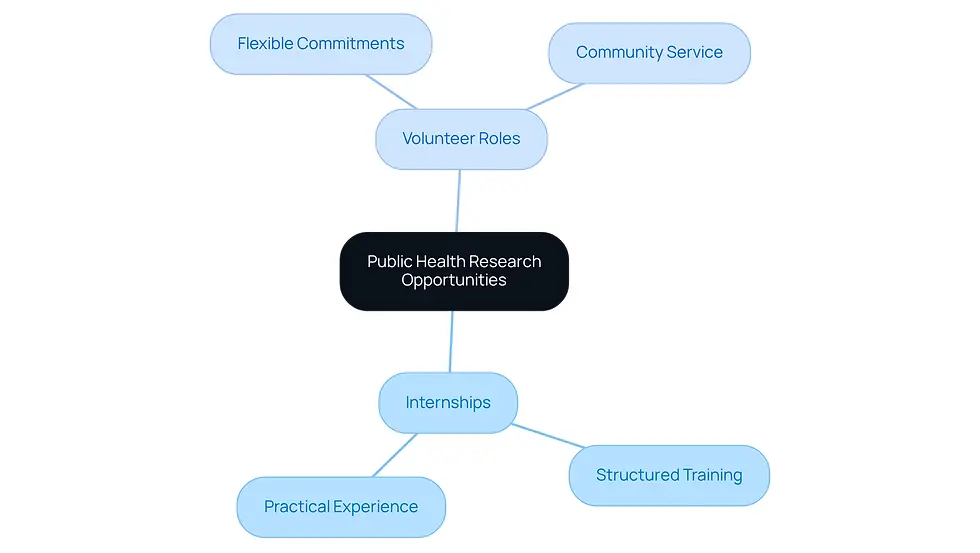
Navigating public health research opportunities for undergraduates requires a clear understanding of the distinct pathways available. These opportunities generally fall into two primary categories: internships and volunteer roles.
Internships: Often include structured training and guidance. Provide practical experience in a professional environment.
Volunteer Roles: Offer more flexible commitments. Emphasize community service, allowing participation in wellness initiatives without the formal structure of an internship.
Both pathways provide valuable experiences that enhance a learner's understanding of community well-being, yet they differ significantly in structure and outcomes. Understanding these differences is crucial for learners as they consider their options and seek to align their experiences with their career goals. Ultimately, this knowledge empowers learners to make informed decisions that align with their professional aspirations.
Exploring Internships in Public Health Research
Internships in community wellness research provide valuable practical experience in professional settings and serve as public health research opportunities for undergraduates, bridging the gap between theory and practice. These public health research opportunities for undergraduates often involve working alongside experienced professionals on specific projects, which allows interns to apply their theoretical knowledge in real-world contexts.
For instance, practical experiences at organizations like the CDC or local health departments may include tasks such as:
Data collection
Analysis
Participation in public health campaigns
Interns benefit from mentorship, enhancing their learning and creating valuable networking opportunities for future careers. However, many students find it challenging to secure public health research opportunities for undergraduates due to high competition, which can be a disadvantage for some learners. Overall, these work experiences, including public health research opportunities for undergraduates, are highly valued for their ability to improve a person's resume and offer practical skills that are directly relevant to future employment. Ultimately, the skills and connections gained through these internships can be pivotal in shaping a successful career in public health.

Evaluating Volunteer Positions in Public Health Research
Volunteer roles in public health research opportunities for undergraduates provide students with a unique chance to gain practical experience while actively supporting their communities. In contrast to structured work placements, volunteering offers a flexible commitment that can adapt to individual schedules and responsibilities. Volunteers may assist with community wellness initiatives, participate in wellness fairs, or support research projects without the formal training that practical experiences require.
For instance, organizations such as the American Red Cross and local wellness departments often seek volunteers for various community initiatives. While volunteering may not provide the same level of professional growth as formal placements, it offers valuable experiences, such as networking opportunities and the chance to develop essential soft skills like communication and collaboration.
Additionally, volunteering allows students to engage in public health research opportunities for undergraduates while making meaningful contributions to their communities and gaining firsthand insights into local issues. Ultimately, volunteering not only enriches personal growth but also fosters a deeper understanding of community dynamics and challenges.
Comparative Analysis: Internships vs. Volunteer Positions
When evaluating public health research opportunities for undergraduates against volunteer roles, several pivotal factors emerge. Internships offer structured experiences with defined roles, mentorship, and potential academic credit or compensation. They are often seen as essential stepping stones to future employment, equipping individuals with vital skills and networking opportunities. For instance, graduates with practical experience receive 12.6% more interview invitations from employers, according to NACE, underscoring the competitive advantage these experiences provide. However, 43% of interns work without compensation, a significant drawback for many.
In contrast, volunteer roles tend to be more adaptable, allowing individuals to engage in community welfare initiatives without the same level of commitment required by internships. While volunteering may not always lead directly to job opportunities, it can greatly enhance a student's resume by demonstrating a commitment to community service and a genuine passion for public health research opportunities for undergraduates. This dedication is increasingly valued by employers, as evidenced by the growing emphasis on company culture and meaningful work among the new generation of professionals; 88% of whom prioritize meaning over money, as noted by Tallo.
Ultimately, choosing between a work placement and a volunteer position depends on career goals, availability, and the preference for structure or flexibility. The COVID-19 pandemic has also influenced this landscape, with the demand for internships exceeding the supply during that time. Students should carefully assess their personal circumstances and long-term aspirations when determining which path aligns best with their professional development in the public health sector.

Conclusion
Choosing between internships and volunteering in public health can significantly impact a student's career trajectory. Navigating the landscape of public health research opportunities reveals two primary pathways: internships and volunteering. Each offers unique benefits and experiences that can shape a student's understanding of community health and enhance their career prospects. Recognizing these differences is essential for students as they align their choices with their professional aspirations and personal circumstances.
Internships provide structured experiences, mentorship, and the chance to develop practical skills in professional settings, making them highly valuable for students seeking to build a competitive edge in the job market. Conversely, volunteer roles offer flexibility and the opportunity to engage in community service, albeit with less formal training. Both pathways contribute meaningfully to personal growth and professional development, allowing students to cultivate essential skills and insights into public health dynamics.
Ultimately, students should let their career goals and availability guide their decision between internships and volunteer positions. Whether opting for the structured environment of an internship or the adaptable nature of volunteering, each choice plays a crucial role in fostering a deeper commitment to public health. A well-considered choice can set the foundation for a successful career in public health, aligning personal growth with professional aspirations.
Frequently Asked Questions
What are the main categories of public health research opportunities for undergraduates?
The main categories of public health research opportunities for undergraduates are internships and volunteer roles.
What are the characteristics of internships in public health research?
Internships often include structured training and guidance, providing practical experience in a professional environment.
How do volunteer roles differ from internships in public health research?
Volunteer roles offer more flexible commitments and emphasize community service, allowing participation in wellness initiatives without the formal structure of an internship.
Why is it important for learners to understand the differences between internships and volunteer roles?
Understanding these differences is crucial for learners as they consider their options and seek to align their experiences with their career goals.
How do both internships and volunteer roles benefit learners in public health?
Both pathways provide valuable experiences that enhance a learner's understanding of community well-being and empower them to make informed decisions that align with their professional aspirations.
List of Sources
Comparative Analysis: Internships vs. Volunteer Positions guides.lib.umich.edu (https://guides.lib.umich.edu/globalhealth/cases) 70+ Internship Statistics in 2025: Data, Case Studies & Trends | Shortlister (https://myshortlister.com/insights/internship-statistics)



Comments