

4 Best Ways for Pre-Med Students to Join a Research Lab

Updated: Sep 1
Introduction
Research experience is a pivotal factor in shaping a successful medical career. For pre-med students, joining a research lab not only enhances their understanding of medical concepts but also significantly strengthens their medical school applications. However, many students encounter significant obstacles when trying to find suitable research opportunities. Addressing these challenges is essential for aspiring medical professionals to secure valuable positions in competitive labs.
Identify Research Areas of Interest
Identifying your fields of focus is essential for navigating your academic journey effectively. Here’s how to effectively navigate this process:
Reflect on Your Courses: Think about the subjects that ignite your passion. Are you captivated by biology, chemistry, or psychology? Create a list of these subjects to clarify your preferences.
Explore Current Research Trends: Stay informed by reading recent articles and journals in your chosen field. Resources like PubMed and Google Scholar can uncover trending subjects and emerging fields. For example, personalized medicine is changing how treatments are customized for patients, making it a key focus for future researchers.
Consider Your Career Goals: Define what you aspire to achieve in your medical career. Whether your emphasis is on clinical practice, public health, or medical inquiry, aligning your interests with your career goals will provide direction. As Rachel Rizal, MD, observes, "Investigation can enhance your medical school application in several ways," highlighting the significance of aligning study with career objectives.
Talk to Peers and Advisors: Engage in conversations with fellow students and academic advisors about their study experiences. Their insights can assist you in honing your interests and recognizing possible areas for study. Learning from others' experiences can provide valuable context and inspiration.
Attend Seminars and Workshops: Participate in departmental seminars and workshops to gain exposure to various fields of study. These events also provide chances to engage with instructors who can assist you in your academic endeavors. Interacting with faculty can result in mentorship opportunities that improve your academic journey.
By following these steps, you will learn the best ways for pre med students to join a research lab that aligns with your academic pursuits and goals. Furthermore, participating in studies can greatly improve your medical school applications, as shown in the case study 'The Value of Studies for Premed Students,' which emphasizes how study experience provides students with vital skills for patient care.

Explore Opportunities for Research Positions
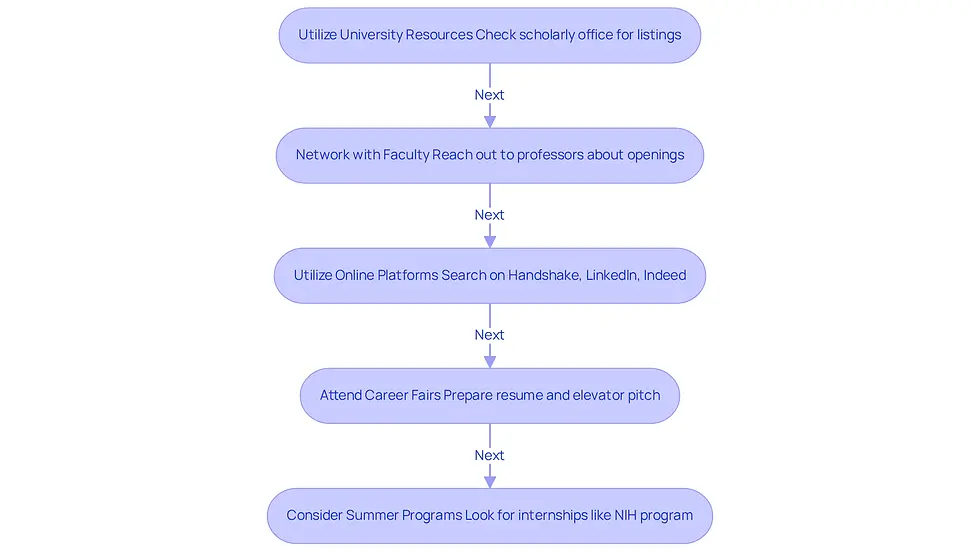
Navigating the landscape of research opportunities can be daunting for students, but recognizing your areas of interest is among the best ways for pre med students to join a research lab. Here’s how to effectively explore available options:
Utilize University Resources: Check your university’s scholarly office or undergraduate study programs, which often maintain listings of available positions. For example, universities represented 60% of all R&D expenditures in the U.S., emphasizing the significance of these resources in linking students with investigative experiences.
Network with Faculty: Reach out to professors in your department. Express your interest in their research and inquire about any openings in their labs. Networking is essential, as 85% of jobs are found through connections, making these relationships invaluable for uncovering opportunities. With Coltie, students can enhance these connections through the platform's intelligent matching system and engaging video profiles, fostering more personal interactions with faculty.
Utilize Online Platforms: Websites such as Handshake, LinkedIn, and Indeed can assist you in locating assistant positions in academia. Use keywords related to your interests to narrow down your search. Employee referrals are four times more likely to result in hiring, so consider reaching out to your network for leads. Furthermore, Coltie's innovative platform can help students in finding opportunities that align with their academic goals through its unique features.
Attend Career Fairs: Participate in university career fairs where academic institutions and labs may be recruiting. Prepare your resume and practice your elevator pitch to make a strong impression.
Consider Summer Programs: Look for summer internships or programs that provide hands-on experience. The NIH Medical Research Scholars Program, for instance, has an application period from September 1 to December 1, 2026, offering a structured opportunity for pre-med students to participate in meaningful studies.
By actively exploring these avenues and using Coltie to connect with instructors, you can uncover the best ways for pre med students to join a research lab that aligns with your career goals. Ultimately, a proactive approach to exploring these avenues can lead to fulfilling research experiences that align with your career aspirations.
Connect with Faculty and Research Mentors
Establishing strong relationships with instructors and advisors is crucial for navigating your academic journey effectively. Here’s how to reach out effectively:
Compose a Formal Email: When reaching out to professors, clearly introduce yourself by mentioning your major, year, and specific topics related to their work. A well-structured email demonstrates professionalism and respect for their time. Avoid vague openings and ensure your email is concise.
Attend Office Hours: Make use of professors' office hours to discuss your passions and inquire about potential project opportunities. This face-to-face interaction can create a lasting impression and foster a personal connection, which is vital for mentorship.
Engage in Departmental Events: Participate in seminars, workshops, or guest lectures. These events not only enable you to connect with instructors but also offer insights into their fields of study, deepening your comprehension and enthusiasm.
Seek Recommendations: Approach upperclassmen or peers who have previously worked with faculty for introductions. A personal recommendation can significantly enhance your chances of obtaining a position in the field, as it establishes credibility.
Follow Up: However, not all outreach efforts yield immediate responses, which can be discouraging. If you don’t receive a response, sending a polite follow-up email after a week or two is acceptable. Persistence reflects your genuine interest and can lead to positive outcomes.
Ultimately, these relationships can open doors to opportunities that significantly impact your academic and professional trajectory. Studies show that when students build meaningful relationships with faculty, it can greatly boost their academic success and personal growth. Thus, investing time in these connections can profoundly influence your academic and career outcomes.

Prepare for Interviews and Lab Meetings
Thorough preparation is crucial for achieving success in interviews and lab meetings. Here are effective steps to get ready:
Investigate the Lab: Familiarize yourself with the lab’s area of study, recent publications, and ongoing projects. This knowledge will enable you to ask informed questions and demonstrate genuine interest in their work.
Practice Common Interview Questions: Anticipate and prepare responses for typical inquiries, such as your study focuses, relevant coursework, and motivations for joining the lab. Practicing with a friend or in front of a mirror can help you articulate your thoughts clearly.
Prepare Your Questions: Compile a list of thoughtful questions to ask during the interview, such as inquiries about mentorship style and lab culture. This not only demonstrates your involvement but also indicates your curiosity about the lab’s studies and environment.
Dress Professionally: Aim for a polished appearance by dressing appropriately for the interview. Business casual is often a safe choice unless specified otherwise.
Follow Up After the Meeting: Send a thank-you email to reinforce your interest and express appreciation for the opportunity to interview.
By adhering to these preparation steps, you will enhance your chances of making a positive impression during interviews and lab meetings. Effective preparation not only enhances your confidence but also significantly improves your chances of securing a research position.

Conclusion
Securing a research position is essential for pre-med students to enhance their academic and professional profiles, yet many face challenges in navigating this process. By understanding personal interests, exploring available opportunities, and building meaningful connections with faculty, students can effectively navigate the research landscape. This proactive approach not only enriches their educational experience but also lays a strong foundation for their medical school applications.
Key strategies discussed include:
Reflecting on personal interests
Utilizing university resources
Networking with faculty
Preparing thoroughly for interviews
Engaging in departmental events and seeking mentorship can provide invaluable insights and opportunities that align with career aspirations. Moreover, being well-prepared for interviews and lab meetings can set candidates apart, showcasing their commitment and enthusiasm for research.
Ultimately, joining a research lab is about more than just gaining experience; it’s about deepening your understanding of the medical field and developing essential skills for your future career. By actively seeking mentorship and exploring diverse research topics, pre-med students can not only gain valuable experience but also lay a strong foundation for their future careers in medicine.
Frequently Asked Questions
Why is identifying research areas of interest important for academic success?
Identifying research areas of interest is essential for navigating your academic journey effectively, as it helps clarify your preferences and align your studies with your career goals.
How can I reflect on my courses to identify my interests?
You can reflect on your courses by thinking about the subjects that ignite your passion, such as biology, chemistry, or psychology, and creating a list of these subjects to clarify your preferences.
What resources can I use to explore current research trends?
Resources like PubMed and Google Scholar can help you stay informed about trending subjects and emerging fields in your chosen area of study.
How do my career goals influence my research interests?
Defining your career goals, whether in clinical practice, public health, or medical inquiry, helps align your interests with your aspirations, providing direction for your academic pursuits.
How can talking to peers and advisors help in identifying research interests?
Engaging in conversations with fellow students and academic advisors can provide insights into their study experiences, helping you hone your interests and recognize possible areas for study.
What is the benefit of attending seminars and workshops?
Attending departmental seminars and workshops exposes you to various fields of study and provides opportunities to engage with instructors, which can lead to mentorship opportunities that enhance your academic journey.
How does participating in research studies improve medical school applications?
Participating in research studies can greatly improve your medical school applications by providing vital skills for patient care, as highlighted in the case study 'The Value of Studies for Premed Students.
List of Sources
Identify Research Areas of Interest Top Clinical Trial Trends to Watch in 2026 - Bio Research Partner (https://bioresearchpartner.com/top-clinical-trial-trends-to-watch-in-2026) 5 Clinical Research Trends Reshaping Physician Practice in 2026 | www.PhysiciansWeekly.com (https://physiciansweekly.com/post/4-clinical-research-trends-reshaping-physician-practice-in-2026-2) 7 Medical Sciences Trends Shaping Healthcare in 2026 | UF Medical Physiology Online (https://distance.physiology.med.ufl.edu/about/articles/7-medical-sciences-trends-shaping-healthcare-in-2026) Premed Research That Impresses Medical Schools (https://usnews.com/education/blogs/medical-school-admissions-doctor/articles/premed-research-that-impresses-medical-schools) Six Trends in Healthcare to Watch in 2026 | Rockefeller Institute of Government (https://rockinst.org/blog/six-trends-in-healthcare-to-watch-in-2026)
Explore Opportunities for Research Positions Networking (https://ocs.yale.edu/networking) Medical Research Scholars Program | Clinical Center (https://cc.nih.gov/training/mrsp) Premed students can apply now for 2026 Flinn Summer Research Internships (https://healthsciences.arizona.edu/news/premed-students-can-apply-now-2026-flinn-summer-research-internships) University Investments in Research Continue to Grow, According to New… (https://aau.edu/newsroom/leading-research-universities-report/university-investments-research-continue-grow)
Connect with Faculty and Research Mentors Grad School Tips: connecting with faculty | Graduate and Postdoctoral Studies | Rice University (https://graduate.rice.edu/current-news/grad-school-tips-connecting-faculty) The Importance of Mentorship for Healthy Research Teams in Academic Medicine (https://slu.edu/medicine/about/faculty-resources/cedar/posts/healthy-research-teams.php) Tips for Writing an Email to Faculty about Research | Office for Undergraduate Research (https://our.unc.edu/find/emails-to-faculty) Mentoring Matters: Supporting Students’ Development of Mentoring Constellations in Higher Education - Center for Engaged Learning (https://centerforengagedlearning.org/mentoring-matters) in-training.org (https://in-training.org/the-value-of-a-mentor-who-is-invested-in-your-growth-26437)
Prepare for Interviews and Lab Meetings How to Prepare for Interviews for Research-Based PhD Programs | ProFellow (https://profellow.com/tips/how-to-prepare-for-interviews-for-research-based-phd-programs) Interviewing to work in a Research Group | Undergraduate Research (https://undergradresearch.oregonstate.edu/interviewing-work-research-group) GitHub - Devinterview-io/statistics-interview-questions: 🟣 Statistics interview questions and answers to help you prepare for your next machine learning and data science interview in 2026. (https://github.com/Devinterview-io/statistics-interview-questions) 40 Statistics Interview Questions you may face during your interview (2026 Edition) - MentorCruise (https://mentorcruise.com/questions/statistics) 10 Statistics Interview Questions for Data Science Role (https://coursera.org/in/articles/statistics-interview-questions-for-data-science)



Comments