

Comparing Research Opportunities for STEM Careers: Key Programs and Benefits

Introduction
The abundance of STEM research programs presents both opportunities and challenges for aspiring scientists and engineers. Navigating these educational initiatives is crucial for students aiming to enhance their career prospects in STEM fields. Students often struggle to identify which STEM programs will best support their career aspirations. This article provides a comparative analysis of key STEM research programs, emphasizing their benefits, drawbacks, and the role of technology in enhancing access to these opportunities.
Overview of STEM Research Opportunities
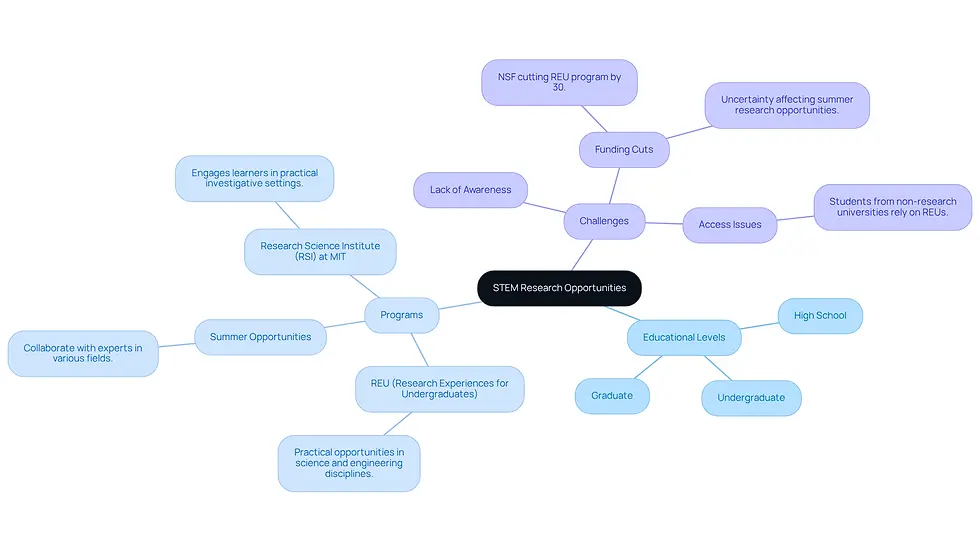
STEM opportunities present a diverse range of initiatives designed to immerse learners in scientific exploration and practical applications of their studies. These opportunities span various educational levels, including high school, undergraduate, and graduate studies. Significant programs include:
National Science Foundation's Experiences for Undergraduates (REU): Provides practical opportunities in science and engineering disciplines.
Summer Opportunities and Internships: Offer individuals the chance to collaborate with experts in their fields.
Research Science Institute (RSI) at MIT: Engages learners in practical investigative settings to cultivate early interest in science and technology careers.
Despite the abundance of STEM opportunities, many learners struggle to find and access research opportunities for STEM careers due to a lack of awareness or guidance. Engaging in these initiatives not only enhances learners' skills but also significantly increases their employability in STEM fields. Understanding these initiatives is crucial for learners aiming to navigate their paths toward successful careers in science and technology.
Top STEM Research Programs for High School Students
High school learners have access to numerous esteemed STEM initiatives that offer exceptional research opportunities for STEM careers and scientific exploration. The Research Science Institute (RSI) at MIT stands out for its rigorous five-week internship, where participants receive guidance from leading scientists and engage deeply in inquiry. Similarly, the Simons Summer Research Program at Stony Brook University typically lasts six to eight weeks, providing participants with hands-on experience across various scientific fields, fostering practical skills and knowledge. The Garcia Summer Research Program, also at Stony Brook, allows high school learners to engage in real-world projects, enhancing their academic profiles.
Additionally, initiatives like the NASA High School Internship and the National Institute of Standards and Technology's SHIP initiative provide invaluable exposure to applied research environments. These initiatives provide learners with hands-on experience and help them understand the research opportunities for STEM careers in real-world situations. Each initiative includes unique application procedures and eligibility standards, making it essential for individuals to assess their choices thoughtfully to discover the best match for their educational and professional goals. Navigating the application processes can be challenging due to varying eligibility standards.
Statistics show that involvement in high school science and technology initiatives greatly enhances college admission opportunities, with 71% of Pioneer Research scholars securing entry to top 20 U.S. universities. This highlights the significance of choosing an initiative that corresponds with individual interests and academic objectives, as valuable research opportunities for STEM careers can significantly enhance a learner's educational path. Ultimately, the right initiative can be a pivotal factor in shaping a learner's future in science and technology.

Comparative Analysis of Program Benefits and Drawbacks
A comprehensive assessment of STEM initiatives reveals critical factors that influence accessibility and success for aspiring students. Assessing science, technology, engineering, and mathematics initiatives requires a thorough examination of different elements, such as structure, mentorship options, and funding accessibility.
For example, the Research Science Institute (RSI) is renowned for its rigorous curriculum and access to distinguished mentors, making it a highly competitive option that demands a strong academic background from applicants. Conversely, the Simons Summer Research Program offers a more straightforward application process, making it more accessible, though it may not carry the same level of prestige as RSI.
Programs such as the NASA High School Internship Program are recognized for their practical applications, but geographic limitations often restrict access to these valuable opportunities. Moreover, while numerous STEM initiatives are fully financed, others may impose certain expenses on participants, creating a possible obstacle for low-income applicants. For example, the Dana-Farber / Harvard Cancer Center CURE Program, which positions individuals in cancer laboratories, is highly selective and may not be financially viable for everyone.
This analysis highlights how crucial it is to tailor course features to meet the unique needs of each learner. As financing for science and technology initiatives continues to change, comprehending these dynamics is essential for university leaders seeking to assist varied learners in their pursuit of research opportunities for STEM careers. Ultimately, understanding these dynamics is crucial for fostering an inclusive environment that nurtures the next generation of STEM leaders.

Leveraging Technology for Enhanced Access to STEM Opportunities
The integration of technology in STEM education has transformed access to research opportunities for STEM careers, addressing previous challenges in the field. Platforms such as Coltie, along with Pathways to Science and various university websites, including the MESA initiative at Barstow Community College, provide innovative solutions for individuals seeking suitable options.
Coltie effectively matches potential candidates with graduate advisors, simplifying the recruitment process and improving visibility for both parties.
Coltie offers a range of pricing options, including individual plans starting at $49 per month, catering to diverse user needs.
The MESA initiative exemplifies this trend by assisting first-generation college attendees through dedicated resources and mentorship, resulting in a 106 percent increase in STEM majors at Barstow Community College from Fall 2020 to Fall 2025.
Additionally, virtual mentorship programs and online workshops enable learners to connect with industry professionals, transcending geographical barriers.
The adoption of digital tools in application processes, such as video resumes and online interviews, has streamlined recruitment, making it more accessible for individuals from various backgrounds.
As technology evolves, its influence on STEM education will be pivotal in fostering a more inclusive environment for aspiring professionals. Dr. Eva Bagg, Superintendent-President of Barstow Community College, emphasizes that initiatives like MESA not only provide academic support but also create research opportunities for STEM careers through mentorships and industry partnerships, further enhanced by platforms like Coltie.

Conclusion
STEM research opportunities are crucial for shaping the careers of future scientists and technologists, yet many students face challenges in accessing them. Participating in diverse STEM programs equips students with essential skills and experiences that boost their employability in competitive job markets. The article highlights the need for accessible application processes, as many students face significant challenges in navigating them. By comparing the benefits and drawbacks of different programs, it becomes evident that careful consideration is necessary to find the right fit for individual goals and circumstances.
With the rapid evolution of technology, utilizing digital tools can greatly improve access to STEM opportunities for students. Initiatives like Coltie and the MESA program exemplify how technology can bridge gaps and create inclusive pathways for diverse learners. By embracing these advancements, students can better position themselves for success in STEM fields. Ultimately, the right STEM program can be a decisive factor in a student's career success, making informed choices essential.
Frequently Asked Questions
What are STEM research opportunities?
STEM research opportunities are initiatives designed to immerse learners in scientific exploration and practical applications of their studies across various educational levels, including high school, undergraduate, and graduate studies.
What are some significant STEM programs mentioned in the article?
Significant programs include the National Science Foundation's Experiences for Undergraduates (REU), summer opportunities and internships, and the Research Science Institute (RSI) at MIT.
What does the National Science Foundation's Experiences for Undergraduates (REU) offer?
The REU provides practical opportunities in science and engineering disciplines for undergraduate students.
How do summer opportunities and internships benefit learners?
They offer individuals the chance to collaborate with experts in their fields, enhancing their skills and experience.
What is the Research Science Institute (RSI) at MIT?
The RSI engages learners in practical investigative settings to cultivate early interest in science and technology careers.
Why do many learners struggle to find STEM research opportunities?
Many learners struggle due to a lack of awareness or guidance regarding available research opportunities.
How do STEM initiatives impact employability?
Engaging in STEM initiatives enhances learners' skills and significantly increases their employability in STEM fields.
Why is understanding STEM initiatives important for learners?
Understanding these initiatives is crucial for learners aiming to navigate their paths toward successful careers in science and technology.
List of Sources
Overview of STEM Research Opportunities NSF downsizes summer research program for undergraduates (https://science.org/content/article/nsf-downsizes-summer-research-program-undergraduates) News (https://nsf.gov/news) Trump’s cuts threaten key NSF undergrad research program (https://insidehighered.com/news/students/academics/2025/03/11/trumps-cuts-threaten-key-nsf-undergrad-research-program) NSF is cutting its Research Experiences for Undergraduates (REU) program by 30% - and for me, this news hits differently. | Korie Grayson, PhD (https://linkedin.com/posts/koriegrayson_nsf-is-cutting-its-research-experiences-for-activity-7302334463009513475-UayR) Latest STEM News and Features For Colleges and Universities - NASA (https://nasa.gov/learning-resources/latest-stem-news-and-features-for-colleges-and-universities)
Top STEM Research Programs for High School Students Top STEM Programs for High School Students in CA (2026 Research Guide) (https://pioneeracademics.com/news/top-stem-programs-for-high-school-students-in-california-research-guide) NASA Internship Programs - NASA (https://nasa.gov/learning-resources/internship-programs) Research Science Institute | Center for Excellence in Education (https://cee.org/programs/research-science-institute) Top 50 College-Based Research Programs for High School Students (https://pioneeracademics.com/news/top-50-college-based-research-opportunities-for-high-school-students) INL launches new research experience for high school students (https://inl.gov/news-release/inl-launches-new-research-experience-for-high-school-students)
Comparative Analysis of Program Benefits and Drawbacks Student STEM Researchers Awarded Competitive DAAD-RISE Internships in Germany (https://now.fordham.edu/colleges-and-schools/fordham-college-at-rose-hill/student-stem-researchers-awarded-competitive-daad-rise-internships-in-germany) Top 50 College-Based Research Programs for High School Students (https://pioneeracademics.com/news/top-50-college-based-research-opportunities-for-high-school-students) Research internships prepare students for academic and career success in STEM fields, study shows (https://uab.edu/news/research-innovation/research-internships-prepare-students-for-academic-and-career-success-in-stem-fields-study-shows) STEM Summer Programs and Students’ Educational Outcomes (https://nber.org/digest/202210/stem-summer-programs-and-students-educational-outcomes) Top 10 Summer Research Programs for High School Students in 2026 (https://ivymax.com/blog/cpp/top-summer-research-for-high-school)
Leveraging Technology for Enhanced Access to STEM Opportunities New USC STEM Center expanding access and opportunity in science and technology (https://rossier.usc.edu/news-insights/news/2026/april/new-usc-stem-center-expanding-access-and-opportunity-science-and-technology) Stony Brook Licenses SnappyXO Robotics Platform - SBU News (https://news.stonybrook.edu/university/stony-brook-licenses-snappyxo-robotics-platform-to-expand-access-to-stem-education) Barstow Community College Launches MESA Program to Expand Access to STEM Education | Barstow Community College (https://barstow.edu/news/barstow-community-college-launches-mesa-program-expand-access-stem-education) GlobalFoundries partners with ECHO Center to expand access to STEM education | Vermont Business Magazine (https://vermontbiz.com/news/2026/july/16/globalfoundries-partners-echo-center-expand-access-stem-education)
Comments